I played a ridiculous amount of Digimon Rumble Arena as a kid. I remember waiting for the Digivolve meter to fill, watching Patamon start to glow, and hearing everyone around the TV lose their minds. This Digimon Rumble Arena review came from going back in 2026 to find out how much of that excitement was actually in the game, and how much was hiding in the room around it.
The answer is a little painful. The Digimon, transformations, voice clips, and chaos still give the game personality. The combat underneath them is much smaller than I remembered. It also has more real technique than I gave it credit for the first time I revisited it.
How I reviewed it: I went back through the original PlayStation game in 2026, focusing on the normal fights, Digivolution system, stages, single-player progression, unlockables, and mini-games. This is a personal replay review, not a score assembled from old reviews.
Last checked: August 20, 2026. I could not find a current official digital rerelease of the original Digimon Rumble Arena. The original remains a PlayStation release, so physical hardware or emulation using your own legally dumped disc and BIOS are the practical ways to revisit it.
Digimon Rumble Arena Review at a Glance
| Developer | Hudson Soft / CAProduction |
|---|---|
| Publisher | Bandai |
| Original release | December 2001 in Japan; February 2002 in North America |
| Platform | PlayStation |
| Players | 1–2 local players |
| Roster | 9 available at first; 24 total after unlocks |
| Best feature | Digivolution and Digimon fan service |
| Biggest problem | Limited movesets and shallow long-term variety |
| Verdict | Still fun as a Digimon nostalgia game, difficult to recommend as a fighter first |
What Made Digimon Rumble Arena Feel Amazing
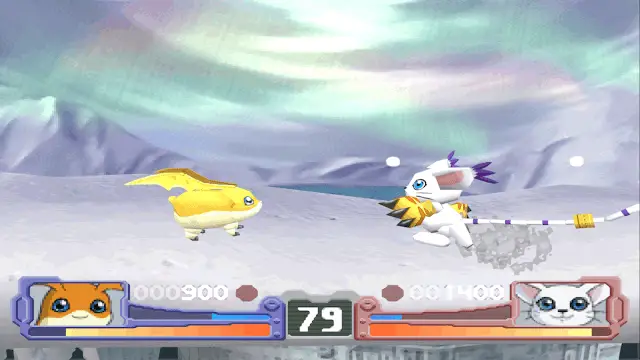
One summer afternoon, four of my buddies and I crowded around a tiny TV in my basement and took turns playing. I picked Veemon, filled his Digivolve gauge, and watched him become Imperialdramon Fighter Mode. Everyone lost it. A bowl of Cheetos went over, my drink followed it, and the carpet briefly became part of the match.
That transformation was the hook. Rumble Arena lets you control Digimon from the first three anime eras, build a Digivolve meter during battle, and transform without leaving the fight. For a kid who mostly experienced Digimon through scheduled television, that felt enormous. I was not just watching WarGreymon throw Terra Force anymore. I was the one pressing the button.
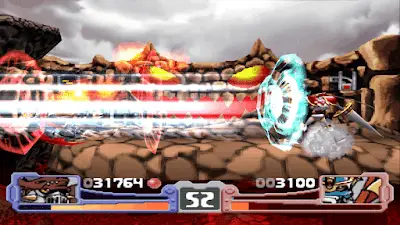
The presentation sells those moments. The screen flashes, the partner voice kicks in, and your small character becomes something much nastier for a short burst. Using the finishing technique spends that power and sends you back to the lower form, so missing one can still feel awful in exactly the right way.
The simplicity helped too. A younger cousin could pick up a controller, mash around, fill a meter, transform Patamon into Seraphimon, and feel like he had done something incredible. Nobody needed a spreadsheet before the first match.
The 2026 Reality Check
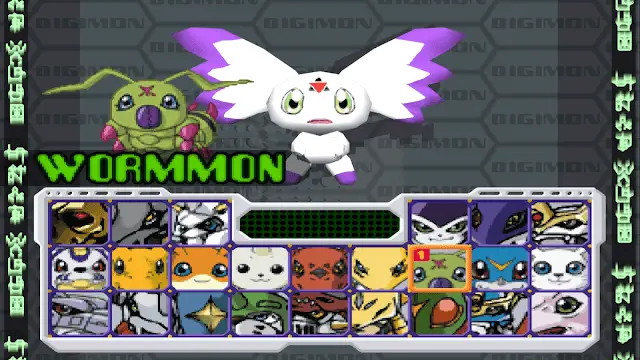
Booting it again was humbling. The PlayStation logo appeared, the Bandai screen followed, and the old excitement came back immediately. Then the first match started and I noticed how little the game asks from you at the beginning.
The basic controls are easy to understand. You have normal attacks, jumping, blocking, throws and movement attacks, plus two character-specific special moves. Cards and other items appear during the fight and can change attributes, restore health, affect the Digivolve gauge, or add another layer of randomness.
That accessibility still works. I could jump in after years away and understand the match almost immediately. The problem is that the first fifteen minutes reveal a huge amount of what a casual player is going to see.
The Simple Combat Has More Depth Than I Remembered
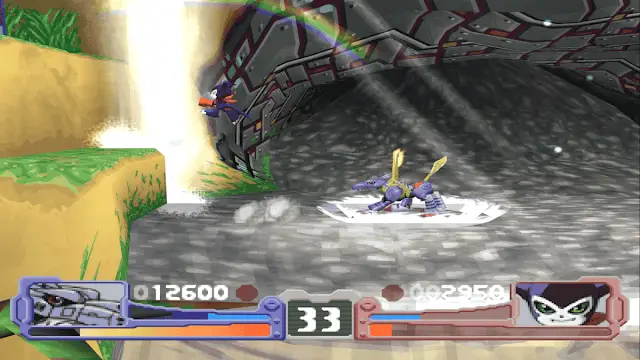
This is where my first 2026 impression was actually too harsh. I originally came away thinking there were basically no combos. That is not accurate.
Each Digimon has a compact set of specials, but the game also has normal strings, dash attacks, aerial attacks, throws, launchers, wall pressure, and character-specific combo routes. Old move documentation and later community matchup work go far beyond the button mashing I remembered doing as a kid.
That does not suddenly make it Tekken 3. The ceiling is still much lower and the characters can feel repetitive when you stay at a casual level. Some ranged characters can make fights especially irritating if both players decide that standing across the arena and throwing projectiles counts as a personality.
One correction from my old draft matters here too: Veemon is not another projectile spammer. His two specials are close-range movement attacks, while characters such as Agumon and Patamon have the ranged tools I was thinking about. That is exactly the kind of detail nostalgia happily sands off after twenty years.
Digivolution Is Still the Star
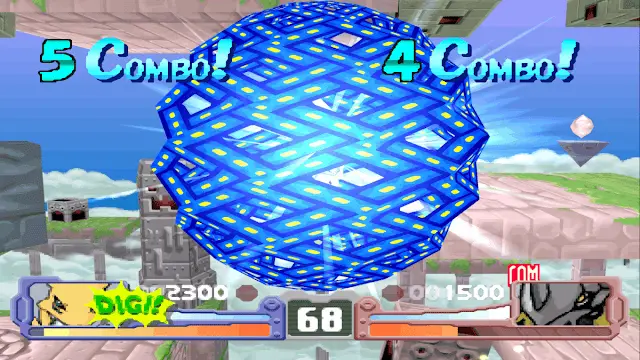
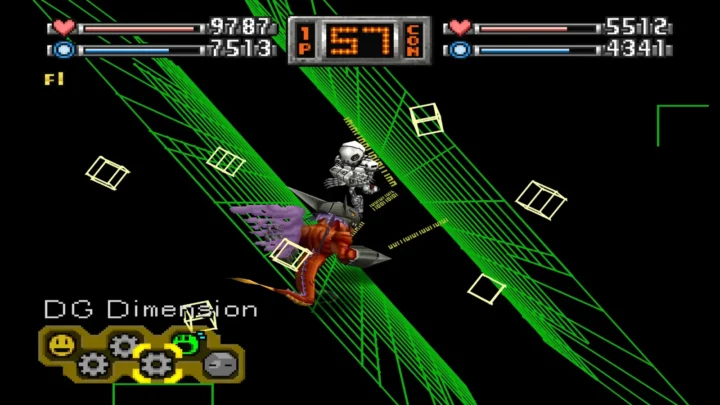
The transformation system is still the reason I would show this game to another Digimon fan. Fill the meter and most of the partner Digimon jump straight into a designated higher form. Agumon becomes WarGreymon. Patamon becomes Seraphimon. Veemon becomes Imperialdramon Fighter Mode.
It works as spectacle, but I still wish the game had more of the journey between those forms. The anime made evolution feel like progression. Here it is closer to flipping a temporary power switch.
Digimon Rumble Arena 2 expanded the idea in 2004 by giving many characters multiple in-battle stages. Agumon can move through Greymon before reaching WarGreymon, for example. That makes the sequel feel closer to the evolution ladder I always imagined the first game having.
Stages, Items, and Presentation
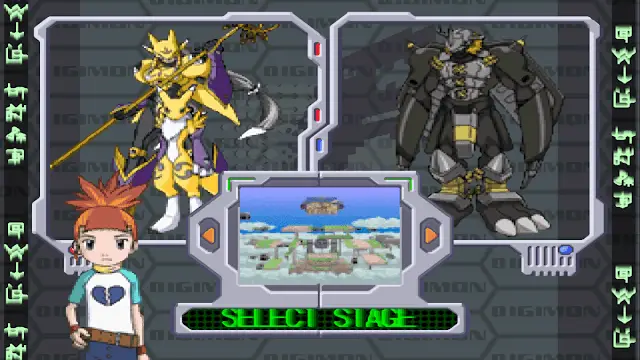
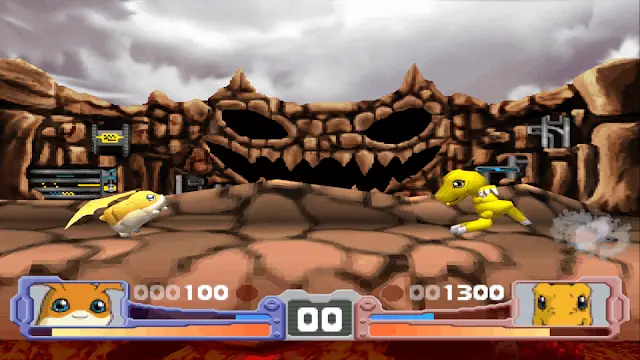
The arenas are more interactive than my first replay notes gave them credit for. Hazards, moving geometry, falling areas, lava, cards and other pickups can interfere with a fight. That randomness is a big part of why the game works better with another person than it does as a serious one-on-one test.
Visually, though, a lot of the stages feel generic beside the Digimon standing in them. I wanted recognizable pieces of the Digital World. Instead, several arenas feel like broad themes built around ice, nature, machinery or lava. They function. Very few have the personality of the characters.
The sound lands in the same strange place for me. The transformation voices and attack calls still trigger the memory immediately. The music itself does much less for me now. I remembered a wall of anime energy and came back to something thinner.
Single-Player, Unlocks, and Mini-Games
Single-player is mostly an arcade ladder ending with Reapermon. Its real purpose is progression. Rumble Arena begins with nine playable Digimon and eventually opens a 24-character roster, so clearing 1P mode with different characters becomes the main reason to keep returning.
That unlock loop was powerful when I was younger. Seeing another portrait appear on the select screen felt like winning something. In 2026, the repetition shows much faster.
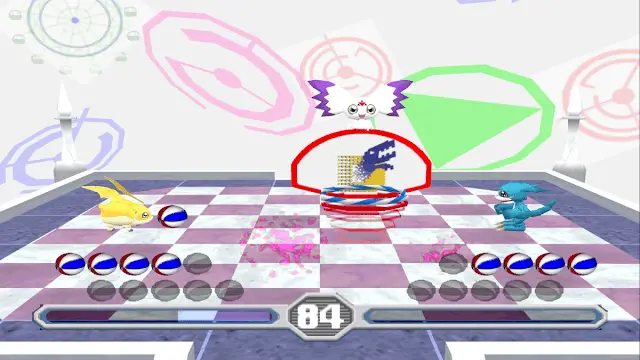
- Target Game: Charge and throw a ball through scoring targets. Simple, readable, finished before it has time to become much of anything.
- Digivolve Race: Mash the attack button against a punching bag and fill the meter first. My thumb remembers this better than my brain does.
- Basketball Game: Charge shots into a hoop that eventually starts moving. The physics remain wonderfully suspicious.
These modes are correctly documented in old guides, so at least childhood me did not hallucinate the basketball. They just do not have enough depth to carry much time on their own.
How to Play Digimon Rumble Arena in 2026
The annoying part of revisiting this game is access. As of August 2026, I could not find an official PS5, Steam, Xbox, Switch, or other mainstream digital rerelease of the original. It is still a PlayStation game from the licensed-game era, which means preservation is doing more work than convenience.
If you still own the disc, original PlayStation hardware is the cleanest authentic route. My beginner’s guide to playing PS1 games in 2026 covers the hardware options. If you want to use a PC, my DuckStation setup guide walks through the emulator itself, and my best DuckStation settings covers the visual side. Your BIOS and game image should come from hardware and discs you own.
2026 oddity: There is also an active fan-made Digimon Rumble Arena Remake project being updated by the community. It is unofficial, so I would treat it as a separate fan project rather than a replacement for an official rerelease.
What I Actually Learned From Replaying It
The biggest thing I got wrong was assuming the game itself had changed in my head because it was mechanically empty. It is more complicated than that. Rumble Arena has real character tech and combo routes. I simply never cared about learning them when I was twelve.
What disappeared was the context. The good controller. The bad controller nobody wanted. Somebody yelling because a card spawned on the wrong side. Snacks on the floor. Taking turns because the game only supported two players. None of that appears on a move list.
That is why the game can feel smaller now without making the old memory fake. I was using Digimon Rumble Arena as a place to hang out with people. The fighting system only had to keep us busy long enough to start another argument.
Frequently Asked Questions
How many characters are in Digimon Rumble Arena?
There are 24 playable characters in total. Nine are available at the beginning and fifteen are unlocked through single-player clears, special conditions, or passwords.
Is Digimon Rumble Arena four-player?
No. The original PlayStation game supports up to two local players. Digimon Rumble Arena 2 expanded the series to four-player local battles.
Can you play Digimon Rumble Arena on PS5?
Not through an official PS5 release that I could verify as of August 20, 2026. The original game has not joined Sony’s current PS1 Classics lineup, and a PS5 cannot simply run the original PS1 disc.
Does Digimon Rumble Arena have combos?
Yes. The individual move lists are small, but documented combo routes use normal strings, throws, launchers, aerial attacks, wall pressure, and character-specific techniques. Calling the game completely combo-free undersells what players eventually found in it.
Final Verdict: Does Digimon Rumble Arena Hold Up?
WornOutWill verdict: Worth revisiting for Digimon fans and old multiplayer memories. Harder to recommend to someone who only wants a great fighting game.
Best for: Short nostalgia sessions, unlocking the roster, and playing a few matches with another Digimon fan.
Biggest drawback: The accessible combat and repeated stage ideas run out of surprises quickly unless you decide to dig into the character-specific tech.
I would still play it again. I just would not pretend I am coming back for a deep competitive fighter. I am coming back because Veemon turning into Imperialdramon still does something to my brain, and because a couple of matches can put me back in that basement faster than any photograph.
If you want to keep going down the PS1 rabbit hole, I have a full guide to the best retro handhelds for PS1 games, and yes, Digimon Rumble Arena was one of the games I tested.