The mid-1990s were the moment gaming stopped thinking almost entirely in flat spaces and started trying to build worlds you could move through. Sega already knew arcades. Nintendo already owned living rooms. Sony was the electronics company wandering into the room with no console history and, apparently, absolutely no intention of behaving like the new guy.
By the end of the generation, the original PlayStation had shipped 102.49 million units worldwide. The Nintendo 64 finished at 32.93 million, while the Saturn landed at roughly 9.26 million. Sony did not win because the PS1 was simply the most powerful machine. It won because the hardware, CDs, price, developer strategy, third-party support, timing, and marketing all started pulling in the same direction.
So this is less “Sony had better graphics, the end” and more why the PS1 won the 3D console war against the Nintendo 64 and Sega Saturn, even when both rivals could beat it in areas of their own.
Last checked: August 21, 2026. I rechecked the sales figures, hardware details, Sony/Nintendo history, E3 pricing, media differences, and third-party claims against contemporary reporting, platform documentation, and later developer accounts.
Why the PS1 Won, at a Glance
| Factor | PlayStation Advantage | The Tradeoff Elsewhere |
|---|---|---|
| Price | $299 U.S. launch price | Saturn launched at $399 |
| Media | High-capacity, cheap-to-reproduce CDs | N64 cartridges were fast but smaller and more expensive to manufacture |
| Development | PC-based tools, software libraries, strong third-party outreach | Saturn hardware was powerful but notoriously complex to exploit |
| Software | Huge third-party catalog across nearly every genre | N64 had a much smaller overall library |
| Timing | Beat the N64 to market and undercut Saturn | N64 arrived about a year later in North America |
| Marketing | Sold PlayStation as entertainment and culture, not just a toy | Sony aggressively pursued teens and young adults |
If you want to see what all of that strategy eventually produced, I also ranked the 10 PS1 games that helped shape modern gaming. This article is the hardware-and-business side of the same story.
The Nintendo Partnership That Became a Rivalry
Sony and Nintendo were collaborators before they were competitors. Sony had already supplied the Super Nintendo’s audio hardware, and the companies worked on a CD-based extension of the SNES idea that became known as the Play Station.
The famous version of the story is almost too perfect: Sony announces the partnership around the 1991 Consumer Electronics Show, then Nintendo announces a deal with Philips the next day. That really happened. Contemporary reporting from the Los Angeles Times documented the sudden Nintendo-Philips pivot.
The part that usually gets sanded off is that the relationship did not instantly evaporate the moment Nintendo said “Philips.” Sony and Nintendo continued negotiating afterward, but licensing control and the business around CD software had already poisoned the arrangement. By 1992, Sony was moving toward a standalone machine instead.
So I would not reduce the PlayStation to a revenge project. The breakup mattered, but what mattered more was that Sony already had engineers, optical-disc experience, and Ken Kutaragi pushing for a machine built around the next generation instead of another SNES attachment.
Sony Built a Machine Developers Could Actually Use
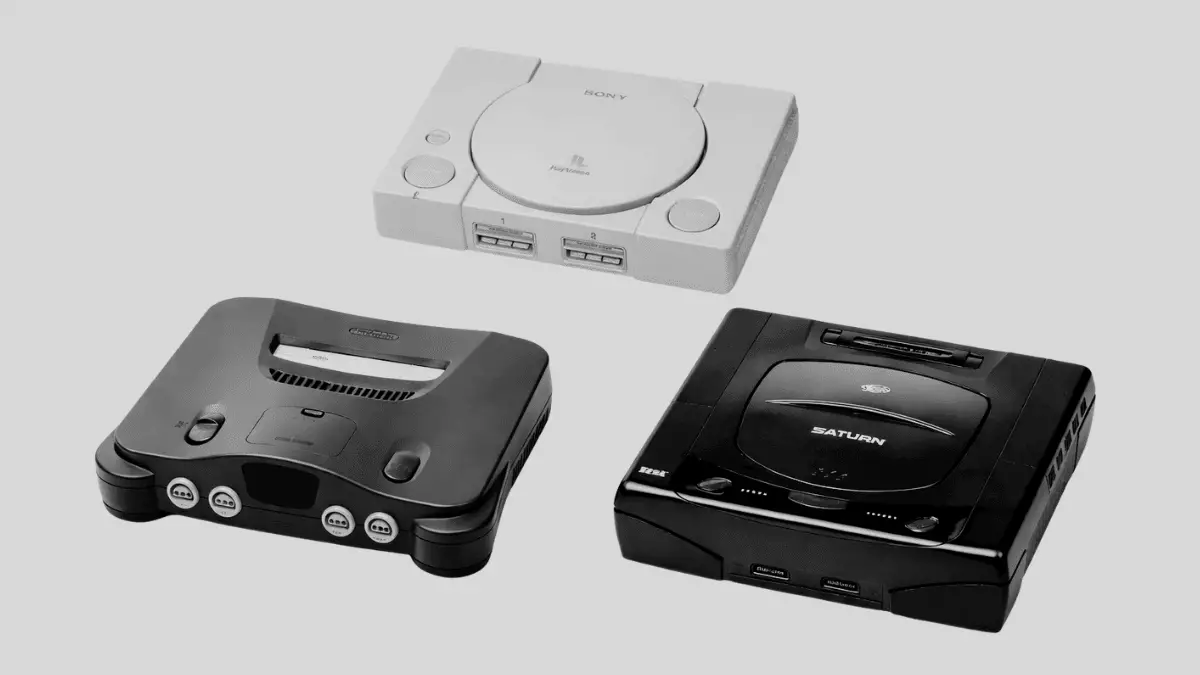
The PS1 was not the undisputed hardware king. The N64 had a much faster CPU, more main memory, hardware texture filtering, and other 3D advantages. The Saturn could do gorgeous 2D work and had a pile of processors waiting for developers brave enough to introduce themselves.
That last part was the problem. The Saturn used two SH-2 CPUs plus a complicated collection of graphics and support processors. Rodrigo Copetti’s Saturn architecture breakdown shows just how much coordination the hardware could demand. Power was there. Extracting it on a deadline was another matter.
Sony took a more developer-friendly approach. The PlayStation paired its CPU with dedicated graphics hardware and a Geometry Transformation Engine for 3D math, then backed the machine with software libraries and development tools. The World Intellectual Property Organization’s PlayStation history specifically credits Sony with offering better economic terms, general software libraries, and PC-based development tools to attract third parties.
The N64 had its own awkward wrinkle. Its Reality Display Processor had only 4KB of texture memory, and large textures could become a balancing act. That did not make the N64 weak. It made its strengths different. Nintendo’s machine could produce smooth filtered 3D that the PlayStation simply could not, while PS1 games often leaned into denser, sharper texture work with all the wobble and warping we now lovingly pretend was an artistic choice.
If you actually like those PS1 quirks, my DuckStation settings guide goes into what happens when modern emulation starts “fixing” them.
The Controller Story Happened in Stages
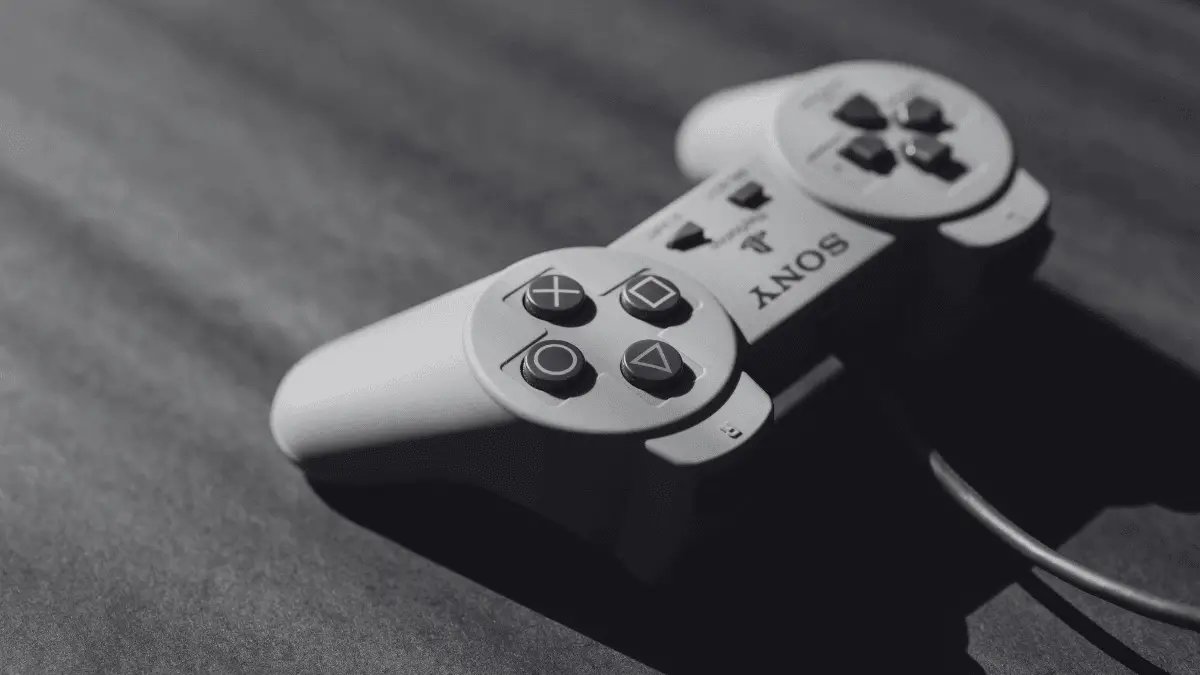
This is one place where the old version of this article compressed history too aggressively. The original PlayStation launched with a digital controller. Nintendo’s N64 arrived in 1996 with an analog stick built around 3D movement before Sony’s dual-stick design became standard.
Sony answered with the Dual Analog Controller in 1997 and then the DualShock, which combined two analog sticks with built-in vibration. That symmetrical twin-stick layout eventually became the PlayStation identity and one of the foundations of modern console controls.
It was not Sony inventing analog movement by itself. It was Sony seeing where 3D controls were heading, adding a second stick, adding vibration, and then refusing to let the basic shape die. Ape Escape eventually made the DualShock mandatory, which I get into more in my PS1 games that shaped modern gaming list.
CDs vs. Cartridges Changed More Than Storage
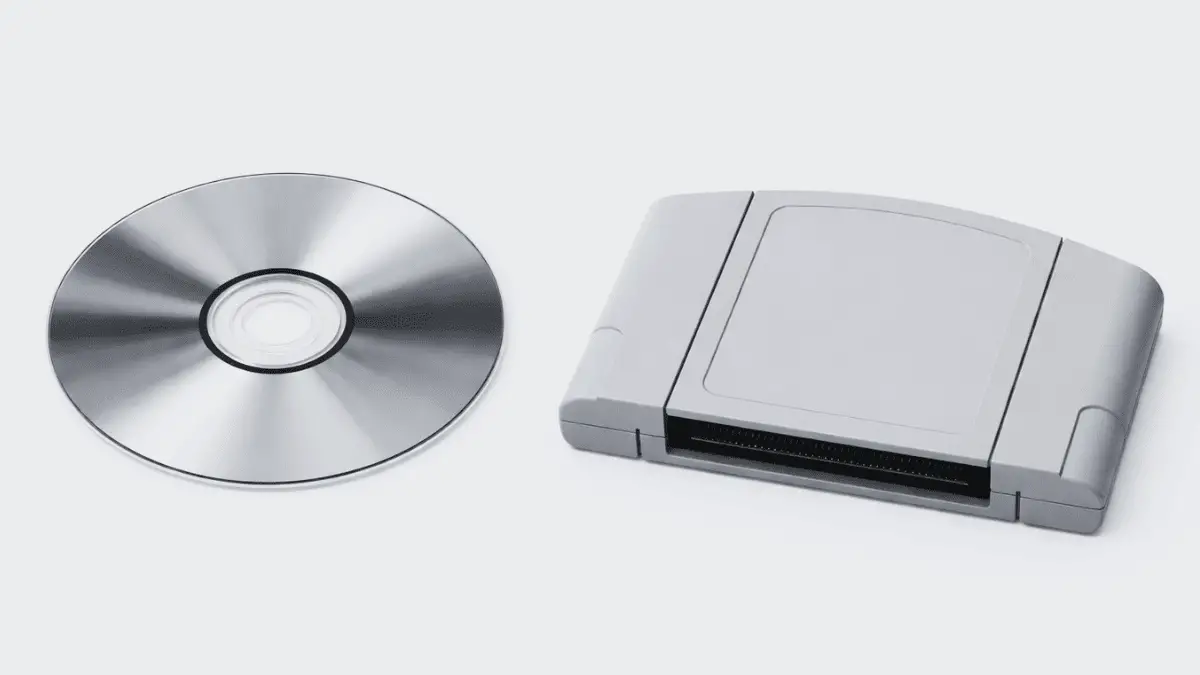
This was probably the cleanest business advantage Sony had. A PlayStation CD could hold roughly 650MB. Commercial N64 cartridges ranged up to 64MB, and many were far smaller.
The cartridge had a real advantage: extremely fast access with none of the CD seek times that gave us an entire generation of loading screens. But capacity mattered more and more as games added CG video, voice work, large audio assets, pre-rendered backgrounds, and increasingly bulky 3D content.
Nintendo’s hardware was not “wrong” for using cartridges. Games like Super Mario 64 and Ocarina of Time are fairly convincing evidence that the format could produce masterpieces. The problem was what cartridges asked publishers to sacrifice in storage, cost, and inventory flexibility.
The Economics Made PlayStation Safer for Publishers
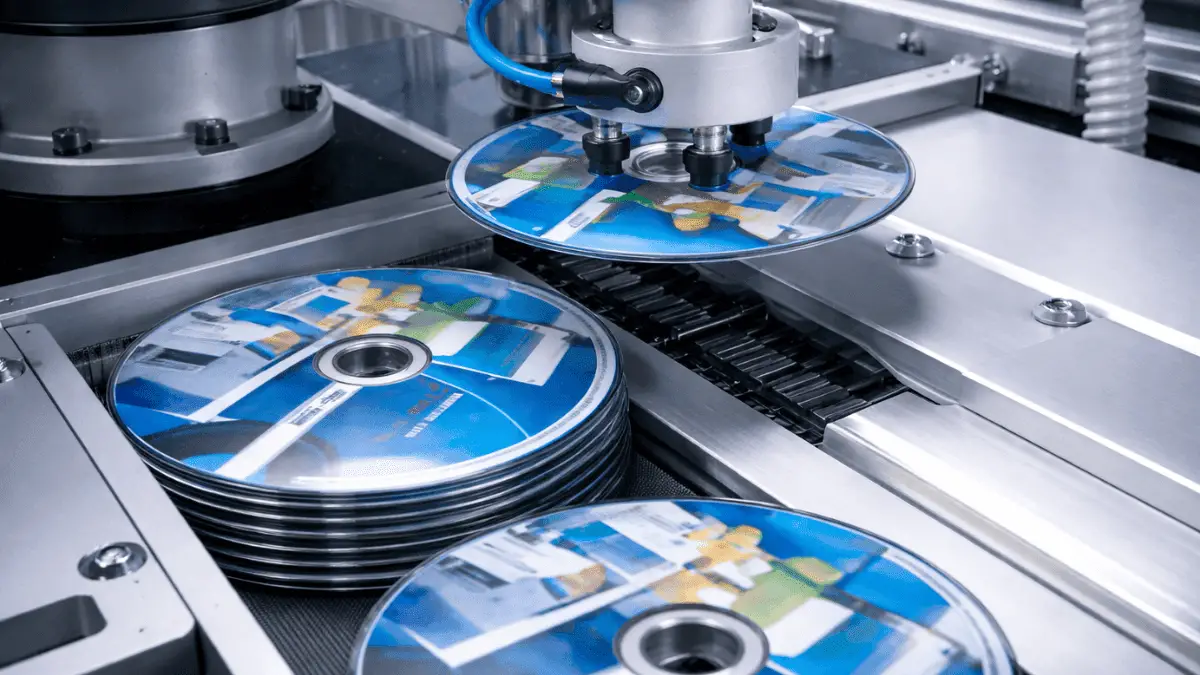
The original article gave this a neat “$1 CD versus $25-$30 cartridge” comparison. The cartridge side is backed by period accounts, but the exact CD figure changes depending on what costs you include, so I would rather not turn a messy supply chain into one magic number.
The important difference is solid. Former Sony executive Jim Whims later recalled ROM-cartridge reorder cycles taking three to four months and cartridges costing publishers roughly $20-$30 each. CDs could be reproduced much more cheaply and in smaller, faster batches. WIRED’s oral history of the era captures why that mattered to third parties.
That changes the risk of publishing a game. Order too many cartridges and you are sitting on expensive plastic nobody wants. Order too few and a hit can spend months waiting for another manufacturing run. Cheap optical media let publishers start smaller, replenish faster, and take chances on games that did not need to become Mario to justify existing.
Then the Third Parties Started Moving
This is where all those smaller advantages started multiplying each other. Sony actively courted outside developers because it did not have Nintendo’s first-party history or Sega’s arcade empire to lean on. WIPO’s history says more than 100 publishers signed with Sony, with hundreds of games planned or in development around the PlayStation’s early years.
Namco, Capcom, Konami, Square, and plenty of others gave the machine an identity that no single Sony studio could have created alone. Tekken, Resident Evil, Metal Gear Solid, Final Fantasy VII, Tomb Raider. The PS1 started feeling less like one company’s console and more like the place everybody was setting up shop.
Square’s move was the symbolic earthquake. Final Fantasy had been tied to Nintendo hardware, but Final Fantasy VII needed the storage for its CG-heavy presentation. Director Yoshinori Kitase later said the team chose a platform using higher-capacity CD media because they needed that space for the game they wanted to make. The final PlayStation release used three discs.
That single game did not “kill” the N64, and the N64 went on to have some of the most important games ever made. But it made Sony’s third-party momentum impossible to ignore.
Then Sony Said “$299”
The cleanest piece of PlayStation mythology is also basically true.
At the first E3 in May 1995, Sega announced that the Saturn was available in the United States for $399. Later, Sony Computer Entertainment America’s Steve Race walked to the podium during Sony’s presentation, said “299”, and left. Contemporary coverage from The Washington Post recorded the $100 gap at the time.
A hundred dollars is a lot of money now. In 1995 it was the kind of difference that could choose the console for you before you even reached the games aisle.
The Library Became the Snowball
The PS1 eventually received well over 4,000 games worldwide. The Nintendo 64 had 388 officially released games. Counting libraries across regions is always a little messy, but the scale of the gap is not.
The N64 also arrived later. In Japan it launched in June 1996, roughly eighteen months after PlayStation. In North America it arrived in September 1996, about a year after the PS1. That gave Sony time to build an install base and publisher relationships before Nintendo’s new machine reached the same shelves.
Then the loop feeds itself. More players attract more publishers. More publishers create more games. More games attract more players. By the time somebody asks which box has the RPGs, horror games, racers, fighters, weird experiments, cheap licensed games, and one title where a guy fights with a fish, the answer is increasingly just “the PlayStation aisle.”
That enormous library is also why I keep finding things I missed. My PS1 hidden gems list exists because no normal human being was going to keep up with all of it.
Sony Made Gaming Look Older Without Making It Boring
The business strategy would have mattered less if PlayStation looked like another toy fighting for shelf space. Sony’s marketing pushed in a different direction. Clubs, music, strange advertising, fashion, older teenagers, young adults. The PlayStation was sold as something that belonged next to the rest of youth culture.
That was a major change in tone. The Associated Press’s 30-year PlayStation retrospective describes Sony as deliberately targeting teens and young adults and helping pull gaming further into mainstream culture.
It matched the software. Wipeout looked like it had escaped from a nightclub flyer. Resident Evil was horror. Metal Gear Solid wanted to be cinema until it remembered it could read your memory card. Gran Turismo sold car obsession with the seriousness of a hobby. Sony was not abandoning younger players. It was making the audience feel wider.
Winning Did Not Mean the PS1 Was Best at Everything
This is the part console-war history tends to flatten.
- Nintendo 64: stronger raw CPU performance, hardware texture filtering, four-controller support, instant cartridge access, and first-party 3D design that produced games like Super Mario 64 and Ocarina of Time.
- Sega Saturn: exceptional 2D capabilities, brilliant arcade conversions, and hardware that could be extremely impressive once a studio knew how to use it.
- PlayStation: weaker in some individual areas, but easier to build a business around and good enough technically to let developers chase the new 3D market.
That last point is the thesis. Sony did not need every specification trophy. It needed the combination that publishers, developers, retailers, and players could all say yes to at the same time.
PS1 vs. N64 vs. Saturn FAQ
Why did the PS1 beat the Nintendo 64?
The biggest advantages were Sony’s earlier market arrival, lower-risk CD manufacturing, much greater disc capacity, aggressive third-party support, and a far larger software library. Nintendo 64 hardware had major technical strengths, but cartridges made publishing more expensive and limited storage.
Why did the PlayStation beat the Sega Saturn?
Price and development complexity mattered enormously. The Saturn launched in the U.S. at $399 while PlayStation launched at $299. Saturn’s multi-processor architecture could be powerful, but extracting that performance was more complicated, while Sony aggressively courted third-party developers with tools and favorable economics.
Was the Nintendo 64 more powerful than the PS1?
In several important hardware areas, yes. The N64 had a much faster CPU, more RAM, perspective-correct texture mapping, filtering, and a Z-buffer. But “more powerful” does not mean better at every workload, and the cartridge format created storage and business disadvantages that raw specifications could not solve.
How many PlayStation 1 consoles were sold?
Sony’s historical production figures put the original PlayStation and PS one family at 102.49 million units shipped worldwide. That made it the first home console to pass 100 million units.
Can you still play PS1 games easily in 2026?
Yes. Original hardware, PS2 and PS3 consoles, selected PS1 Classics on modern PlayStation hardware, and PC emulation are all options. My beginner’s guide to playing PS1 games in 2026 compares them without assuming you already own a closet full of adapters.
Playstation vs. N64 vs. Sega Saturn, the PS1 won.
The more I look at the fifth generation, the less I think the PlayStation won because of one killer decision.
It was $100 cheaper than Saturn. CDs held more than cartridges and were cheaper to reproduce. Developers got approachable tools. Publishers got lower inventory risk. Sony chased third parties because it had to. The N64 arrived later. Marketing made the whole thing feel like culture instead of another toy aisle.
None of those wins the generation by itself. Put them together and suddenly the electronics company that was supposed to be the outsider has 102 million consoles in the world.
And that might be the most PlayStation thing about the PS1. It was not perfect. The textures wobbled, the load screens were real, the memory cards vanished exactly when you needed them, and somehow the whole package landed in the right place at the right time.
If this sent you back into PS1 mode, my piece about the gaming memories we buried is the emotional side of the same era. The hardware explains why PlayStation won. The memories explain why anybody still cares.