The PS1 library was so large that even diehard fans had no realistic way to play everything, and decades later, some of its best PS1 hidden gems are still buried beneath the names everyone remembers. Each PS1 hidden gem on this list still offers something worth experiencing today.
Some were overshadowed by blockbusters like Crash Bandicoot and Final Fantasy VII. Others were buried under the constant flow of new releases arriving month after month. A PS1 game could be excellent and still barely get noticed.
These ten games all tried something memorable during a time when developers were still figuring out what 3D games could be. Some have aged more gracefully than others, but every entry still gives you a reason to return in 2026.
How I chose these games: I focused on PS1 releases that were overshadowed during their original run, still offer something distinctive, and remain enjoyable beyond nostalgia. Every screenshot in this article comes from gameplay I captured myself.
Last checked: August 18, 2026. Modern availability can change as games enter or leave digital storefronts.
Table of Contents
1. Klonoa: Door to Phantomile
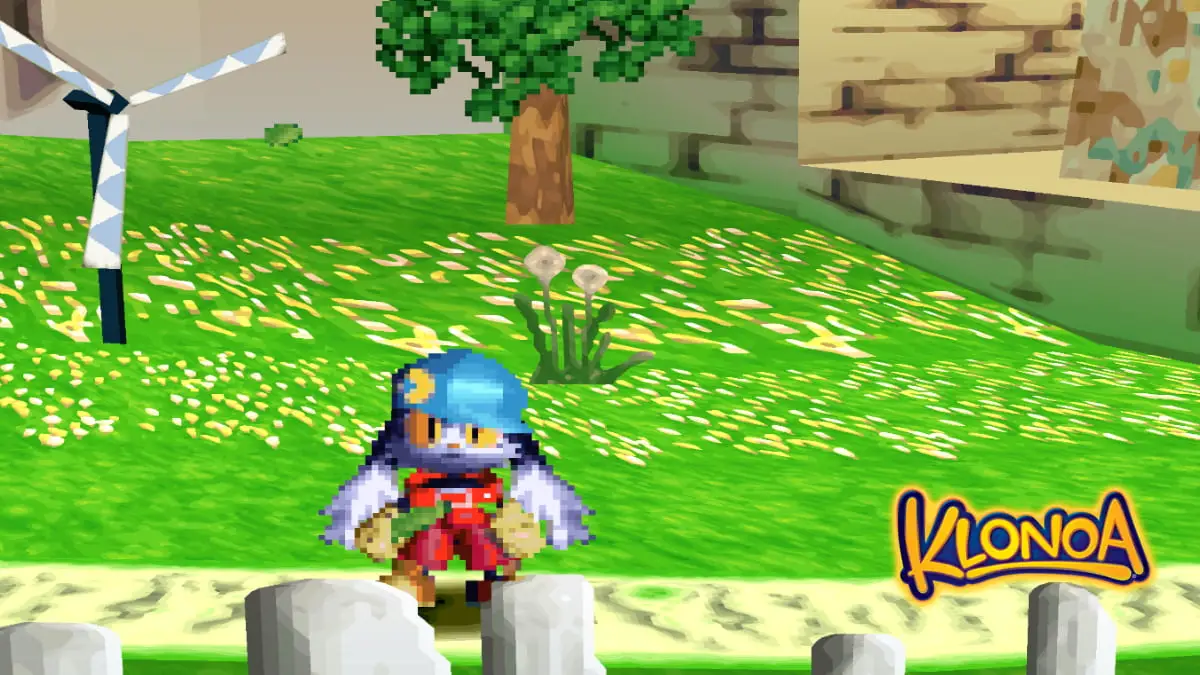
Image captured by WornOutWill. Characters and trademarks belong to their respective owners.
A dreamlike 2.5D platformer packed with heart and imagination
Best for: platformer fans who want creativity and story without a huge time commitment
Biggest drawback: experienced platformer players may find the main adventure fairly easy
Klonoa: Door to Phantomile is one of those games that reminds you why you fell in love with gaming in the first place. It blends beautiful dreamlike visuals with clever level ideas in ways that still impress. Set in Phantomile, a surreal world built from dreams, you explore floating ruins, winding forests, and whimsical villages connected by a soft storybook atmosphere.
The Wind Bullet mechanic lets Klonoa grab enemies, throw them at obstacles, and use them for double jumps. The game constantly introduces new twists on this simple idea through stages that curve, wrap, and bend around the environment. Just when you think you have the mechanic figured out, the next level surprises you.
What truly elevates Klonoa is its emotional depth. The story starts cute and lighthearted, but it evolves into something surprisingly powerful. The ending lands much harder than the opening hours prepare you for, helped by expressive animation and a beautiful soundtrack.
How to play it today: The original PS1 version remains worth experiencing for its presentation. For easier access, Klonoa Phantasy Reverie Series includes a remastered version on PC, Nintendo Switch, PS4, PS5, Xbox One, and Xbox Series X|S.
2. Alundra
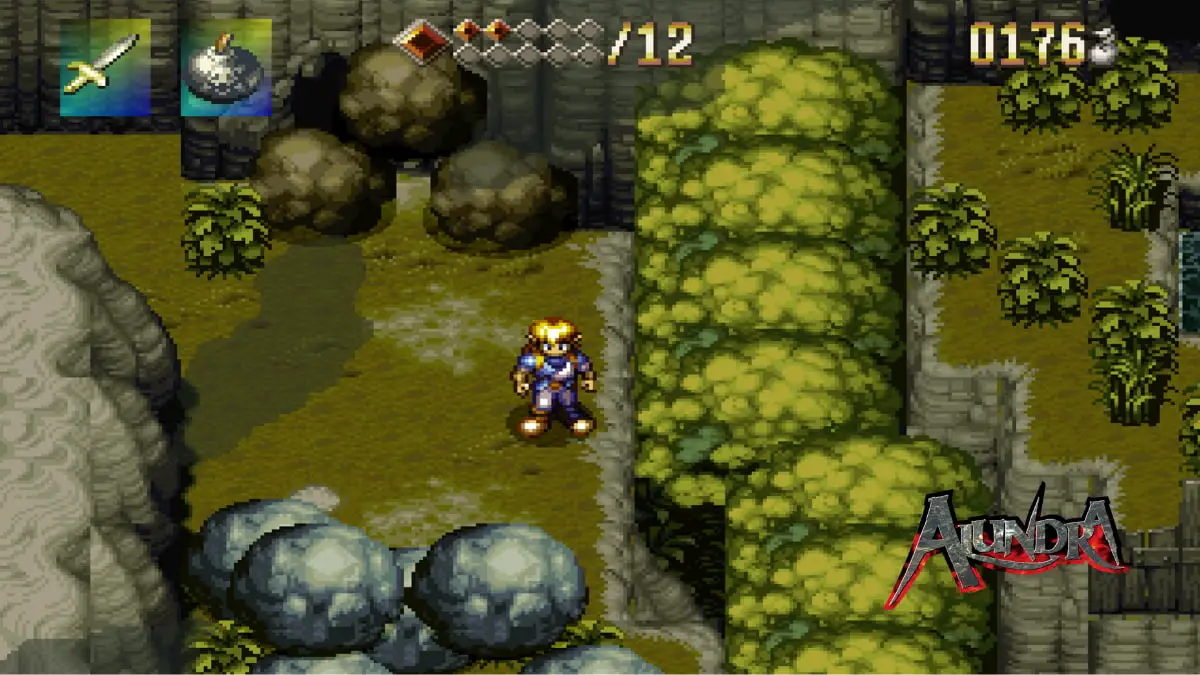
Image captured by WornOutWill. Characters and trademarks belong to their respective owners.
A dark Zelda-style adventure with emotional depth and gorgeous 2D art
Best for: Zelda fans who want harder puzzles and a darker story
Biggest drawback: the perspective can make a few jumps and puzzle solutions harder to read than intended
Alundra is one of the most thoughtfully designed action-adventure games on the PS1, yet it remains strangely overlooked. You play as a dreamwalker who enters the nightmares of villagers to uncover a tragic curse spreading through the town of Inoa. These dream segments serve as surreal dungeons filled with symbolism and genuinely challenging puzzles.
The overworld uses handcrafted 2D art that has aged extremely well. Every cave, home, and cliffside feels purposefully designed. Inoa itself evolves as the story progresses, with new dialogue and emotional developments that reflect the events taking place. It gives the entire world a grounded, living feel.
The puzzles are some of the most sophisticated on the system. They demand logic and precision, making them genuinely rewarding to solve. This is the game I would hand to someone who likes classic Zelda but wants puzzles that can actually stop them for a while.
What sets Alundra apart is its willingness to explore mature themes. It deals with loss, mortality, and destiny with a level of seriousness rarely seen in its era. Characters die, story arcs carry weight, and the writing is surprisingly grounded. It remains an essential experience for players who want an atmospheric adventure with depth.
How to play it today: Alundra has no current PC or modern-console rerelease. The practical route is an original PS1 copy, either on original hardware or through a compatible emulator using your own disc. My DuckStation setup guide explains the emulator side.
3. Einhänder
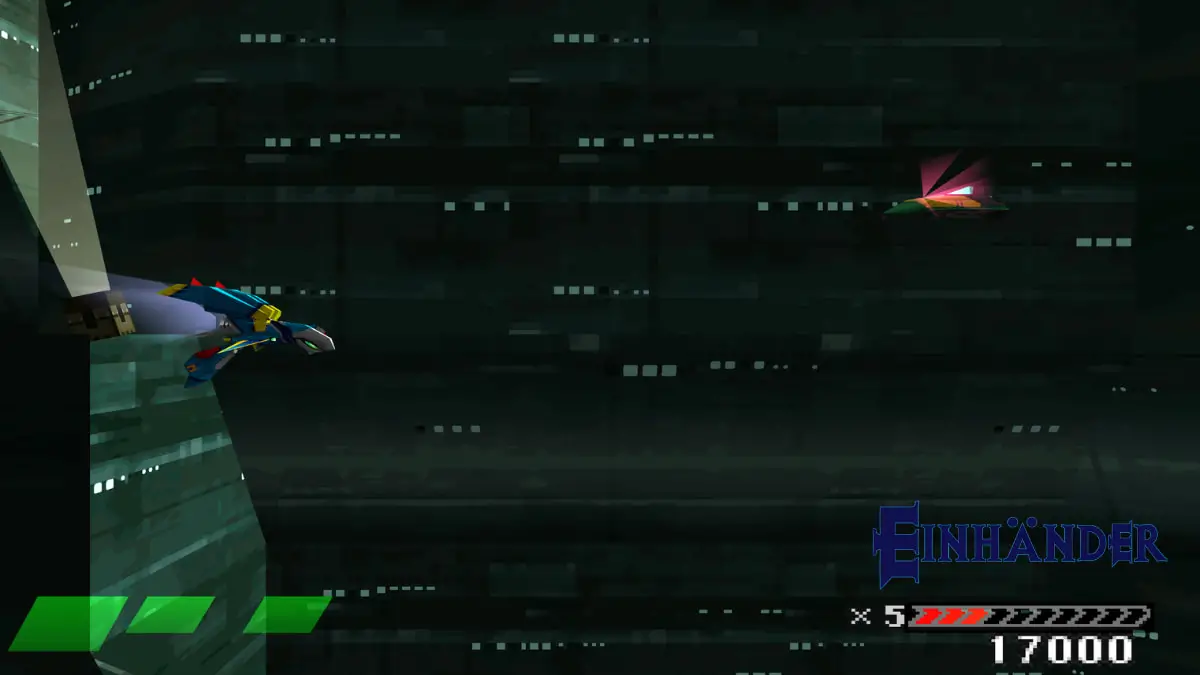
Image captured by WornOutWill. Characters and trademarks belong to their respective owners.
A sleek science-fiction shoot-’em-up from Square
Best for: shoot-’em-up fans who enjoy adapting their weapons during a run
Biggest drawback: the difficulty rises quickly and leaves little room for careless mistakes
Einhänder is one of the most technically impressive shooters on the PS1, and yes, it is from Square. The same studio known for Final Fantasy delivered a fast, aggressive shoot-’em-up that still looks stylish today. You pilot a futuristic fighter in a war between Earth and the Moon, moving through neon cities, mechanical factories, and massive war machines that fill the screen.
The Gunpod system is the star here. You can steal enemy weapons mid-battle and attach them to your ship in different positions. It is the mechanic that keeps Einhänder from feeling like another shooter where memorizing the stage is the entire game.
Levels stay fresh from start to finish. One moment you are weaving through industrial machinery, and the next you are flying over a city engulfed in combat. Boss fights are cinematic, with shifting attack patterns and screen-filling designs.
The electronic soundtrack perfectly matches the pace, boosting both tension and style. Einhänder remains one of the most polished and memorable shooters of its generation.
How to play it today: Einhänder has no current worldwide PC or modern-console rerelease. The original PS1 disc remains the most reliable way to play it legally, either on original hardware or through a compatible emulator.
4. Colony Wars
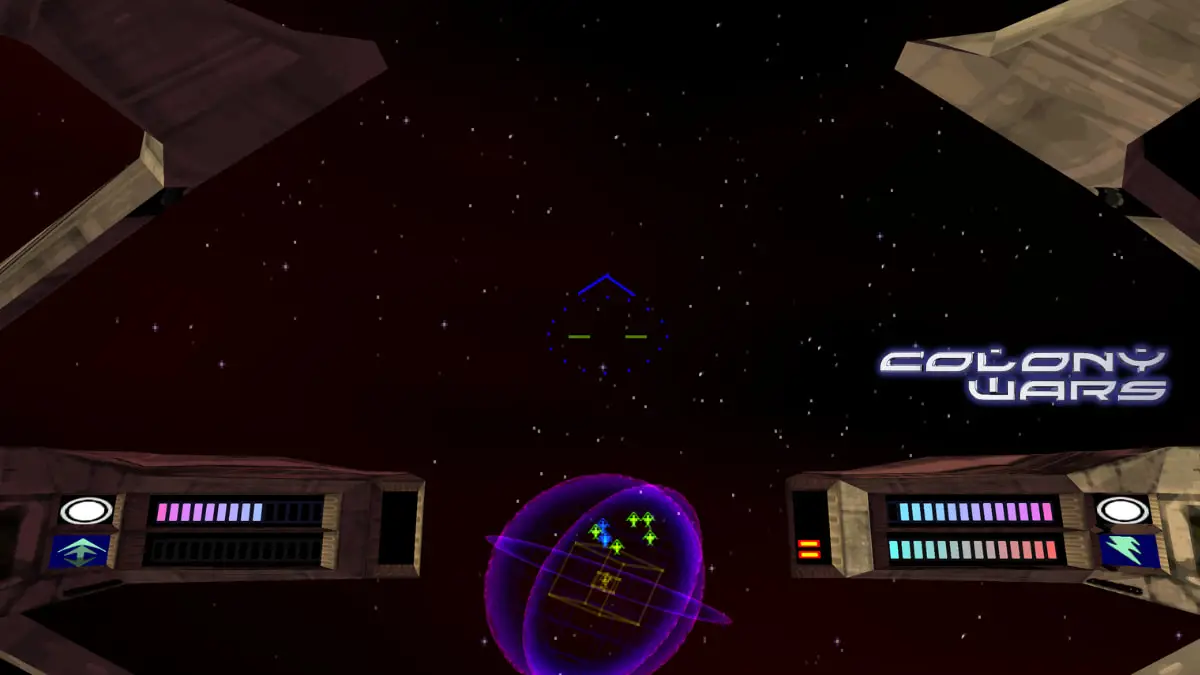
Image captured by WornOutWill. Characters and trademarks belong to their respective owners.
A branching, story-rich space combat epic
Best for: players who want a campaign where failed missions still shape the story
Biggest drawback: the controls take time to learn if you are used to modern space games
Colony Wars is an ambitious space combat simulator that allows the story to change based on your mission performance. This was 1997, and the game featured multiple story routes with completely different outcomes. You play as a pilot in the League of Free Worlds, fighting against an oppressive Earth Empire. Success and failure both lead to new missions instead of simple game overs.
The flight mechanics are smooth and intuitive. Each ship handles differently, and the variety of mission objectives keeps the campaign engaging. Escort missions, base assaults, defense roles, and large-scale battles make you feel like part of something bigger.
High-quality voice acting and cinematic cutscenes help create a believable universe. Asteroid fields, space stations, and massive fleets all contribute to the sense of scale and immersion.
The branching campaign is what makes Colony Wars worth returning to. Failing a mission does not always stop the game. It can push the war in a different direction, which makes a bad performance feel like part of your story instead of a screen asking you to reload.
How to play it today: Colony Wars has no current PC or modern-console rerelease. You will need an original PS1 copy, either for original hardware or a compatible emulator.
5. Brave Fencer Musashi
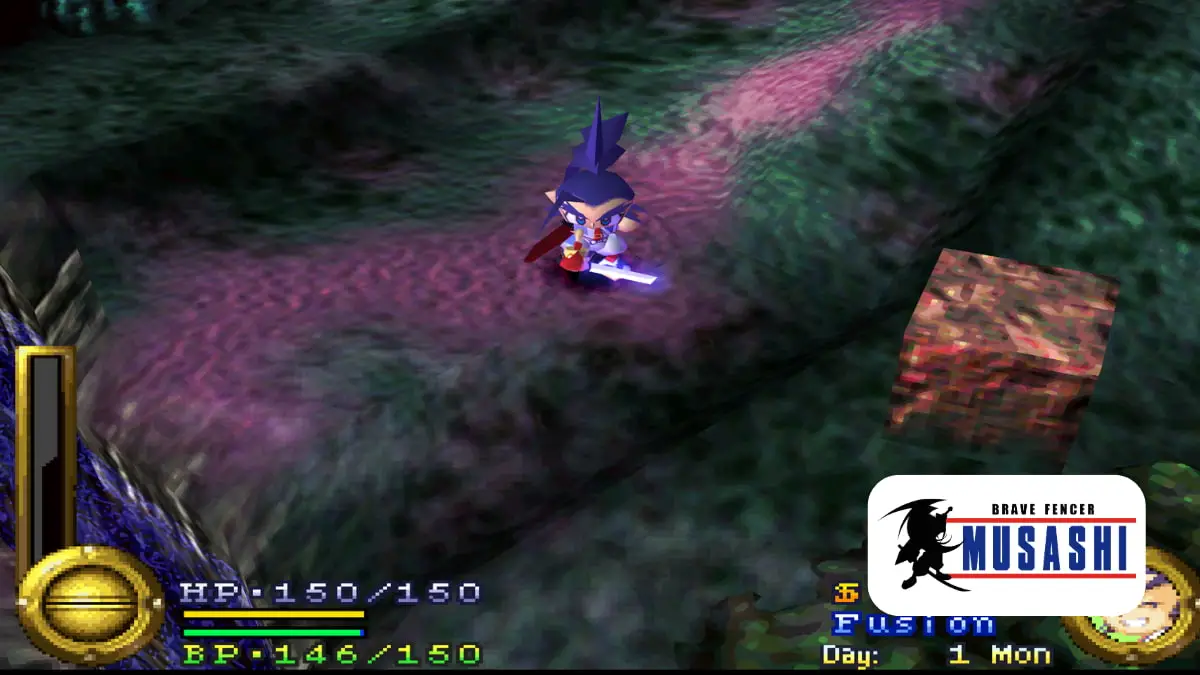
Image captured by WornOutWill. Characters and trademarks belong to their respective owners.
A quirky, action-packed adventure with personality
Best for: action RPG fans who enjoy strange characters and interconnected systems
Biggest drawback: the day-night schedule and fatigue system can interrupt your momentum
Brave Fencer Musashi is an action-adventure filled with humor, charm, and memorable moments. You play as Musashi, a small but talented swordsman summoned to defend the Allucaneet Kingdom. You can tell immediately that the game has a playful tone. The kingdom is called Allucaneet and the villainous empire is named Thirstquencher.
The game blends combat, platforming, puzzles, and RPG systems into a lively experience. A real-time day-night cycle affects everything. Shops close, characters sleep, and certain events only occur at specific times. I love how much life this gives the town, even when waiting for a shop to open tests my patience.
Combat is fast and satisfying. Musashi wields two swords and can absorb enemy abilities, allowing for creative strategies. The boss battles are full of personality and clever set pieces.
Brave Fencer Musashi is colorful, energetic, and full of charm. It is one of Square’s most overlooked PS1 titles and a fantastic adventure for anyone who enjoys action games with personality.
How to play it today: Brave Fencer Musashi has no current PC or modern-console rerelease. An original PS1 copy remains the practical option for original hardware or a compatible emulator.
6. Tomba!
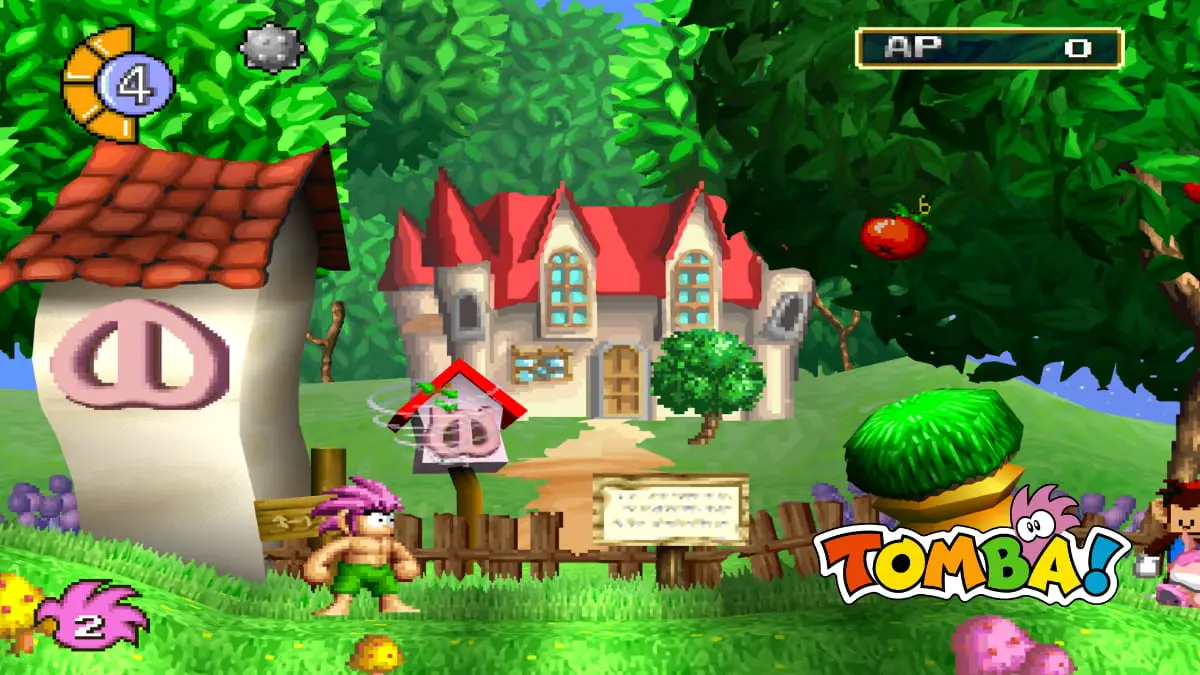
Image captured by WornOutWill. Characters and trademarks belong to their respective owners.
A bizarre platformer and RPG hybrid full of surprises
Best for: players who enjoy platforming, exploration, and small quests constantly overlapping
Biggest drawback: the event system can leave you unsure which objective should come next
Tomba! stands out because of its pure creativity and unconventional ideas. You play as a wild boy trying to defeat the Evil Pigs who cursed the land. The world is filled with bright colors, quirky characters, and loads of secrets.
The game mixes side-scrolling platforming with RPG-style progression. Instead of simple stages, you complete dozens of events that act as quests. These events range from small tasks to major objectives that unlock new areas and change the world around you.
Exploration is always rewarding. Hidden items, branching paths, and secret challenges encourage you to experiment. The part I appreciate most is how often completing one event quietly changes something somewhere else, giving you a reason to revisit areas instead of treating them like finished levels.
Tomba! remains one of the most imaginative and distinctive games from the PS1 era. It is charming, strange, and constantly surprising.
How to play it today: Tomba! Special Edition brings the game to PC, PS4, PS5, Nintendo Switch, and Nintendo Switch 2 with save-anywhere and rewind features. The original PS1 version is still worth playing if you want its original presentation.
7. Silhouette Mirage
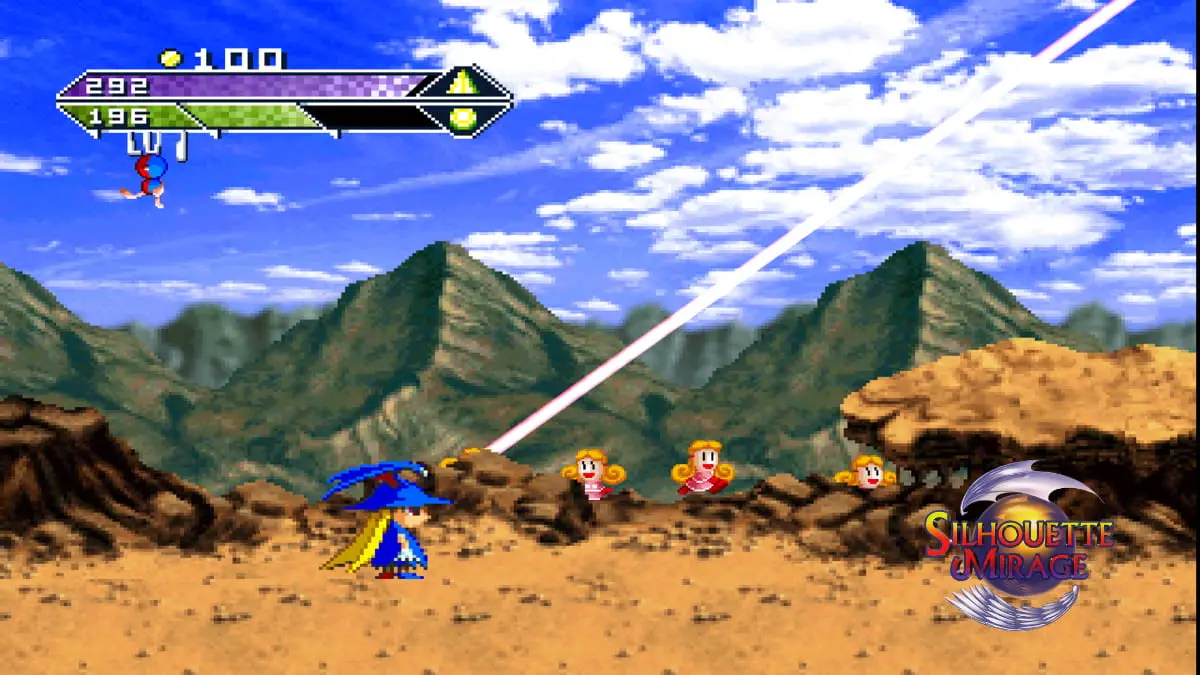
Image captured by WornOutWill. Characters and trademarks belong to their respective owners.
A dual-attribute action game with clever combat
Best for: action fans who want a combat system built around positioning and quick decisions
Biggest drawback: the North American release is noticeably harsher than the Japanese version
Silhouette Mirage features one of the most inventive combat systems on the PS1. You play as Shyna, a messenger with two opposing energies: Silhouette and Mirage. Facing one direction activates one attribute, while facing the other activates its opposite. Enemies also have these attributes, and the direction you face determines how much damage you do.
This creates strategic encounters. You might need to reposition yourself, weaken specific enemies, absorb energy, or use special techniques to deal with different enemy groups. It takes time to stop thinking of direction as simple movement and start treating it like part of your weapon selection.
The sprite animation is expressive and colorful, and the tone is playful despite the combat depth. Boss fights are memorable and often require both strategy and reflexes.
The North American version was made harder than the original Japanese release, so it is tougher than expected. If you enjoy challenging action games with unique mechanics, Silhouette Mirage is a great fit.
How to play it today: Silhouette Mirage has no current PC or modern-console rerelease. The PS1 and Sega Saturn versions differ, so check which release you are buying before tracking down an original copy.
8. Tobal No. 1
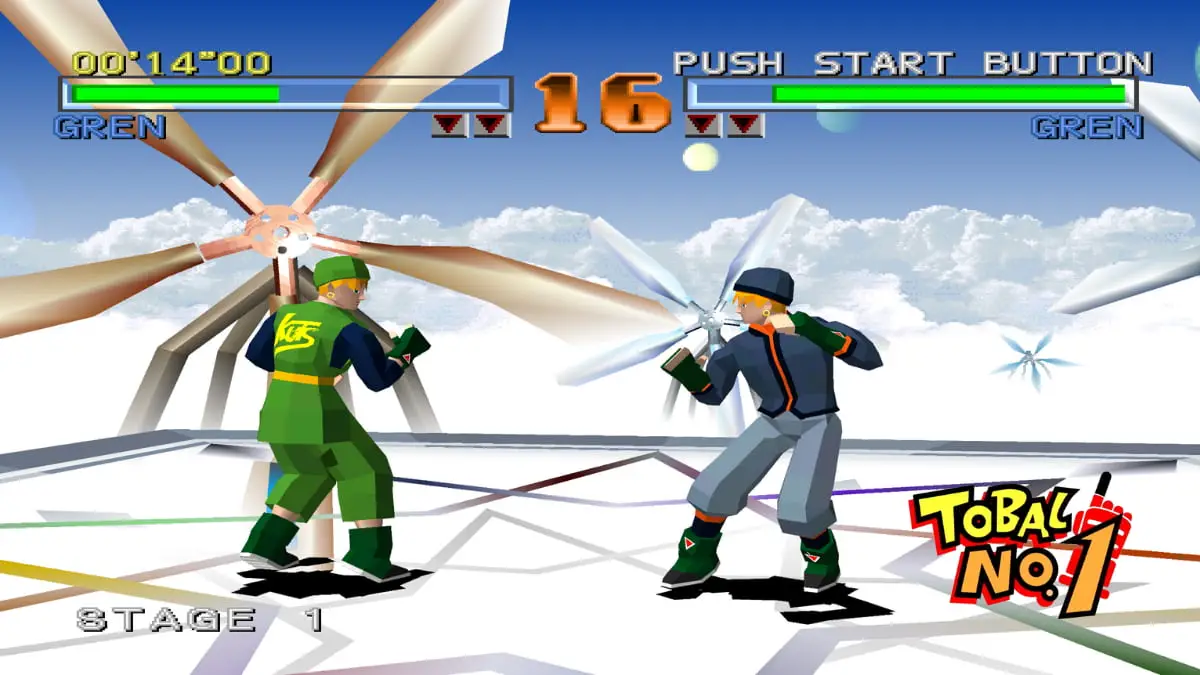
Image captured by WornOutWill. Characters and trademarks belong to their respective owners.
An experimental 3D fighting game with RPG flavor
Best for: fighting game fans interested in an unusual solo Quest Mode
Biggest drawback: the dungeon crawling becomes repetitive before the fighting system does
Tobal No. 1 is an experimental fighting game that includes both standard matches and a full Quest Mode. In Quest Mode, you explore dungeons, fight monsters, gather items, and unlock new characters.
The fighting system is smooth and responsive. The game runs at 60 frames per second, giving it crisp movement and fluid animation. The untextured polygon aesthetic gives the visuals a clean look that has aged decently well.
Character designs by Akira Toriyama give the roster a distinctive style. Quest Mode is the reason I would revisit it now. It is rough around the edges, but the idea of taking a fighting game character through a dungeon still feels strange in a way most modern fighters never attempt.
Tobal No. 1 rewards experimentation and stands as an interesting piece of PS1 history worth revisiting.
How to play it today: Tobal No. 1 has no current PC or modern-console rerelease. The original PS1 disc is still the version to seek out.
9. Future Cop: LAPD
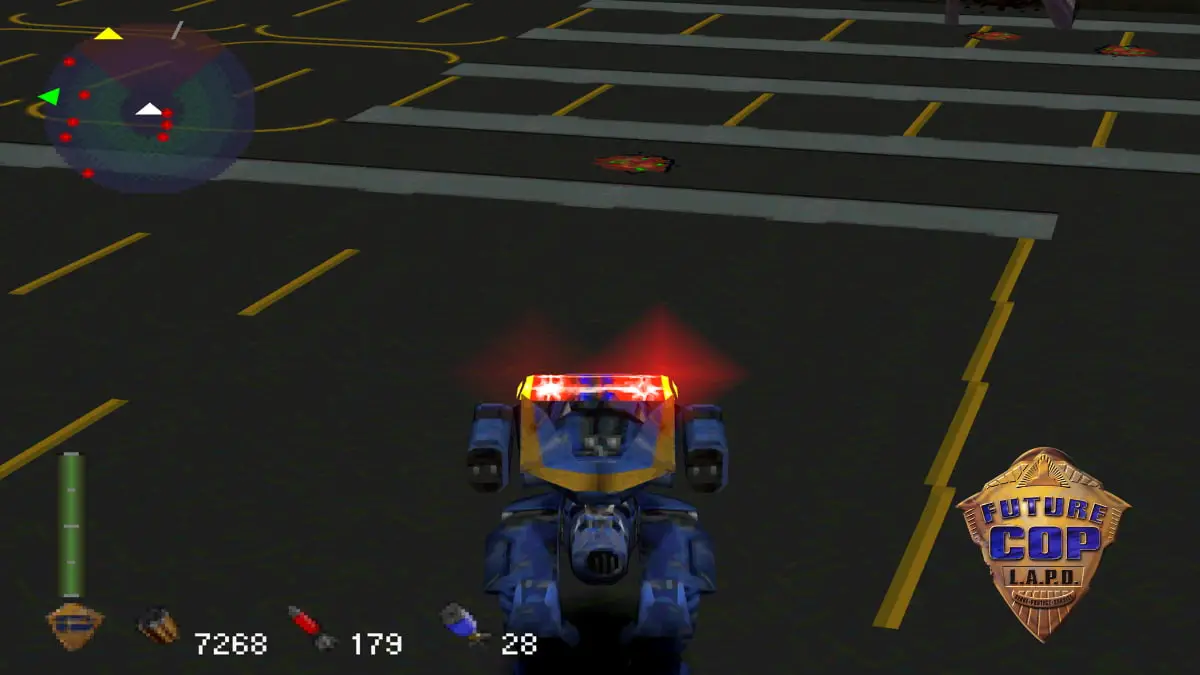
Image captured by WornOutWill. Characters and trademarks belong to their respective owners.
A mech shooter with a surprising strategic twist
Best for: players who want arcade mech action and a surprisingly deep two-player strategy mode
Biggest drawback: the camera and movement feel noticeably older than the ideas behind them
Future Cop: LAPD is a fun and fast mech action game set in a futuristic Los Angeles. You control the X1-Alpha, a transforming police vehicle that shifts between walker and hovercraft modes. Each form has different abilities, giving combat a dynamic feel.
The Crime War campaign is filled with action as you fight rogue machines, gangs, and large mechanical bosses. The environments include flooded streets, industrial complexes, and abandoned districts.
The standout feature is Precinct Assault. It is essentially an early version of a lane-pushing strategy mode. You capture bases, deploy units, control lanes, and work to destroy your opponent’s headquarters. This is the mode that turns Future Cop from an interesting campaign into a game I would still pull out for local multiplayer.
With both cooperative and versus modes, Future Cop is a unique and entertaining hidden gem.
How to play it today: Future Cop: LAPD has no current official PC or modern-console rerelease. Original PS1 and older PC copies are the available versions to look for.
10. Omega Boost
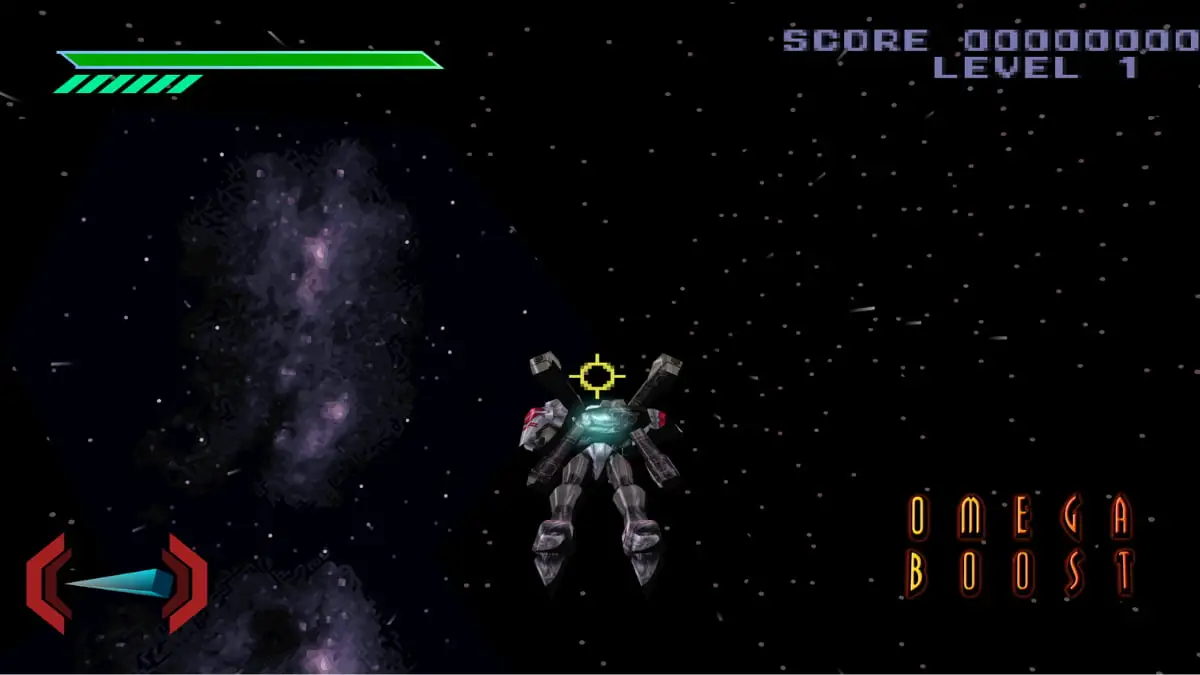
Image captured by WornOutWill. Characters and trademarks belong to their respective owners.
A fast rail shooter from the creators of Gran Turismo
Best for: mecha fans who want a short burst of fast, cinematic shooting
Biggest drawback: the campaign is short and does not have enough variety to hide it
Omega Boost is a stylish rail shooter that blends mecha design with fast-paced action. It was developed by Polyphony Digital, the same team behind Gran Turismo. You pilot the Omega Boost unit through futuristic stages filled with enemies and mechanical threats.
The lock-on shooting system is satisfying. You chain multiple targets and unleash rapid volleys of energy shots. Omega Boost is at its best when the camera swings around the action and makes a simple encounter feel much larger than it really is.
Mecha designs by Shoji Kawamori give the game a strong anime-inspired look. The soundtrack and effects complement the action well.
Omega Boost is short but memorable. It is a great choice for fans of mecha and science-fiction shooters who want something fast and stylish.
How to play it today: Omega Boost has no current PC or modern-console rerelease. The original PS1 disc remains the version to find.
What Makes a PS1 Hidden Gem Worth Playing Today?
The PS1 library is enormous and full of strange ideas that would be difficult to pitch today. These ten games did not all age perfectly. Some have awkward controls, sharp difficulty spikes, or systems that take too long to explain themselves. I would still rather revisit a game with a rough edge and a real identity than one I forget as soon as the credits roll.
If you are returning to the PlayStation after many years, start with the game that sounds least like something you already know. Klonoa and Tomba! are the easiest modern starting points, while Alundra, Einhänder, and Future Cop reward the extra effort needed to play them. That little bit of friction is often where the best PS1 discoveries begin.