Mega Man Legends has always felt larger than the game Capcom managed to ship. Apple Market is warm and memorable, Downtown stretches farther than its population can justify, and the ruins hint at a history the story barely has time to explain.
I felt that incompleteness long before I understood game development. As a kid, I wondered why so many shops were decorative or why entire districts had only a handful of people. The older I got, the more obvious the reason became. Capcom had imagined a world that its inexperienced 3D team and the original PlayStation could only partially realize.
That tension is part of what makes the game special. Mega Man Legends feels like a complete adventure built inside the outline of something much bigger.
The short version: Capcom created the world before fully understanding what the PlayStation could support. Most of the team was learning 3D development as it worked, and the core programming still required major attention late in production.
Last checked: August 18, 2026. This feature draws from translated 1997 developer interviews, contemporary concept material, and my own time returning to Kattelox Island.
Table of Contents
A Team Learning 3D While Building a Universe
For its time, Mega Man Legends looked great and played surprisingly well. The difficult part was that its team was learning how to make a 3D game while attempting one of Capcom’s most ambitious worlds.
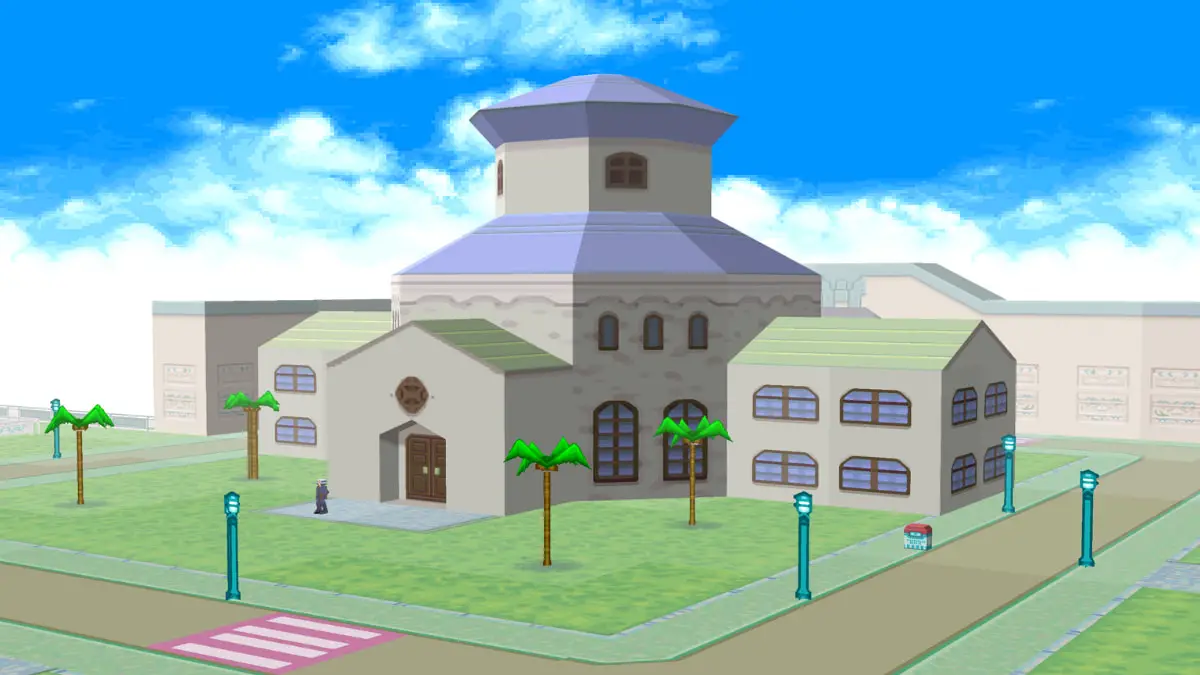
City Hall remains one of the most recognizable locations in Mega Man Legends. Image captured by WornOutWill.
In the translated developer roundtable from the Rockman DASH Capcom Official Guidebook, producer Keiji Inafune jokingly called the staff the “3D Amateurs” team. Background designer Miki Kijima said this was his first 3D project, while Inafune identified Reaverbot designer Yuuji Ishihara as the only member with previous 3D experience through his work on Resident Evil.
Kijima explained that the team had to research the technology together. By the time he felt comfortable with the process, the deadline had arrived. The roundtable also describes difficulties with hitboxes, walls, character movement, and balancing detailed models against what programmers could actually make work.
You can feel that instability when exploring Kattelox today. The strange sewer entrance in Downtown, the unused-looking power plant in Old City, and the short Main Gate finale all feel like pieces of a larger plan that ran out of room.
It feels like exploring a beautiful prototype held together by a team that refused to stop reaching.
A World Too Ambitious for the PlayStation
Capcom usually shaped a game’s world around the limits of its technology. Mega Man Legends reversed that process. The team imagined the setting first, then worked out how much of it the PlayStation could handle.
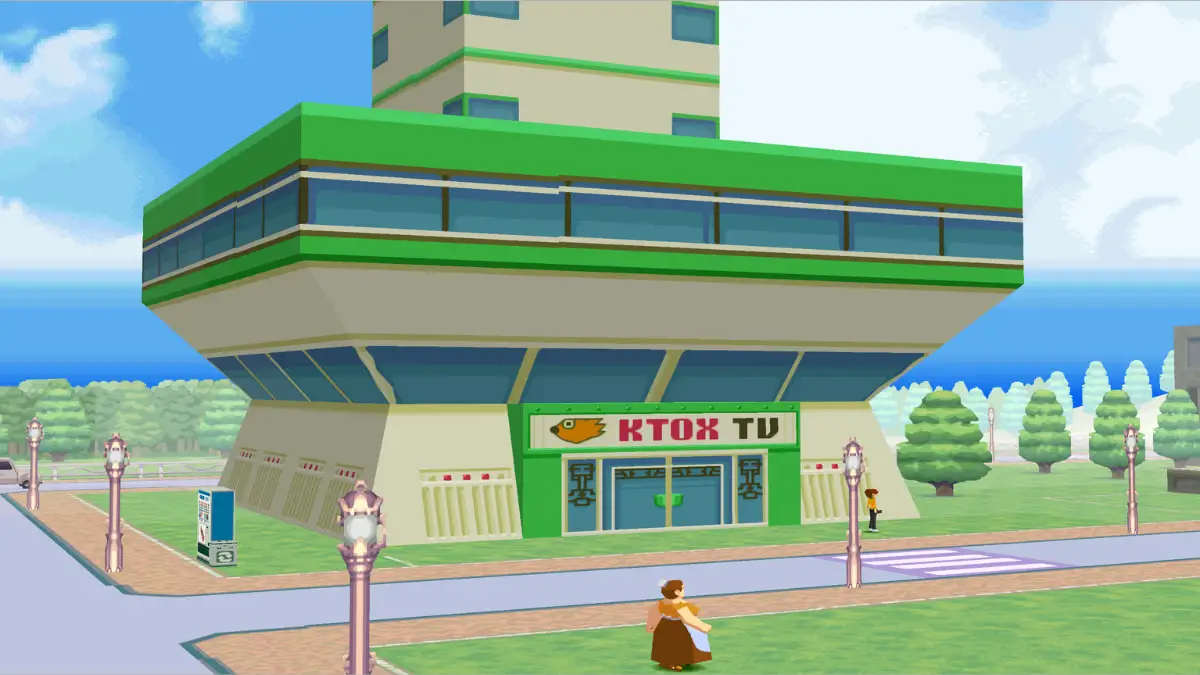
The KTOX television station gave Kattelox extra personality through its minigames. Image captured by WornOutWill.
Main programmer Masaru Ijuuin said the team did not know the PlayStation’s exact hardware specifications when development began. Director Yoshinori Kawano asked for a very large city, so Ijuuin prototyped one measuring roughly 600 square meters. The console could not handle it. The team reduced the scale and population, leaving Kawano wishing they could have included more people and more islands.
Why Kattelox can feel empty:
- Several NPCs share faces and character models
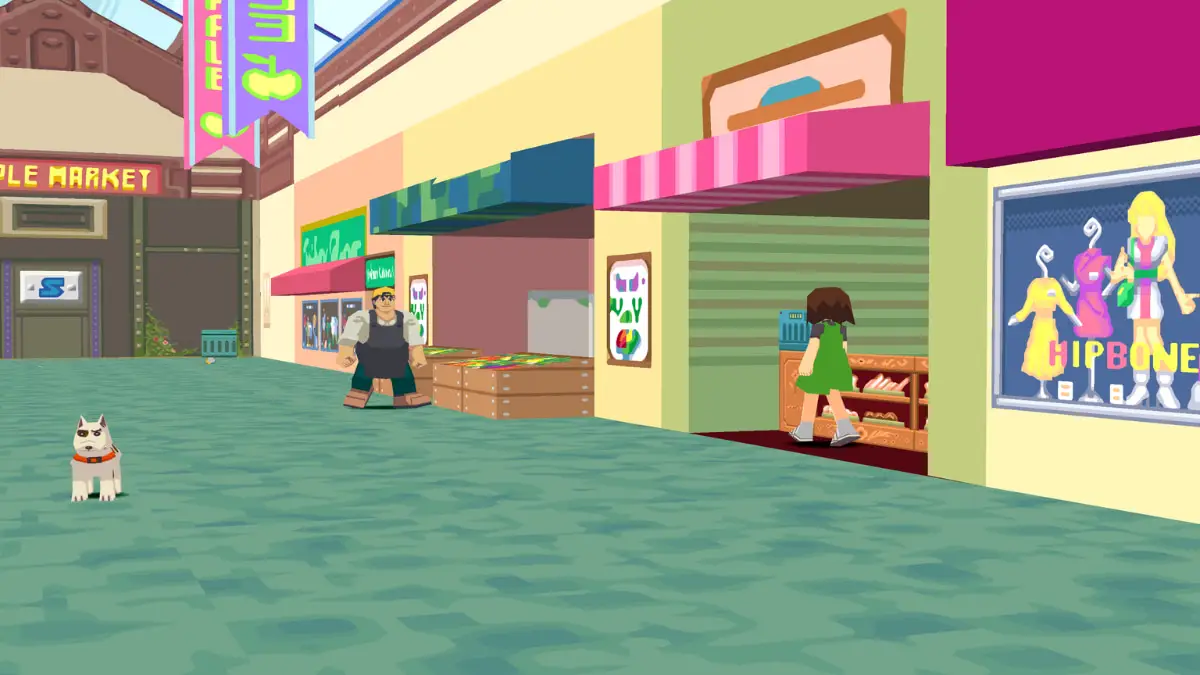
- Many storefronts are decorative instead of functional
- Districts reuse architectural elements
- The city’s size exceeds the number of people and activities filling it
Early concept illustrations reinforce the scale of the team’s imagination. The Rockman DASH Great Adventure Guide includes ideas for submerged ruins, cities built on giant gears, elevated pleasure gardens, crowded streets, and garbage-covered remnants of an older civilization. These images were exploratory rather than proof of finished areas removed from the game, but they show how broad the original vision was.
The finished game retains the same sense of possibility. Its locations feel as though they belong to a much larger world, even when the PlayStation can only show a small piece of it.
Why Mega Man Legends Feels Unfinished
The developer roundtable suggests the issue was less a late purge of finished content and more a production order that left essential work until the end. Ijuuin recalled that the team began with numerous sub-events, then realized much of the main programming still needed to be completed. Because those smaller systems were already interconnected, removing them would not have solved the underlying problem.
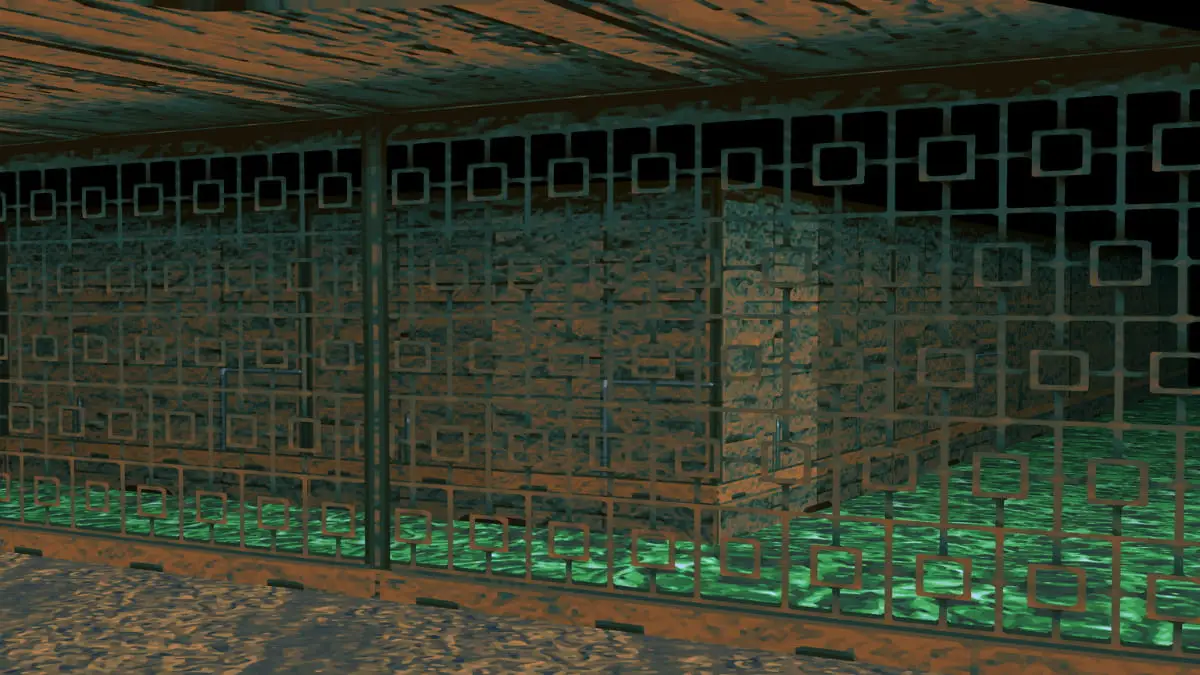
The Downtown sewer entrance still feels like it should lead somewhere more important. Image captured by WornOutWill.
Late in development, the team also devoted substantial effort to producing a fully polygonal promotional trailer. The choice helped unify the game’s anime-inspired presentation, but it consumed time and manpower during an already difficult production.
The result is a world with memorable details and an uneven sense of scale. Buildings repeat. NPCs share bodies and faces. Boss encounters are limited, and the story accelerates rapidly once Mega Man enters the Main Gate. Nothing is outright broken. The pieces simply suggest more connective tissue than the finished game can provide.
As a kid, I felt that emptiness without understanding it. As an adult, I can finally see the development story behind it.
Lore That Arrives Too Late and Too Fast
The lore beneath Kattelox is one of Mega Man Legends’ greatest strengths. Museum exhibits, library books, and ruins suggest an ancient civilization whose technology still controls the lives of everyone above it. Even the island’s paintings appear to preserve fragments of a conflict its present-day residents barely understand.
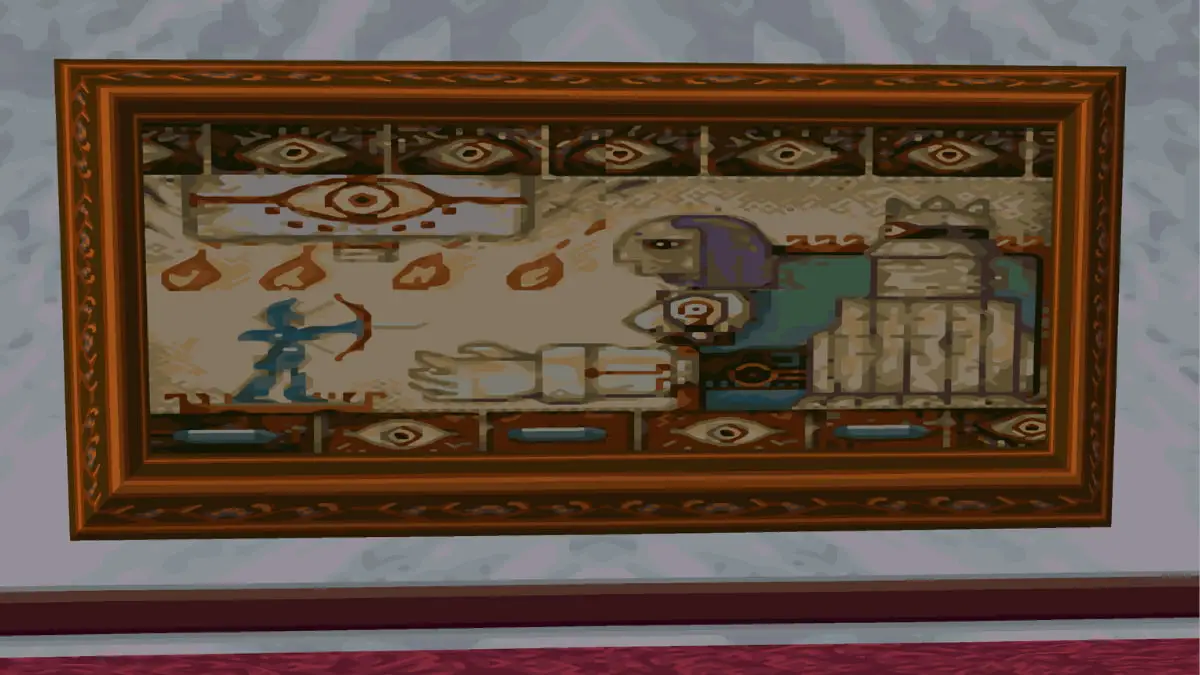
An ancient Kattelox painting hints at events the game explains much later. Image captured by WornOutWill.
Most of that history remains background texture until the final hour. Juno then introduces the Carbon Reinitialization Program, the Master’s System, and Mega Man’s original identity in a concentrated burst of exposition. The reveal is fascinating, but it arrives just as the adventure is ending.
Mega Man Legends 2 opens with another flood of mythology and spends much of its story expanding ideas the first game only introduced. I have always wished the original had eased players into those mysteries earlier. The final confrontation would have carried more weight, and the sequel could have spent less time catching us up.
Would a Fuller Vision Have Sold Better?
Technical limitations were only part of the problem. In a later reflection reported by Time Extension, Inafune argued that Capcom misread the audience. Mega Man was closely associated with younger players, while Legends pursued older fans interested in RPG systems and a deeper story. The new direction made the game harder to position.
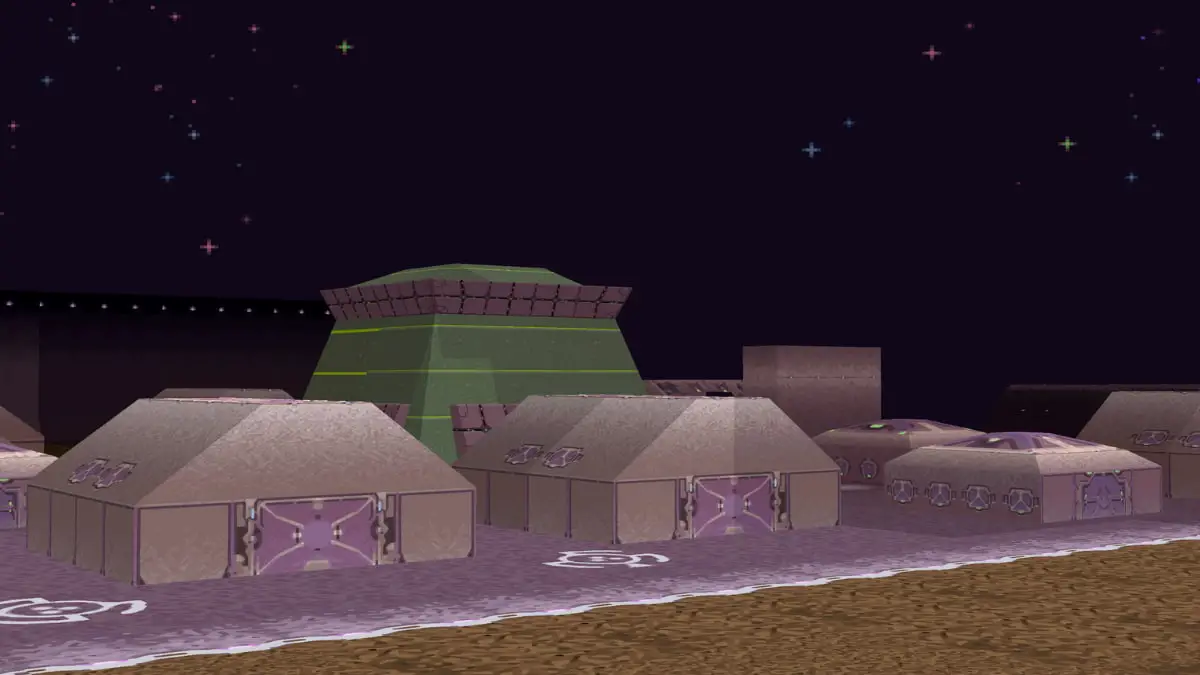
A Sub-City beneath Kattelox, home to ancient technology and Proto Reaverbots. Image captured by WornOutWill.
I still think Legends contained the ingredients to reach both audiences. Its accessible combat and expressive characters were easy to enjoy, while its ruins and upgrade systems gave older players something deeper to follow. A livelier Kattelox, stronger boss variety, and a story with more time to breathe might have made that combination easier to recognize.
Large, mysterious worlds were thriving in the late 1990s. Ocarina of Time, Final Fantasy VII, and Xenogears gave players scale and discovery in different forms. Mega Man Legends had its own version of that appeal. Its bright island towns and unsettling underground civilization felt unlike anything else on the system.
A fuller realization of Kattelox would not have guaranteed a hit. Marketing, audience expectations, and the shift away from traditional Mega Man still mattered. It might, however, have helped more players understand what Capcom was trying to build.
A Franchise That Deserved More
Mega Man Legends had heart to spare. What it lacked was time, broad 3D experience, and hardware capable of carrying the full scale of its ideas.
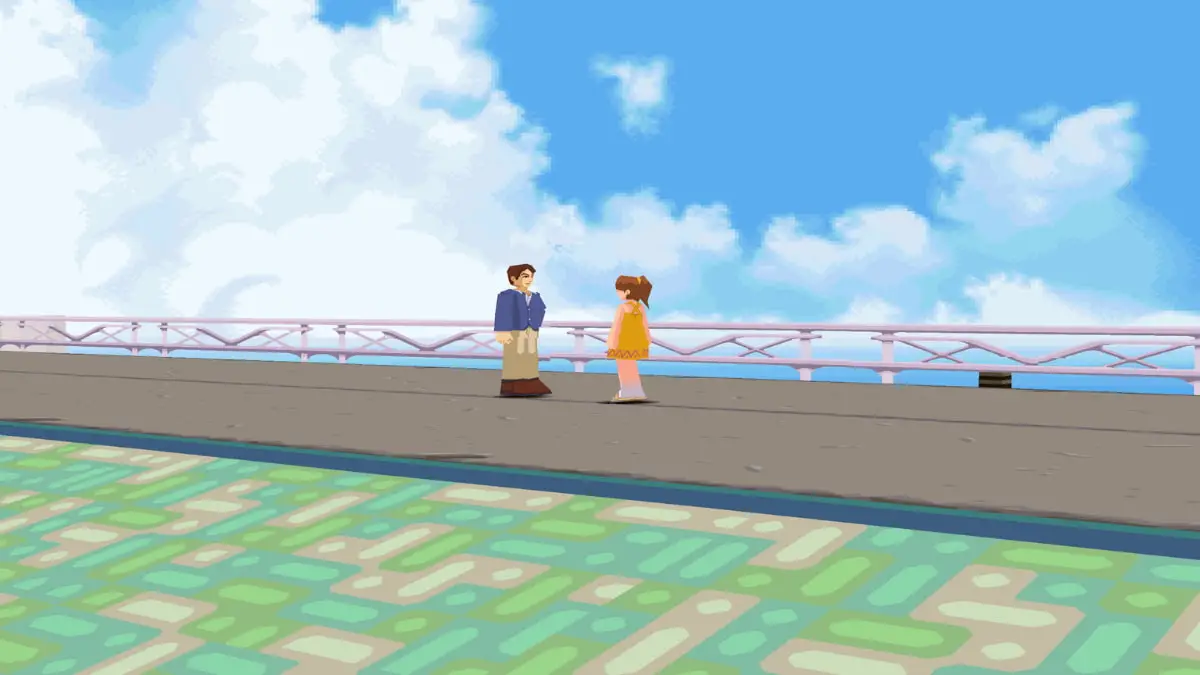
Two residents talking in Uptown, one of the small touches that gives Kattelox its charm. Image captured by WornOutWill.
Underneath the rough edges is a gripping story with unforgettable characters, a distinctive anime presentation, and a world that still feels full of unexplored possibilities. Even with its limitations, Legends remains one of the most magical and ambitious games I have played.
Its imperfections have become part of the memory. I still wander through Apple Market and wonder what might have filled the empty shops. I still enter the Main Gate wishing the mystery had another few hours to unfold. Few games leave me thinking about the world that exists beyond their boundaries for this long.
Mega Man Legends was a masterpiece constrained by time, technology, and circumstance. More than two decades later, Kattelox still feels like a place worth returning to.
If you enjoy returning to overlooked PlayStation games, my list of PS1 hidden gems covers ten more releases that deserve another look.
Sources and Further Reading
- Mega Man Legends: 1997 Developer Interviews, translated by Shmuplations
- Worlds of Possibility, translated concept material from the Rockman DASH Great Adventure Guide
- Inafune’s later reflection on the game’s audience, reported by Time Extension