Childhood gaming memories rarely return in an orderly way. Mine arrive as sounds, habits, and tiny flashes: the PlayStation startup shaking the house, a warm console that stayed on all night, or the sudden panic that I might not have saved before bed.
I grew up exploring with a Game Boy Advance and PS1 more often than I explored outside. Those worlds felt enormous. Decades later, the strangest parts are still with me. I remember finding a rare shiny Pokemon, wandering through Final Fantasy VII, and earning an awful headache because I refused to stop playing when the room went dark.
This list is about the personal rituals around those games. For the shared objects and moments that seemed to disappear from gaming culture, read the gaming memories we buried until now. Here, I am going back to the things I did, the things I worried about, and the habits that followed me into adulthood.
A quick note: This is a personal memory list, not a claim that every kid experienced the PS1 era the same way. If you rented games blindly, double-saved before bed, or watched someone else play for hours, you will probably recognize at least a few of these.
Last checked: August 20, 2026. The PlayStation startup credit and the eyesight section were reviewed during the WordPress migration.
Table of Contents
Why Childhood Gaming Memories Stay So Vivid
Games were attached to the physical world around them. A startup sound belonged to a particular television. A save point meant bedtime was coming. A rental case carried the pressure of knowing the game had to go back in a few days. The memory is rarely just the game. It is the room, the people, and the little rule you created to survive it.
Repetition did the rest. I heard the same menu songs, followed the same saving ritual, and argued with the same family members over who got the controller. Those moments were ordinary at the time. That is probably why they became so powerful later. Nobody announces that a random Friday night is going to stay with you for thirty years.
What this list is really ranking: I am not ranking the best games or the most important pieces of hardware. I am ranking the moments that still trigger an immediate reaction in me. Some are comforting. A few are embarrassing. All of them feel honest.
1. Boot Screens That Woke the House
This startup could be heard for miles. At least that is what my parents would tell you.
The memory: Reaching for the remote before pressing the console’s power button.
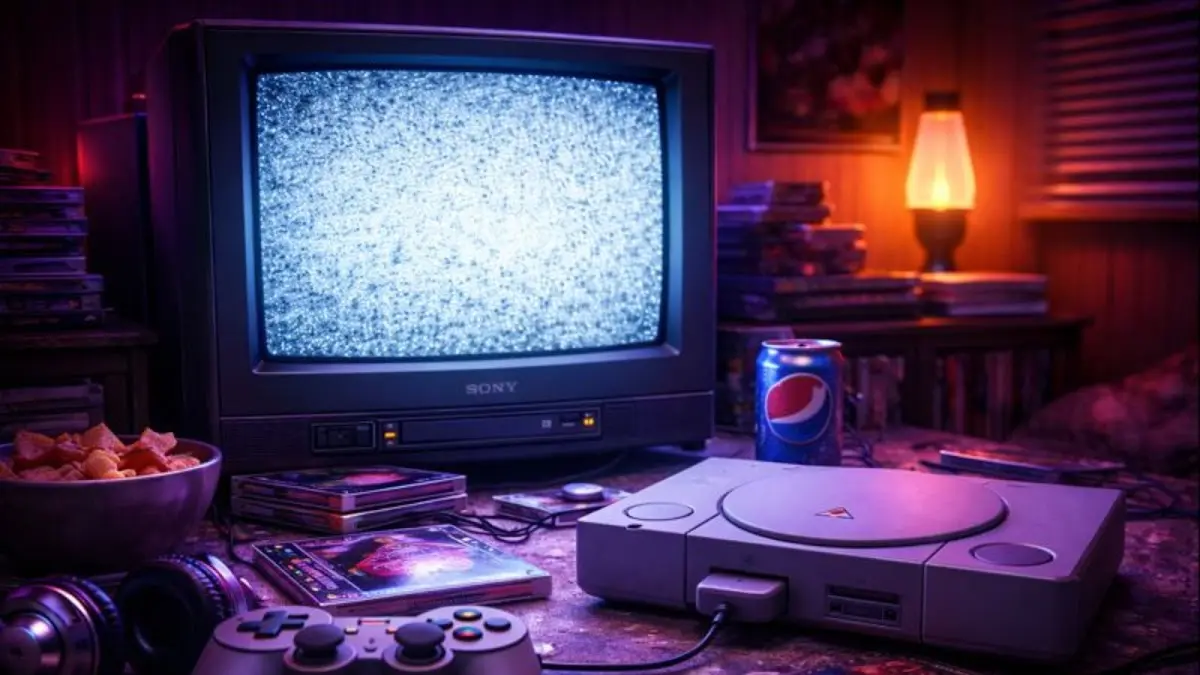
Turning on the PlayStation meant hearing an unbelievable cascade of sound. It built slowly, then hit like a wave. I remember my parents yelling at me more times than I can count to turn the TV down.
Sometimes I had been watching television at a low volume, so I turned it up. Then I switched to the PS1 and the startup exploded through the house. Ears bleeding. Walls shaking. Everybody awake. It felt like the console was announcing my crime before I had even loaded a game.
The sound was designed to feel dramatic. Sony’s official PlayStation history credits the original startup sound to Takafumi Fujisawa. He succeeded a little too well. I still grab the remote before turning on a console because some part of my brain expects another sonic boom.
2. Renting Games Blindly
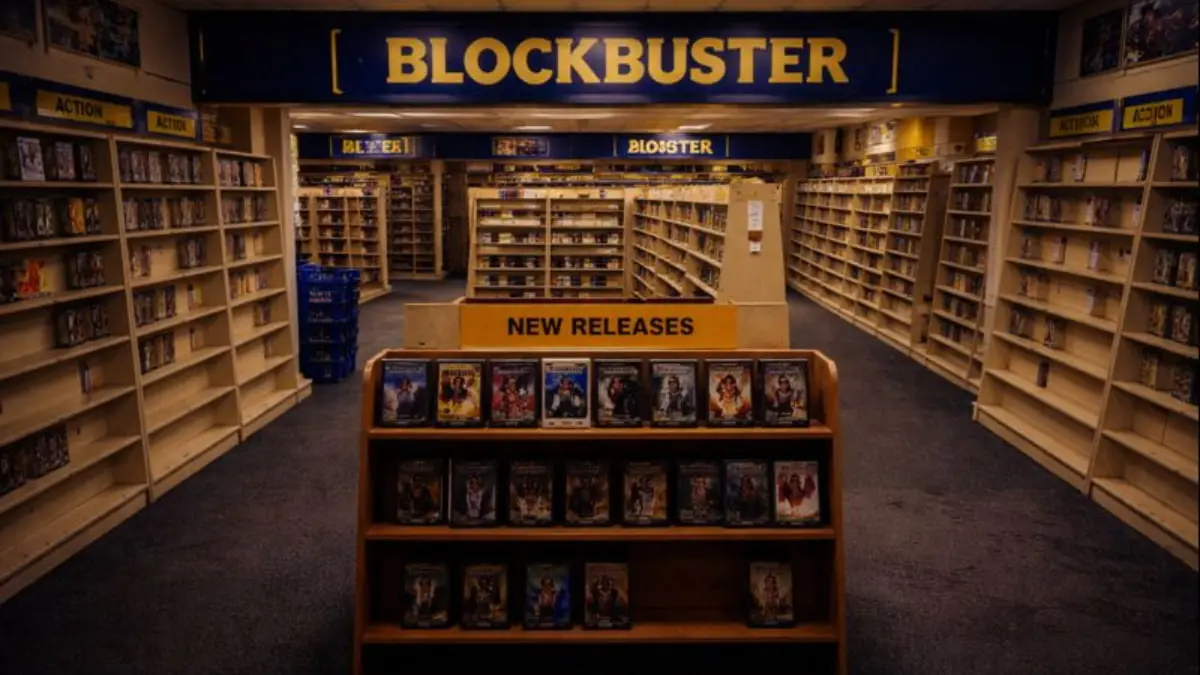
One rental, a few days, and almost no useful information. Choose wisely.
The memory: Treating cover art and case thickness like professional review scores.
I miss Blockbuster. There was something magical about walking in with permission to pick one game. My parents would wander away while I sprinted toward the PlayStation aisle and immediately became overwhelmed. I had a single choice, a limited rental window, and no phone full of reviews to save me.
Cover art did most of the work. A thick case seemed promising because more discs obviously meant more game. This was flawless logic until it was not. Sometimes the gamble produced Toy Story 2. Other times I ended up with Blasto, which gave me Phil Hartman, a hostile camera, and a save file that eventually vanished.
The uncertainty made every rental feel larger. Even a bad choice became the game for that weekend. You could not abandon it after ten minutes and download something else. You either found a way to enjoy it or spent the rest of the rental explaining to yourself why the cover had lied.
3. Leaving My Console On Overnight
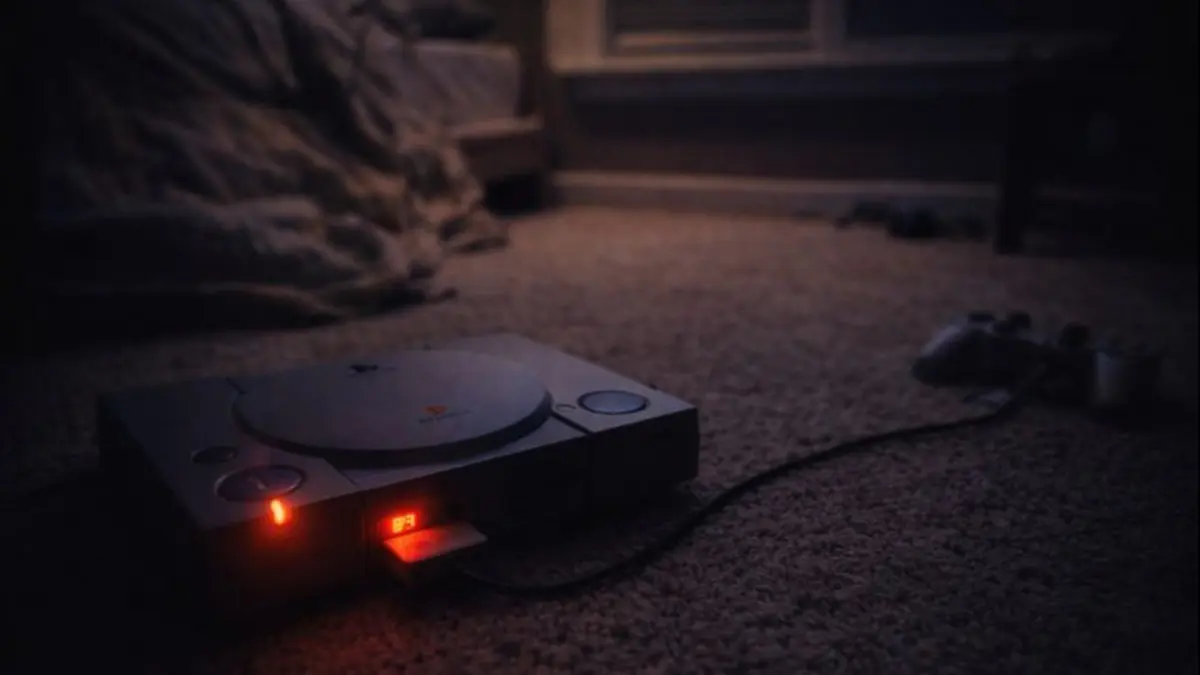
That tiny power light looked like evidence at a crime scene.
The memory: Waking up, seeing the power light, and assuming the PlayStation was permanently damaged.
Waking up to a warm PS1 felt like I had committed some kind of crime. I did not have much growing up, so that console was sacred. Every time I realized I had fallen asleep with it running, my heart sank.
- What if it broke?
- What if my parents thought I was pretending to sleep?
- What if this was the night everything ended?
One accidental night was unlikely to kill a healthy PlayStation sitting in an open, ventilated space. Kid-me did not know that. All I saw was heat, a glowing power light, and the possibility that I had ruined my favorite thing.
The anxiety became a habit. I now check consoles and computers before leaving a room, sometimes twice. The PS1 survived my accidental all-nighters. I survived the panic. The ritual stayed.
4. Falling Asleep to Looping Music
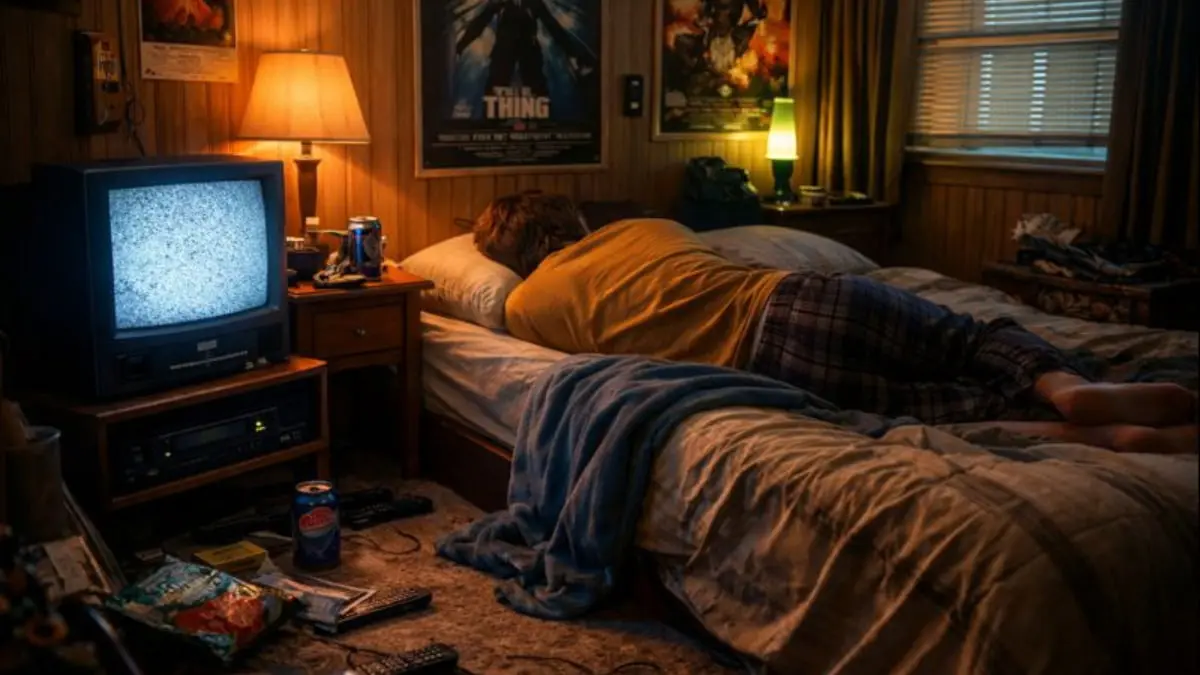
The same short loop played for hours and somehow became part of the room.
The memory: Waking up long enough to hear the same town theme still playing.
We all have a retro song that appears in our heads without warning. Mine probably got there because I fell asleep to it.
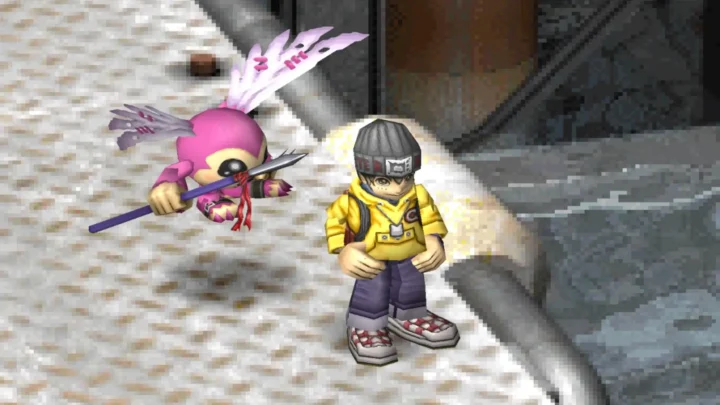
Old games loved a loop. Digimon World could play the same area music forever while I stared at a menu or stopped moving. If I drifted off with the television on, that melody kept circling the room long after I stopped listening consciously.
Hours of repetition attached the music to a place and a feeling. Hearing it now brings back the glow of the screen, the heavy eyelids, and the stubborn belief that I could play for another ten minutes. I explored more of those permanent earworms in the PS1 songs that never left us.
5. Sitting Too Close to the TV
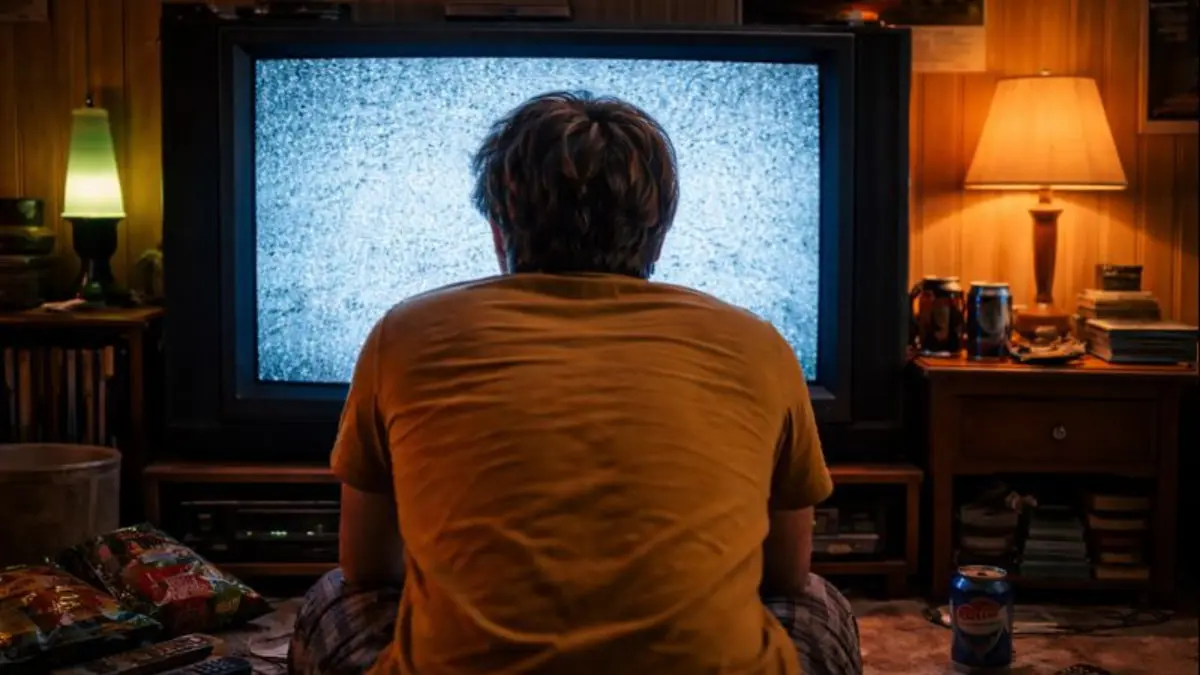
I sat close enough to count the pixels because I could barely see anything behind them.
The memory: Being told to move back while quietly wondering why everyone else could see the screen.
I had bad eyesight throughout childhood, but my parents did not notice until I was around nine. Before I had glasses, I sat directly in front of the television. It made text readable and games more immersive, so I treated the floor beneath the screen as my assigned seat.
My mom warned me that sitting that close would ruin my eyes. The modern explanation is less dramatic. Long screen sessions can cause temporary eye strain, headaches, blurred vision, and dry eyes. Sitting unusually close can also be a sign that a child is already nearsighted. The American Academy of Pediatrics’ HealthyChildren guidance recommends breaks and watching for symptoms, rather than claiming the television simply creates a refractive error.
So my mother was right that hours without a break could make my head and eyes feel awful. The part we missed was that I was three inches from the screen because I needed glasses. Either way, the habit became one of my clearest childhood gaming memories.
6. Watching Someone Else Play
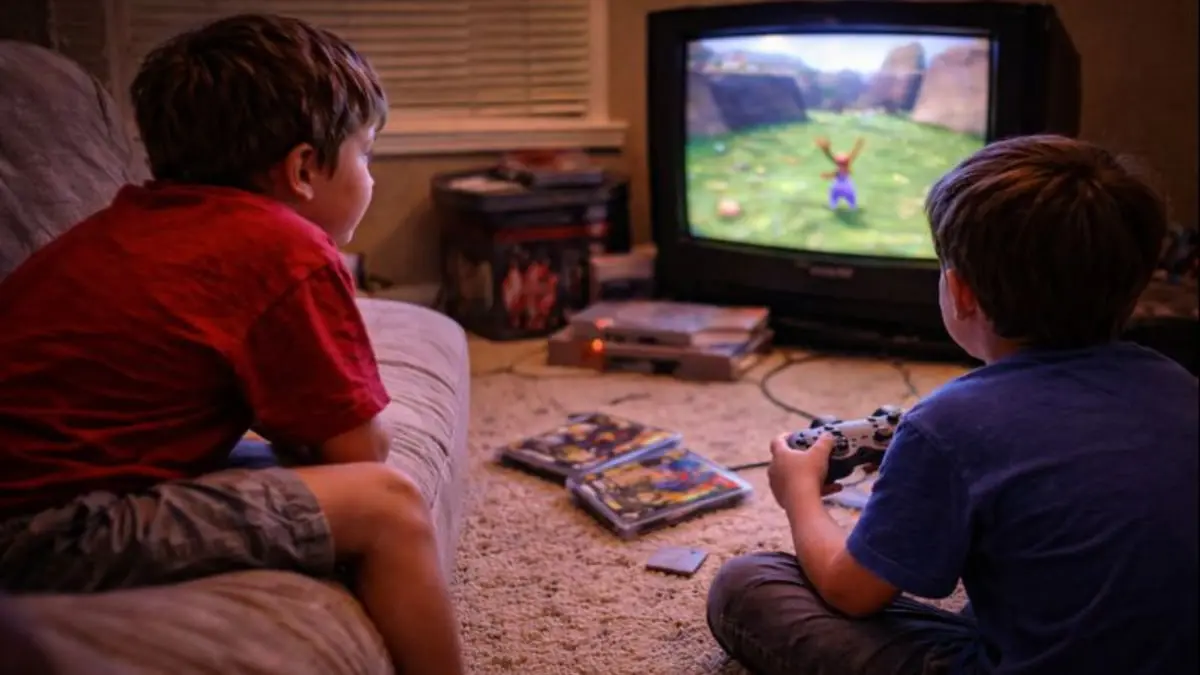
I was a backseat gamer before anyone had given the behavior a name.
The memory: Offering expert advice from the safety of not holding the controller.
Backseat gaming was my calling. It did not matter who was playing or whether they were doing fine. I sat behind them with a running commentary they never requested. My sister hated it, which was reasonable. I always had a criticism ready.
When the controller reached my hands, the rules changed. Nobody was allowed to tell me what to do. Their suggestions were interference. Mine had been valuable tactical support.
I eventually grew out of the worst version of that habit. Now I genuinely enjoy watching someone discover a game for the first time. Streams did not invent that pleasure. They scaled up the old living-room experience where one person played, everyone else watched, and the loudest person believed they were part of the team.
7. Being Scared but Wanting More
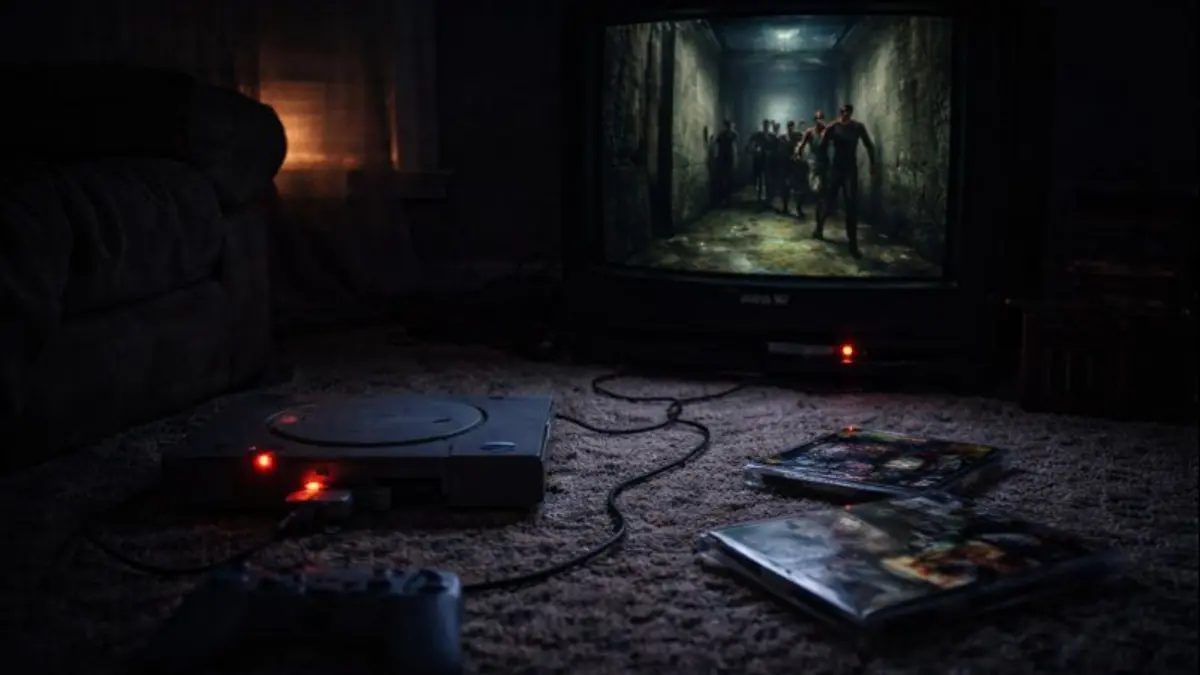
The room was dark, the game was terrifying, and turning it off was apparently impossible.
The memory: Wanting the horror to stop while pressing forward to find the next terrible thing.
Silent Hill and Resident Evil were constant companions during my PS1 years. I played in a dark room with my face too close to the television, creeping through fog or opening doors while waiting for something awful to happen.
Part of me wanted the tension to end. I was stressed, tired, and one noise away from turning the console off. Another part wanted more. The fear made every hallway matter. Finding a safe room felt like reaching a real shelter.
When I eventually worked through much of the PS1 horror catalog, I felt strangely empty. I wanted another game to make me feel that exposed again. Modern horror can look far more convincing, but the uncertainty of those blocky rooms still has a direct route into my nervous system.
8. Saving Before Bed
Save once for progress. Save twice because trust had already been broken.
The memory: Saving, staring at the confirmation, and saving again anyway.
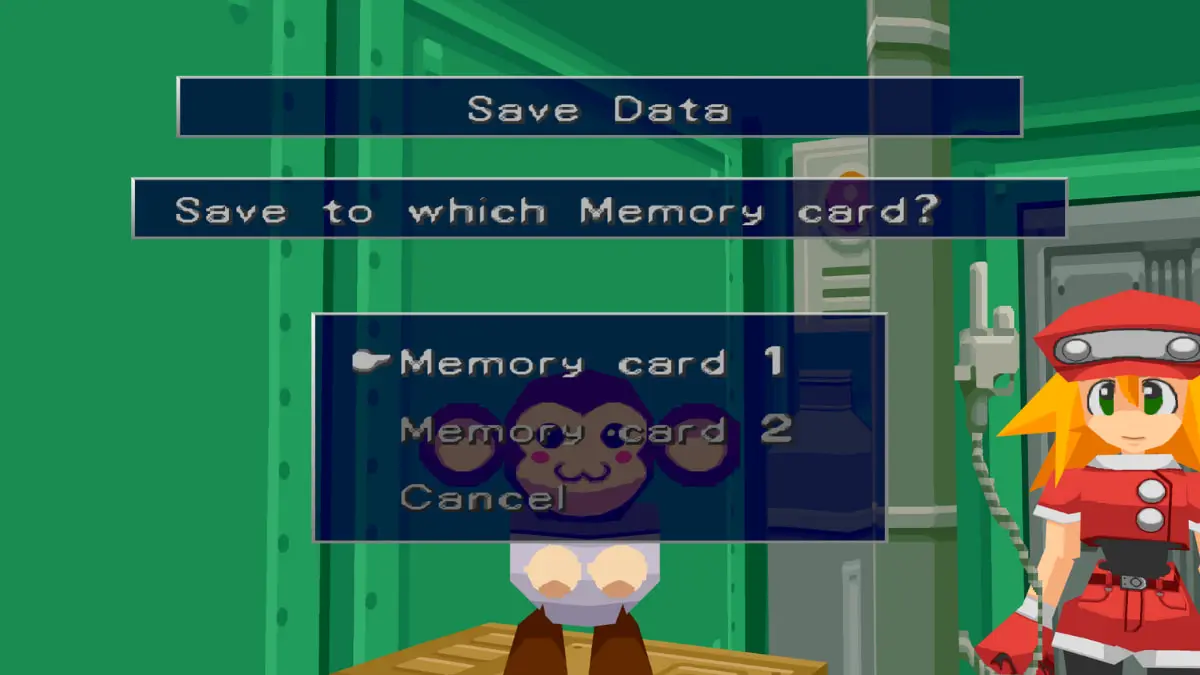
I learned this lesson through loss. Hours disappeared because I thought I had saved. Maybe I confused two memory-card slots. Maybe I turned the system off too early. The exact crime has faded, but the punishment remains clear.
Saving became a bedtime ritual. Find the point. Save the game. Wait for the confirmation. Save again. I was not replaying a long section because my nine-year-old brain had failed one administrative task.
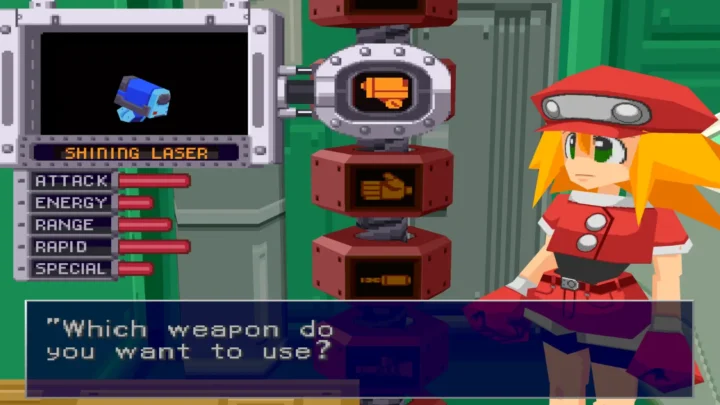
Mega Man Legends made that ritual especially memorable because Data handled saves in the field. I can still picture the menu and hear his voice. That world has stayed with me for plenty of other reasons too, which is why I eventually wrote about why Mega Man Legends deserved more.
Modern autosaves are convenient, but I still make manual saves whenever a game allows it. Then I make another. The technology changed. My trust did not.
9. The Games I Never Finished
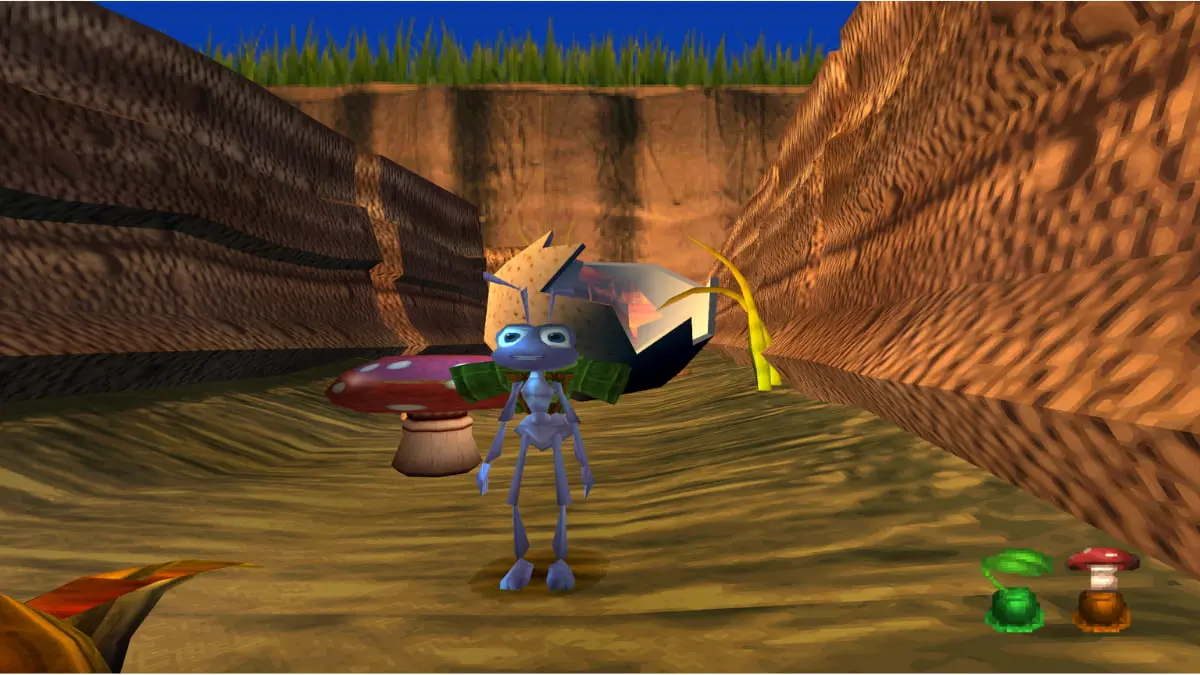
I never finished this one, but unfinished games have a strange way of staying open in your head.
The memory: A rented game, a lost save, or one level that quietly ended the entire adventure.
We all have an unfinished game. It might have been too difficult, the save disappeared, or the rental period ended while we were still learning the controls. The game never received a proper ending, so it kept living in the back of the mind.
For me, the list includes A Bug’s Life, Blasto, and Tomb Raider. A Bug’s Life confused me. Blasto crashed and erased my save. Tomb Raider never clicked before Blockbuster demanded it back.
I could return now with guides, save states, and decades of experience. I probably will not. The unfinished version has become its own memory, complete with the frustration and mystery of not knowing what waited beyond the place where I stopped. Getting stuck used to shape an entire relationship with a game, which is why I still think getting stuck on PS1 felt like a rite of passage.
10. Knowing It Was Time to Turn It Off
The glow vanished, the room went quiet, and tomorrow immediately became important.
The memory: Finally making progress at the exact moment someone said it was time for bed.
Nothing hurt like hearing, “It is time for bed,” immediately after reaching a new area. It was 10 p.m. I was nine. The controller felt heavier than it should, and pressing that large round power button felt like closing a door I had only just managed to open.
The television collapsed into darkness. The fan and music stopped. My bedroom suddenly felt smaller without another world shining from the corner.
Then anticipation took over. I started planning what I would do tomorrow, where I would go next, and how quickly I could return. Turning the console off never felt good. Knowing it would turn on again made the wait bearable.
Frequently Asked Questions
Why are childhood gaming memories so vivid?
They often combine repetition, strong emotion, music, physical routines, and a specific place. A game was attached to the television, bedroom, rental store, family member, or time of day around it. Remembering one detail can bring the rest of that setting back.
Can sitting close to a TV damage eyesight?
Long periods of close screen use can contribute to temporary eye strain, headaches, blurred vision, and dry eyes. Sitting unusually close can also signal that someone is already nearsighted. It is worth taking regular breaks and arranging an eye exam if a child has trouble seeing the screen from a normal distance.
Was it bad to leave a PS1 on overnight?
An occasional overnight session was unlikely to destroy a working console with adequate ventilation. Heat, blocked vents, dust, failing components, and repeated unnecessary runtime can still shorten electronic hardware’s life, so powering down when finished remains the sensible habit.
Why did saving feel more stressful on PS1?
Many PS1 games relied on removable memory cards, limited save blocks, manual save points, or long gaps between opportunities to record progress. A missing card, corrupted file, full card, or forgotten save could erase hours. Modern autosaves have made that particular bedtime anxiety much less common.
Why These Childhood Gaming Memories Still Follow Me
These memories became habits, instincts, and tiny rituals that still live in my hands. I reach for the remote before a console starts. I save twice. I listen to menu music longer than necessary. I understand the appeal of watching someone else discover a game, even if I have to resist giving them directions.
Games taught me how to wander, wait, feel afraid, and look forward to tomorrow. The PS1 did not raise me by itself, but it occupied enough late nights to leave fingerprints everywhere.
Which childhood gaming memory still follows you? I want to know the odd little ritual you assumed everyone did until you finally said it out loud.