Some childhood games stay with you because they felt amazing. Others stay because they stressed you out so badly that they carved a tiny groove into your nervous system.
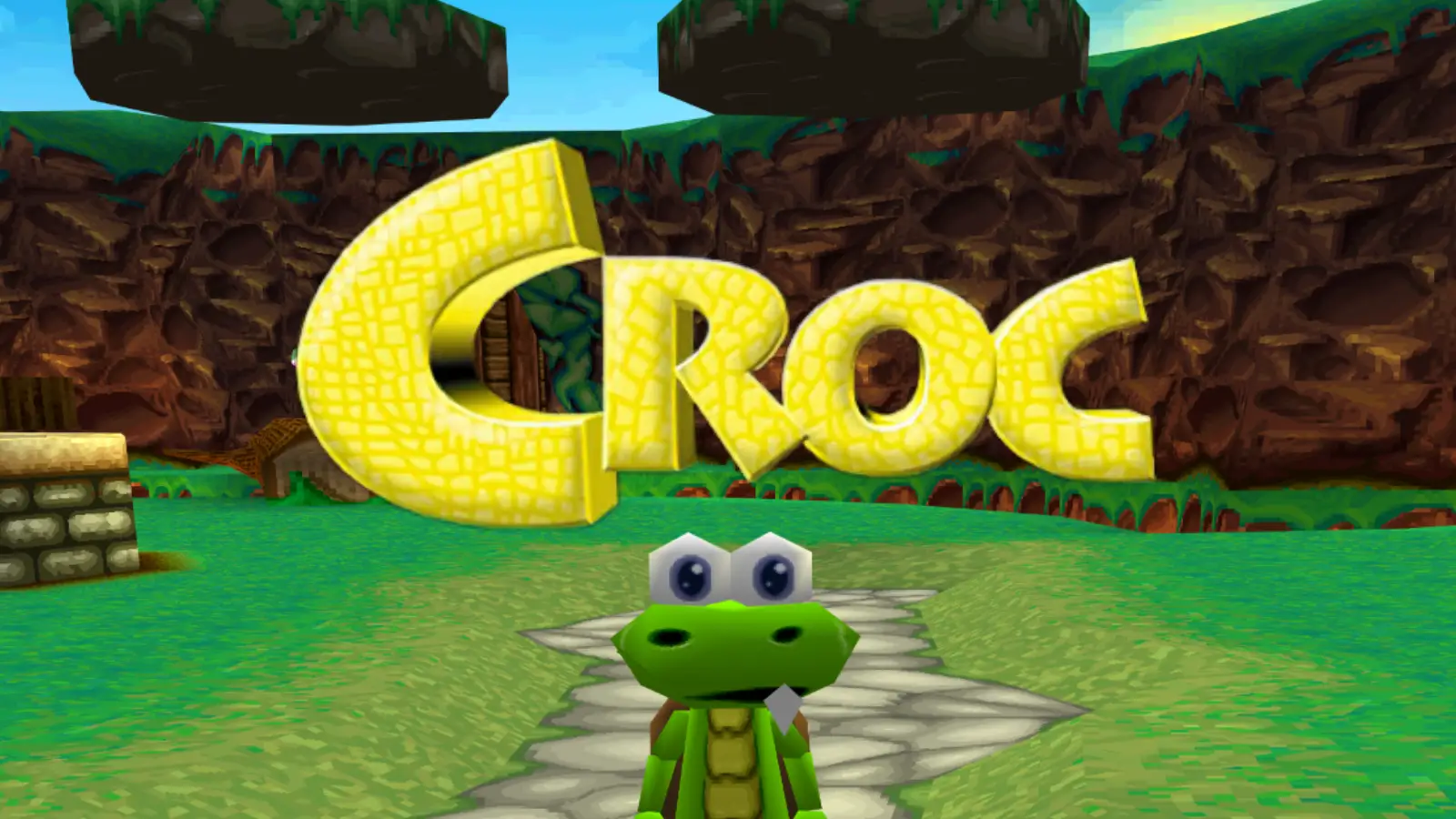
Croc: Legend of the Gobbos was that game for me.
I played it constantly on PS1 and never managed to beat it as a kid. I would make a little progress, decide this was finally the run, miss a few jumps, burn through my lives, and somehow find myself staring at those opening levels again. I knew the beginning of Croc far better than any child should know anything.
So this Croc: Legend of the Gobbos review is really a memory test. The Gobbos, crystals, secret doors, weird music, and colorful worlds still live comfortably in my head. But after replaying the original PS1 version as an adult, I wanted to know whether the game underneath those memories still holds up.
Short answer: The original Croc still has charm, great collectible design, memorable environments, and Gobbos I would defend with my life. The tank-style controls and camera have aged badly enough that I would not recommend the PS1 version to a newcomer in 2026. The modern remaster is a much easier recommendation because it adds modern controls and an updated camera while preserving the original game.
Last checked: August 22, 2026. This review is about the original 1997 PS1 release, but I also rechecked the game’s sales history, Yoshi prototype origin, original save/continue rules, and the current Croc remaster and Platinum Edition.
Croc: Legend of the Gobbos Review: Quick Verdict
| Original release | 1997 |
|---|---|
| Developer | Argonaut Software |
| Genre | 3D platformer |
| Still good | Gobbos, exploration, colorful worlds, collectibles, secrets |
| Aged badly | Tank-style movement, camera, jump alignment, some repetitive design |
| Original PS1 score | 2/5 |
| Best version for newcomers | 2025 remaster / Platinum Edition with modern controls |
The Gobbos and Collecting Still Work
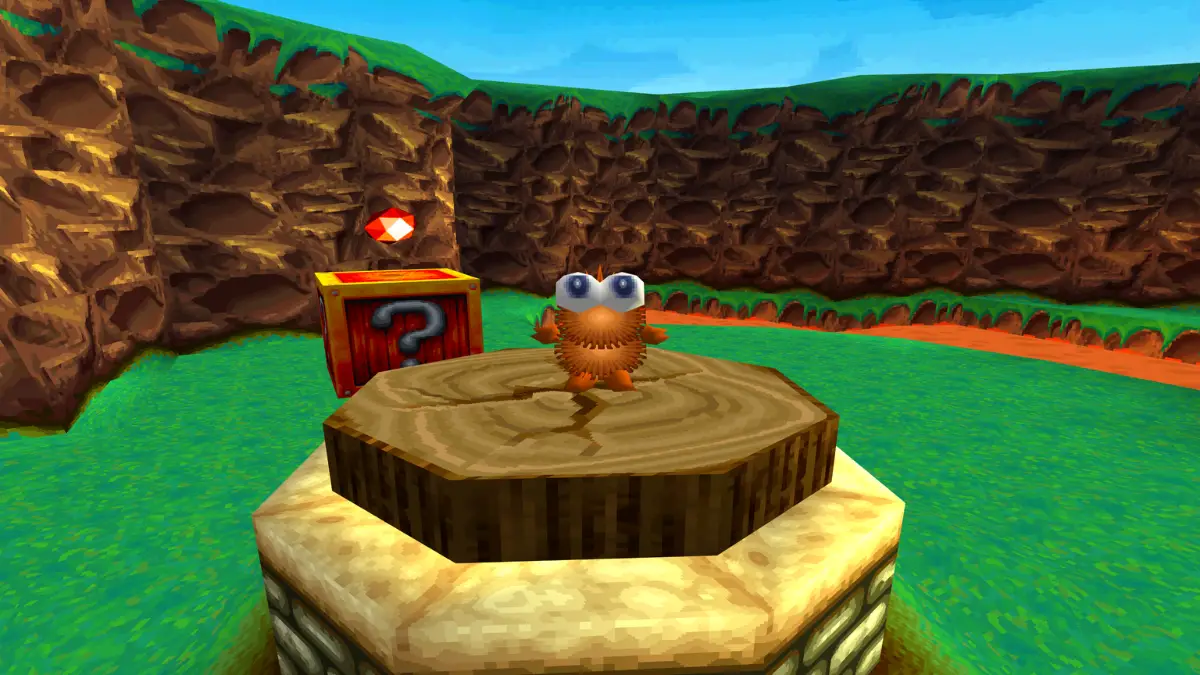
Croc himself was never the reason I loved this game. He is a crocodile with a backpack who tail-spins enemies, climbs walls, and occasionally announces himself in a voice that has been living rent-free in my head since childhood.
The Gobbos were the hook. Each normal level hides six of them, and that simple rescue loop still scratches the part of my brain that wants to check every corner before leaving.
The colored crystals add another layer. Find all five in a normal level and the Crystal Door near the exit opens, giving you access to the final Gobbo and usually another small challenge. Hit the Beany Gong and Beany carries Croc back to the island map.
That structure is simple, but it gives every level multiple little victories. Find a key. Rescue a Gobbo. Spot a crystal tucked behind something suspicious. Open the door. Smack the gong. The satisfaction is still there.
The remaster’s official description now counts 45 levels across five worlds, including icy, volcanic and underwater areas. That variety is one of the original game’s better qualities too. Croc rarely looks visually dead, even when moving through it can feel like negotiating with a shopping cart that has one evil wheel.
The Real Final Boss Is Still the Controls
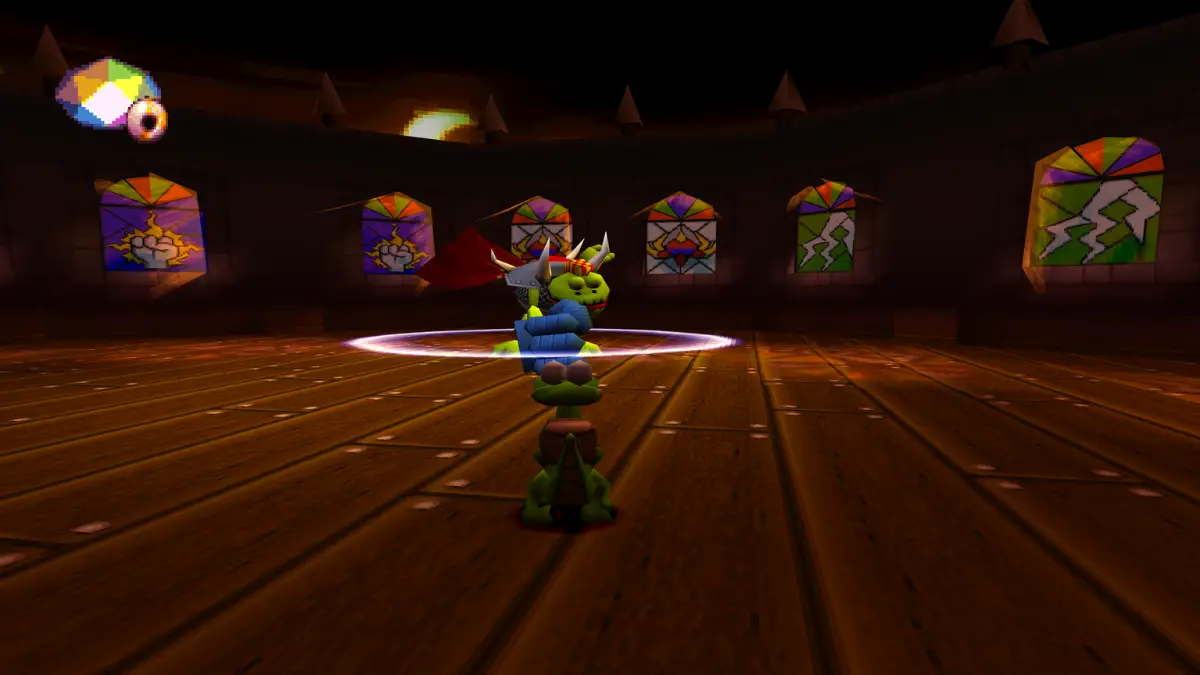
Replaying Croc made one childhood memory feel extremely accurate: I never trusted where Croc was going to land.
The original game uses character-relative, tank-style movement. Forward moves Croc in the direction he is facing, while left and right rotate him. The game does include sidestepping and camera controls, so it is more flexible than the phrase “tank controls” sometimes suggests, but it still feels stiff compared with the analog 3D platformers that became standard afterward.
That stiffness matters because Croc asks for precision. There are small platforms, moving platforms, lava, icy surfaces, climbs, and jumps where being a little off means disappearing into a pit.
The camera makes the problem worse. A jump can be mechanically simple and still feel uncertain because judging depth from the current angle is harder than the jump itself. That was not just a complaint invented by people revisiting the game decades later. Contemporary reviews also criticized Croc’s camera and controls, which is useful evidence that childhood me was not uniquely bad at being a crocodile.
I recently wrote about why tank controls actually made sense in many PS1 games. Croc is the important counterexample: a control scheme can make historical sense and still be a poor fit for the exact precision a game keeps demanding from you.
Croc Still Has a Very Specific Weirdness
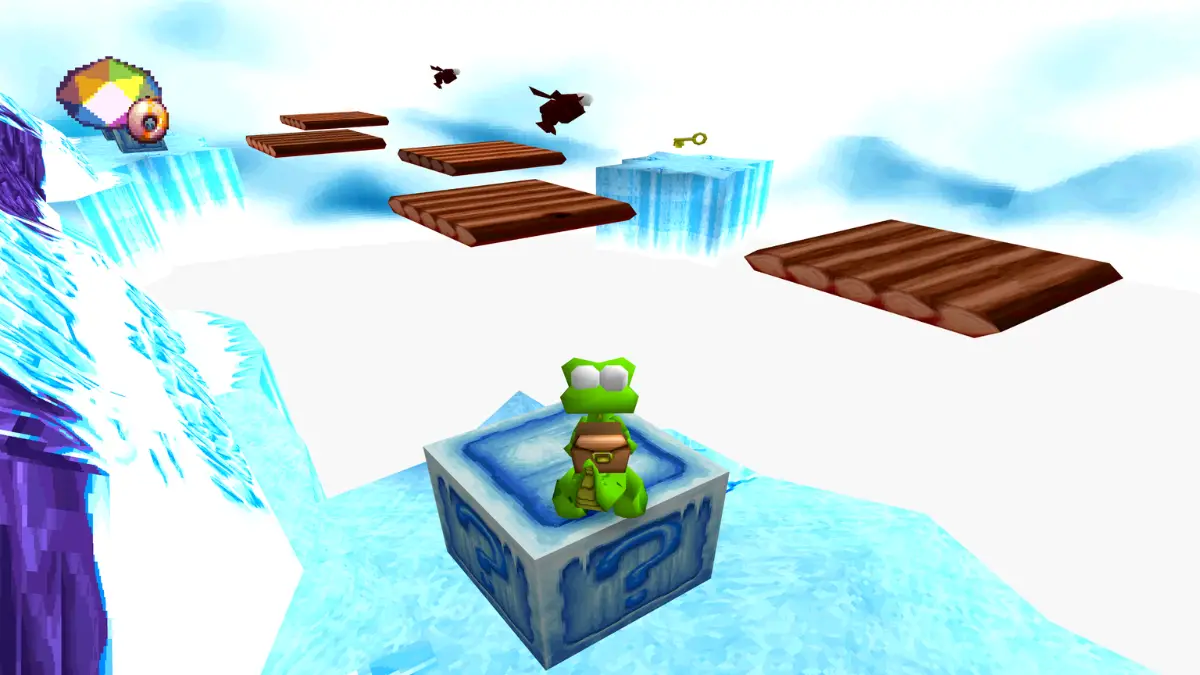
The strange thing is that the awkwardness never completely kills the atmosphere.
Croc has that late-90s mascot-platformer dream logic where everything is colorful, cheerful, and somehow slightly unsettling at the same time. The bosses are goofy. The music can be playful and then suddenly sound like it wandered into a different game. Environments jump from forests to ice to desert-like spaces to castles without the world worrying too much about explaining itself.
The story barely matters. Baron Dante kidnaps the Gobbos, Croc goes to rescue his adopted family, and that is enough structure to send a backpack-wearing crocodile through forty-five levels.
But I remember the feeling more clearly than the plot. The crystals. The little cages. The hidden spaces. The relief of reaching a gong. The anxiety of seeing another moving platform and knowing my afternoon had just acquired stakes.
One Childhood Memory Was Harsher Than the Game Really Was
I remembered running out of lives and being thrown all the way back to the beginning of Croc. That feeling was real. The rule was not quite that cruel.
The original PlayStation manual says that when all lives are gone, you can continue from the beginning of the last level attempted. Longer-term progress could also be resumed using a password obtained from the map screen.
So childhood me was probably mixing together failed continues, passwords I did not use properly, sessions I did not preserve, and the psychological horror of replaying early stages often enough that they felt like permanent residence.
That correction actually makes the memory more interesting. Sometimes a game does not need to literally erase everything for a child to experience it as if it did.
Croc Really Did Begin as a 3D Yoshi Pitch
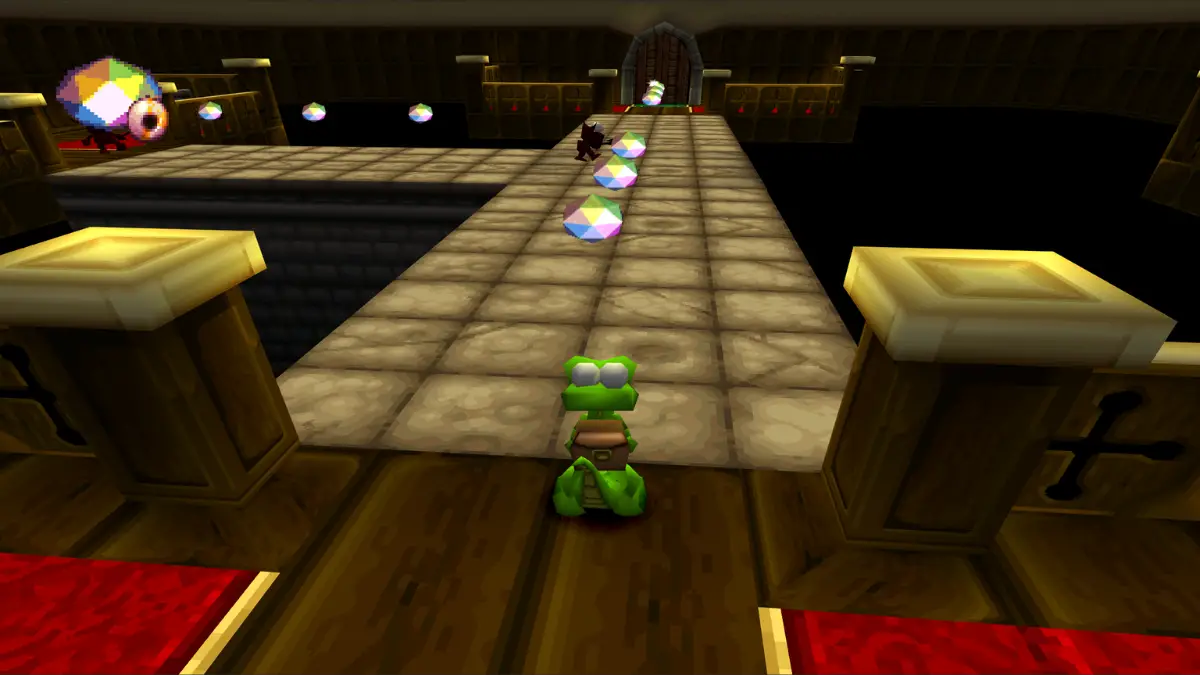
The weird history behind Croc is real, although it is worth telling it without turning rumor into mythology.
Argonaut was deeply involved with Nintendo during the Super FX era, working on Star Fox, Stunt Race FX, and Star Fox 2. After that relationship, founder Jez San says Argonaut pitched Nintendo a 3D platformer built around Yoshi. The team mocked up a PC prototype and showed Nintendo what a 3D take on that style could look like.
Nintendo declined the project. Argonaut then reworked the concept into its own game, which became Croc. San has repeated that history in recent interviews while discussing the studio’s return, including a 2026 Time Extension interview.
That does not mean Croc is just “rejected Mario 64.” It means Argonaut was trying to solve the same enormous problem almost everyone was wrestling with in the mid-90s: what is a mascot platformer supposed to feel like when the player can suddenly move through three dimensions?
Sometimes Croc’s answer is charming. Sometimes Croc walks directly off the answer.
Croc Was a Much Bigger Hit Than Its Reputation Suggests
The old version of this review said Croc sold more than 3.5 million copies on PlayStation alone. I would not use that exact figure.
Argonaut founder Jez San has recently said Croc sold well over 3 million copies, and Argonaut’s own current material calls the original a multi-million seller. That is enough to make the point without pretending the available historical sales accounting is cleaner than it is.
It was a major commercial success for Argonaut despite the mixed critical response. That contrast makes Croc more interesting, not less. The things reviewers complained about in 1997, especially camera and control problems, are still the exact things that drag down the original today. Meanwhile, the cute characters and colorful 3D platforming were strong enough to sell millions of copies anyway.
The Best Way to Play Croc in 2026 Is the Remaster
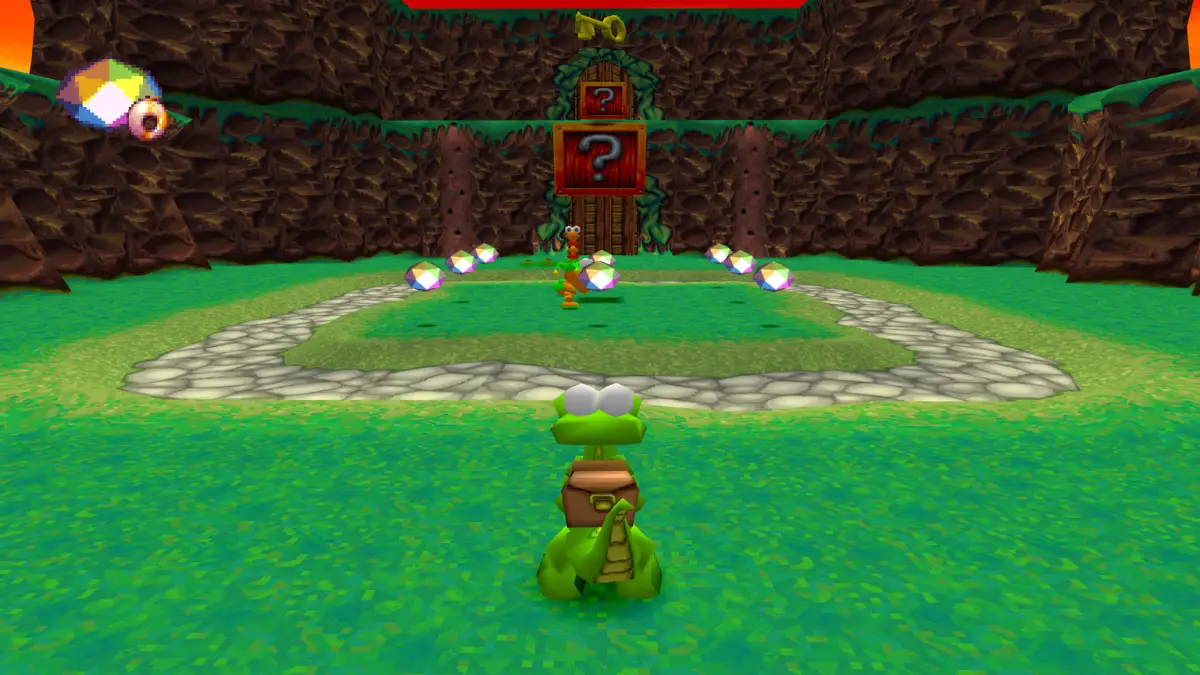
This article originally recommended the newer version with modernized controls. That recommendation has only become easier to make.
Argonaut’s Croc: Legend of the Gobbos remaster launched digitally on April 2, 2025 for PS4, PS5, Xbox One, Xbox Series X|S, Nintendo Switch, and PC through GOG. A Steam version followed in October 2025. The remaster adds enhanced HD graphics, an updated camera, modern control mechanics, retro display modes, and the Crocipedia, an interactive museum full of development material and interviews.
The free Platinum Edition update later added Time Attack, 16 new trophies/achievements, more than 25 Crocipedia additions, extra quality-of-life improvements, and bug fixes. Argonaut says it is now available across the current platforms, with platform-specific differences where necessary.
If your goal is historical curiosity, the PS1 original is still worth seeing. If your goal is actually enjoying Croc for the first time, I would play the remaster with modern controls and let the original tank movement remain an optional archaeological dig.
And Croc is officially alive again: Argonaut announced a Croc 2 remaster in July 2026, so this strange little mascot is somehow having a busier thirties than many of us.
Memory vs. Reality
My memory of Croc is bright, anxious, and soft around the edges. I remember the Gobbos, secret doors, colored crystals, the sound of the gong, and that feeling that every new level was somewhere I might never manage to reach again.
The reality is less generous. The original PS1 controls are rough. The camera can make straightforward platforming harder to read than it needs to be. Croc’s movement is not a natural match for the precision the levels sometimes demand.
But nostalgia is not automatically lying just because a game aged.
The Gobbos really are charming. Searching for all six still works. The level themes are memorable. The collectible loop is satisfying. The bizarre late-90s atmosphere survived the replay completely intact.
What changed was my tolerance for the machinery holding those good ideas together.
Croc: Legend of the Gobbos FAQ
Does Croc: Legend of the Gobbos still hold up?
The original PS1 version is difficult to recommend to newcomers because the tank-style movement and camera have aged poorly. Its collectibles, Gobbos, colorful environments, secrets, and overall atmosphere still hold up much better. The modern remaster is the easier way to experience those strengths.
Does Croc use tank controls?
Yes. The original game uses character-relative movement: forward moves Croc in the direction he is facing and left/right rotate him. It also includes sidestepping and camera controls, so the full control scheme has more flexibility than basic survival-horror tank controls.
Was Croc originally a Yoshi game?
Argonaut founder Jez San says the studio originally pitched Nintendo a prototype for a 3D platformer using Yoshi. Nintendo declined, and Argonaut reworked its concept into the original property that became Croc.
How many copies did Croc sell?
Jez San has said the original Croc sold well over three million copies. I would use that figure rather than the more specific 3.5-million PlayStation-only claim sometimes repeated online because the surviving sales documentation is not clean enough to make that stronger number necessary.
Is the Croc remaster better than the PS1 version?
For a first-time player, yes. The remaster preserves the original level design while offering modern controls and an updated camera, which directly addresses the two biggest problems I have with the PS1 release. It also includes the Crocipedia museum and optional retro presentation features.
What is Croc Platinum Edition?
Platinum Edition is a free update to the modern remaster. It adds Time Attack, new trophies/achievements, more Crocipedia material, bug fixes, and additional quality-of-life changes.
Final Verdict: 2/5 for the Original PS1 Version
If you have childhood history with Croc, the original is fascinating to revisit. You may discover that the world really was as strange as you remember, the Gobbos really were that cute, and the controls really were plotting against you.
If you have never played it, I would not start with the PS1 release just to prove something. The modern remaster lets the better parts of Croc breathe without asking you to spend the first hour negotiating with movement that already felt controversial in 1997.
Original PS1 score: 2/5. Charming, memorable, historically interesting, and much harder to recommend than it is to remember.
That is where memory and reality finally agree. Croc was never one of the best games I owned. It was just one of the few weird enough, stressful enough, and lovable enough that my brain refused to throw it away.