When I played Digimon World as a kid, I barely understood what the game wanted from me. I trained for hours, wandered around File Island with no real plan, somehow ended up with Numemon again, watched the virus gauge creep toward another disaster, and spent battles hammering the same command because I was convinced pressing it six more times would finally make my Digimon listen. This Digimon World review came from going back in 2026 to find out whether this brutal PlayStation game actually holds up, or whether nostalgia has been doing most of the work.
The answer is yes, but with a pretty large warning label. Digimon World is still confusing, repetitive, poorly explained, and occasionally hostile to the player. It’s also one of the most interesting monster-raising games I’ve ever played, and some of the things that made it miserable for me as a kid are exactly what make it feel refreshing now.
How I reviewed it: I went back through the original PlayStation Digimon World in 2026, focusing on raising and Digivolution, lifespan, combat, exploration, File City recruitment, training, side activities, presentation, and how the experience changes when modern guides and emulation features are available. This is a personal replay review, not a score assembled from old reviews.
Last checked: August 24, 2026. I couldn’t find a licensed modern digital rerelease of the original Digimon World on Steam, the current PlayStation Store, or GOG.
Digimon World Review at a Glance
| Digimon World | Review Details |
|---|---|
| Developer | BEC |
| Publisher | Bandai |
| Original release | 1999 in Japan; 2000 in North America; 2001 in Europe |
| Platform | PlayStation |
| Genre | Monster-raising RPG / virtual pet adventure |
| New-player length | Roughly 30 hours, although knowledge can cut that down dramatically |
| Best feature | Raising one temporary partner while permanently rebuilding File City |
| Biggest problem | Fantastic systems buried underneath terrible explanations |
| Does the core game hold up? | Yes |
| Does the original pacing hold up? | Not nearly as well |
| Will you eventually want a guide? | Probably |
| Does emulation improve it? | Dramatically, especially fast-forward |
| Verdict | Still worth playing in 2026, but definitely not for everyone |
Should You Play Digimon World in 2026?
Short answer: Yes, if you can tolerate repetitive training, unexplained mechanics, indirect combat, and eventually losing the Digimon you spent hours raising. In return, you get a strange and incredibly personal monster-raising RPG with awesome exploration, satisfying town progression, and systems that still feel unusual more than 25 years later.
Think twice if: Partner death sounds miserable (you gotta just let them go, ok?), you hate consulting guides, or you want smooth modern pacing, a story-heavy RPG, and direct control over every battle.
A first playthrough will probably take somewhere around 30 hours, although an experienced player who already knows the evolution requirements, recruitment conditions, and efficient routes can finish it in far less time. Knowledge changes the pace of this game enormously, and it makes everything feel so much better.
The untouched PlayStation experience can still be genuinely aggravating though. Modern emulation makes it much easier to recommend, but no amount of fast-forward turns Digimon World into a modern RPG. You have to meet the game somewhere in the middle.
What Is Digimon World Actually Like?
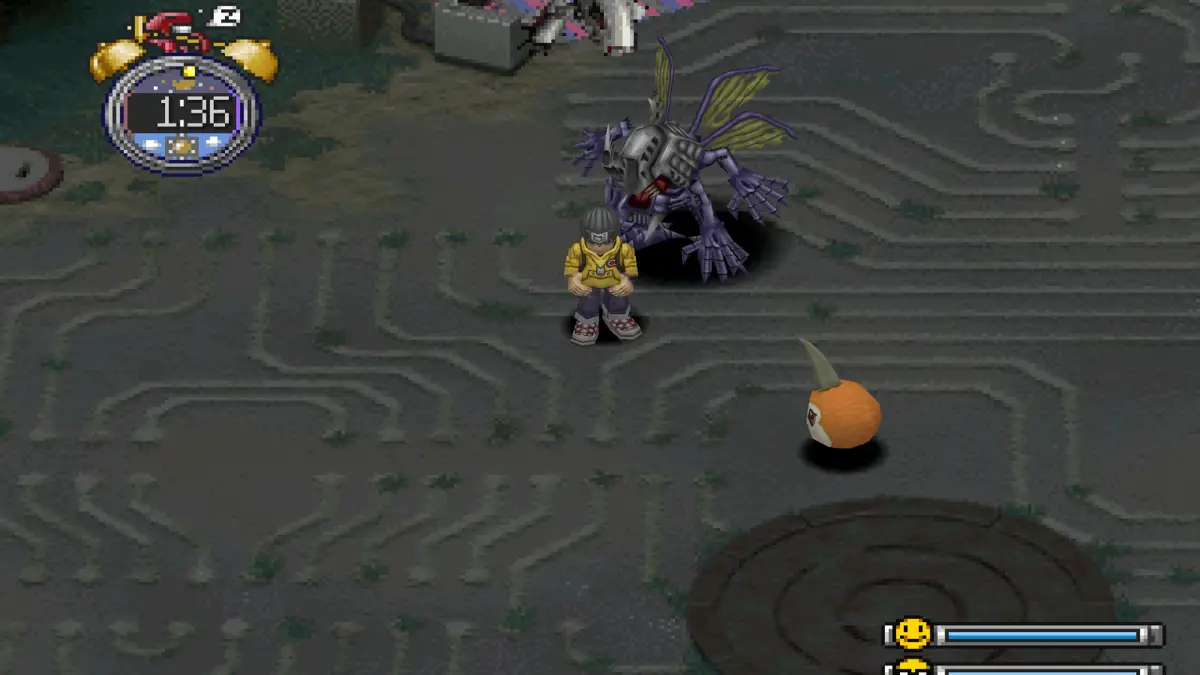
If you have never played it, Digimon World is probably not the game you imagine when you hear “Digimon RPG.”
You arrive on File Island and are asked to help rebuild File City by finding the Digimon that have scattered across the world and convincing them to return. Recruiting them raises the city’s prosperity, unlocks services, and gradually pushes the adventure toward its ending.
The main story itself is pretty light, and if you’re coming here for elaborate character arcs and hours of cutscenes, this isn’t the game for you. The individual Digimon you meet and the strange situations surrounding their recruitment are much more memorable than the plot connecting everything together.
Most of your time is spent raising one Digimon at a time. It gets hungry, tired, sick, injured, and needs to use the bathroom. You train its stats, manage its weight and care, teach it techniques, and influence what it eventually Digivolves into.
Then you prepare some food and items and leave File City to explore.
Some Digimon fight you, others want items, help, or something much stranger. Recruit them and many return to File City to open shops, improve facilities, or add entirely new services. Those improvements make future raising and exploration easier.
Eventually your partner grows old and dies. You raise another one and continue on like nothing ever happened.
That loop is the game: raise, explore, recruit, rebuild, lose your partner, learn, and push farther with the next one.
This Is Not Pokémon With Digimon
This distinction matters a lot if you’re approaching Digimon World for the first time.
Pokémon is built around collecting and developing a permanent team. Digimon World asks you to build a relationship with one very temporary creature, one you can spend hours raising, get really attached to, and then have to watch die.
Battle control works differently too. Early on, your partner has a lot of autonomy and your commands are limited, but as you raise its Brains stat, you unlock increasingly precise orders until you can directly tell your Digimon which equipped technique to use. Even your ability to control it becomes something you have to raise.
Digivolution is just as different. You don’t simply reach a level and select what comes next. Stats, weight, care mistakes, and other conditions influence what your partner becomes, and the game often gives you very little feedback about which requirements you actually met.
And even if you finally raise the perfect partner, you can’t keep it forever. Eventually it dies and you begin another generation.
The closest comparison is probably a virtual pet or life simulation wrapped inside an RPG. The main adventure isn’t about building a permanent collection of Digimon. Instead, you raise one partner at a time, use each generation to explore farther and rebuild File City, then start again when its life ends. There’s still plenty here for completionists, though. The game tracks the Digimon you have raised on your Digivolution chart and even awards medals for goals like raising every Digimon, mastering every technique, collecting every card, and completing other challenges.
If that sounds stressful, it can be.
It’s also the reason the game feels so different.
What the First Few Hours Actually Feel Like
The beginning is probably the hardest part of recommending Digimon World.
Your first partner isn’t especially strong. File City barely has anything in it. You don’t understand Digivolution yet. Your battle commands are limited. Training is repetitive before you have unlocked many improvements, and every path outside town feels like it might contain something capable of flattening you.
Your first partner may even die while File City still looks embarrassingly empty (thanks for the warning, game).
That can feel awful for the first time because you just spent hours feeding, training, and dragging this creature around the island, and suddenly it looks like somebody deleted your progress.
They didn’t.
The city you developed is still there. The systems and resources you unlocked still matter. Techniques and knowledge can help future partners, and most importantly, you now understand how to raise the next generation better.
The first few hours are also when the game is at its most mysterious. Every path out of File City feels unknown. Finding your first recruit matters. Reaching a new biome feels like an expedition. Getting your first decent Champion can feel like an actual accomplishment instead of something the game owed you.
If you spend those first hours waiting for Digimon World to turn into a conventional RPG, it never will.
If the loop of raising a partner, preparing for a trip, exploring farther, and bringing somebody new back to File City starts clicking during that first generation, there’s a good chance the game has you.
Digimon World Was Always This Brutal
It would be easy to blame my childhood struggles on being young. Maybe I ignored the manual. Maybe I didn’t understand RPGs yet. Maybe twelve-year-old me was the real problem.
The reviews from the time make that difficult to argue. GameSpot gave the North American release a 5.1/10, IGN scored it 5.8/10, GamePro gave it 2/5, and Famitsu’s Japanese score was 23/40. Critics complained about pet maintenance, repetitive raising, limited battle control, and mechanics that were difficult to understand.
Even game director Satoshi Takayashiki acknowledged problems surrounding evolution, unfriendly puzzles, combat, balancing, and polish.
So childhood me gets at least a partial acquittal, the game really did explain itself badly (so apparently it wasn’t just me).
What I understand much better now is that those problems were wrapped around some genuinely interesting ideas.
Your Digimon Is Going to Die
This is still the idea that makes Digimon World special.
You raise one partner. You feed it, train it, praise it, heal it, teach it techniques, help it Digivolve, and eventually turn it into something strong enough to push deeper into File Island.
Then it dies.
That limited lifespan puts a clock behind almost everything you do. Training makes your Digimon stronger, but training consumes time. Exploration consumes time. Getting lost consumes time. Trying to squeeze one more recruitment out of an aging partner consumes time.
I start asking questions I rarely have to consider in other monster RPGs. Do I spend another day training? Do I have enough food to stay away from File City? Can this partner survive the next fight? Should I turn around, or can I squeeze out one more piece of progress before its life runs out?
That can become surprisingly dark, I raised this creature, I cared for it, I spent hours turning it into something strong, and now I am basically wondering whether I can get one final job out of it before it dies (very healthy relationship).
The partner is temporary, but the larger game isn’t resetting. File City remains developed, the resources and services you unlocked still matter, techniques can benefit future partners, and you now understand the raising systems better than you did one generation earlier.
The part that still works: Your Digimon is temporary, but your progress as a tamer isn’t. Each generation becomes another attempt to use what you learned and push farther into File Island.
As a kid, that pressure made the game feel cruel. In 2026, it gives every expedition teeth.
File Island Still Feels Like an Adventure
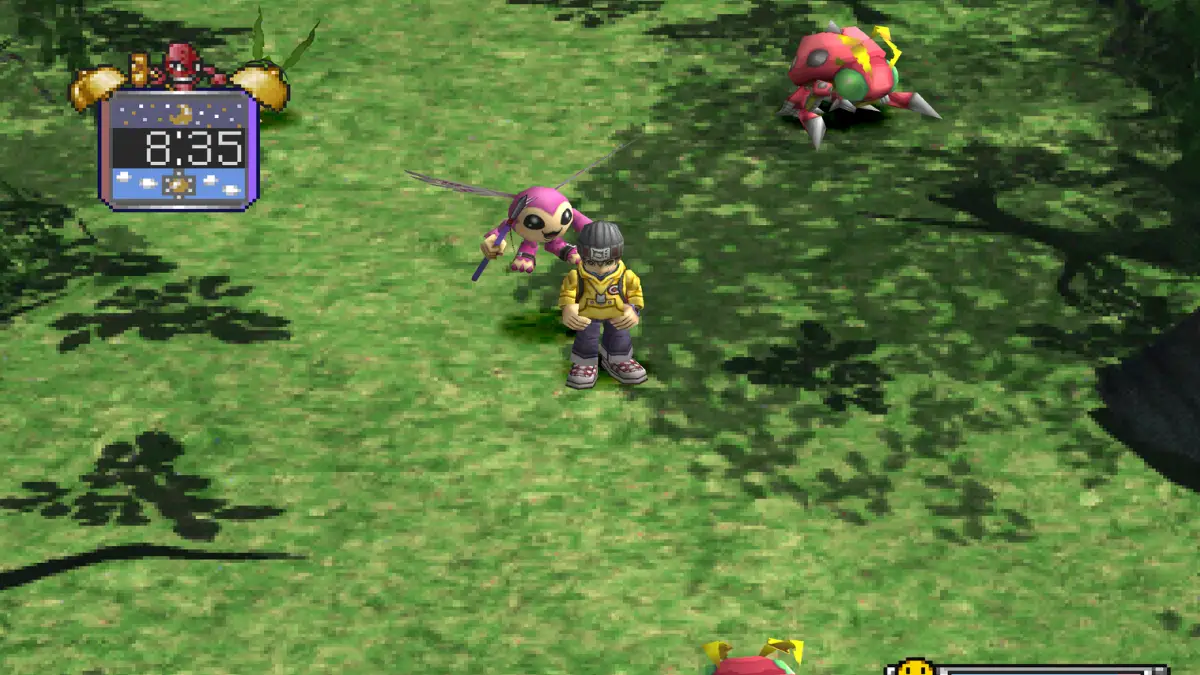
This is where my memory and reality line up almost perfectly. File Island still has mystery.
The world is tiny beside a modern open world, but very little feels wasted. Tropical jungle gives way to frozen landscapes, caves, factories, swamps, deserts, strange ruins, mechanical areas, and places that barely seem connected geographically.
The Digimon living there are even more important. Recruiting somebody is rarely as simple as winning another battle. One Digimon might run a shop. Another wants to fight. Another is tied to an environmental condition, an item, a minigame, or some event I could walk past repeatedly without realizing anything was there.
As a kid, I constantly felt like something interesting was hiding one screen farther than I had already explored.
That feeling still works.
I actually think File Island benefits from being small. Rather than filling a giant map with repeated activities, the game keeps throwing strange little encounters at me. It feels handcrafted in a way some much larger worlds don’t.
File City Is Still One of the Best Parts of the Game
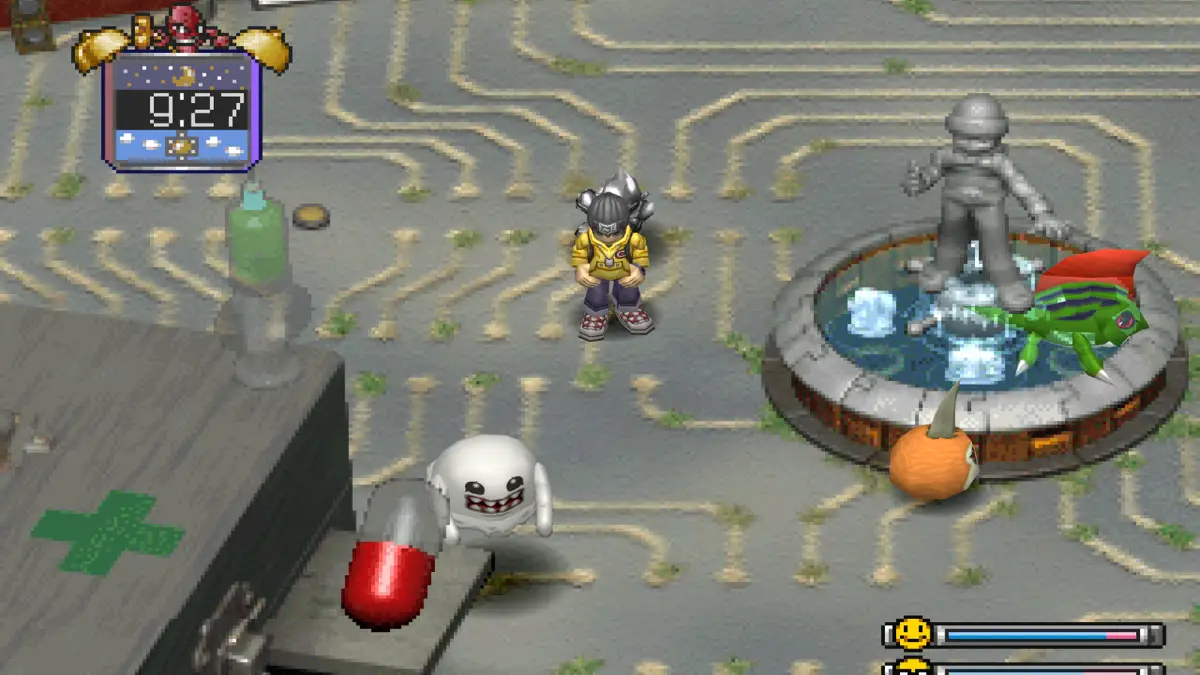
Finding Digimon would already make exploration interesting. Sending them back to File City makes it meaningful.
You begin with a mostly empty settlement. As you recruit Digimon, shops open, services appear, transportation improves, and more characters start occupying the city. Instead of progress existing only as a number somewhere in a menu, I can walk through the hub and see what I accomplished.
The loop is incredibly satisfying: explore the island, discover a Digimon, figure out what it wants, recruit it, improve File City, and use those improvements to push farther into the world.
Not every resident earns its floor space equally. Some recruits dramatically improve the city, while others mostly give me prosperity and another face hanging around town. Ogremon, after everything involved in recruiting him, isn’t exactly opening the Digital World equivalent of Walmart.
Even those weaker recruits contribute to the feeling that File City is becoming a community. The city itself starts feeling like the character I am permanently leveling.
Digimon World Hides Too Much From You
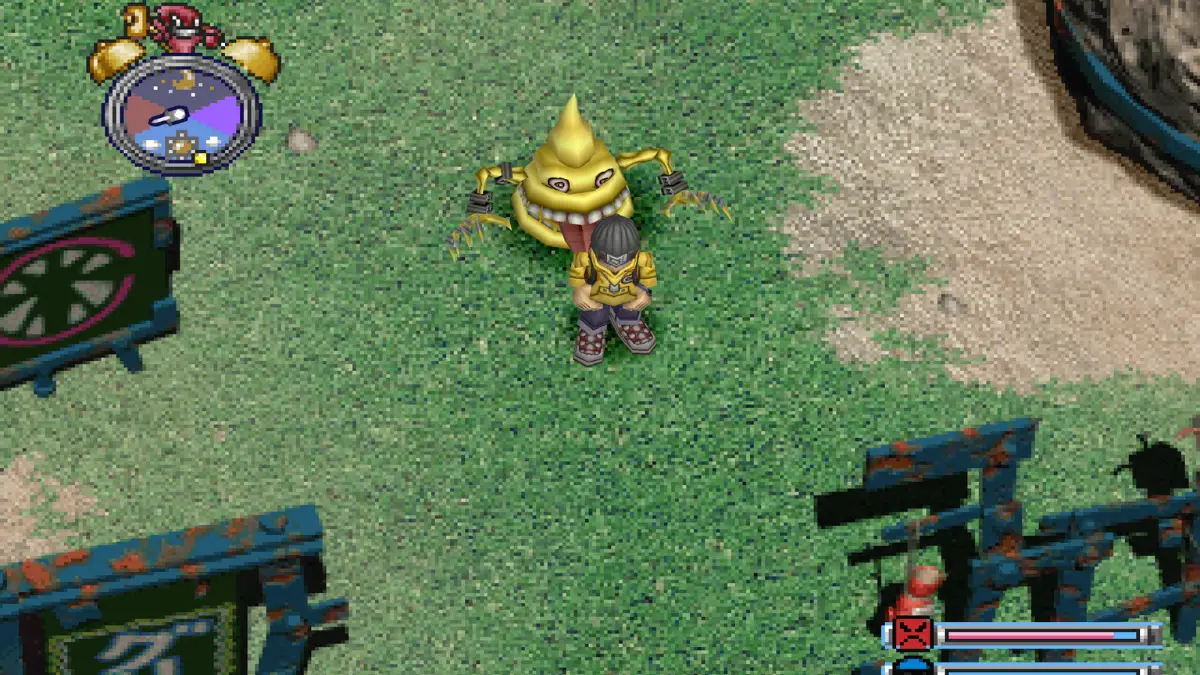
This is where I draw the line between mystery and bad communication.
Digimon World’s greatest strength and greatest flaw come from the same place: it wants you to discover how its world works, but it often can’t tell the difference between preserving a mystery and withholding information the player actually needs.
Digivolution has real rules. Stats matter. Weight matters. Care mistakes matter. Different evolution candidates look for different combinations of conditions. What I do while raising my partner genuinely affects what it becomes.
The problem is how little useful feedback I get when something goes wrong.
When I was younger, I didn’t look at Numemon and think, “Interesting, I must have failed to satisfy the necessary Champion requirements.”
I thought the game hated me (Numemon again, awesome).
I like that raising can fail. I like that the game doesn’t show me every future evolution in a giant menu. I don’t like being given almost no way to understand why an outcome happened.
The system goes even deeper than normal stat-based evolution. Digivolution items can force specific evolutions, and some of those items are tied to tournaments, Treasure Hunt, fishing, trading, and other activities a new player could easily miss.
That problem reaches far beyond Digivolution. Digimon World is packed with mechanics that are much more complicated than they first appear, while the interface stands in the corner refusing to elaborate.
Combat Is Way Deeper Than I Understood
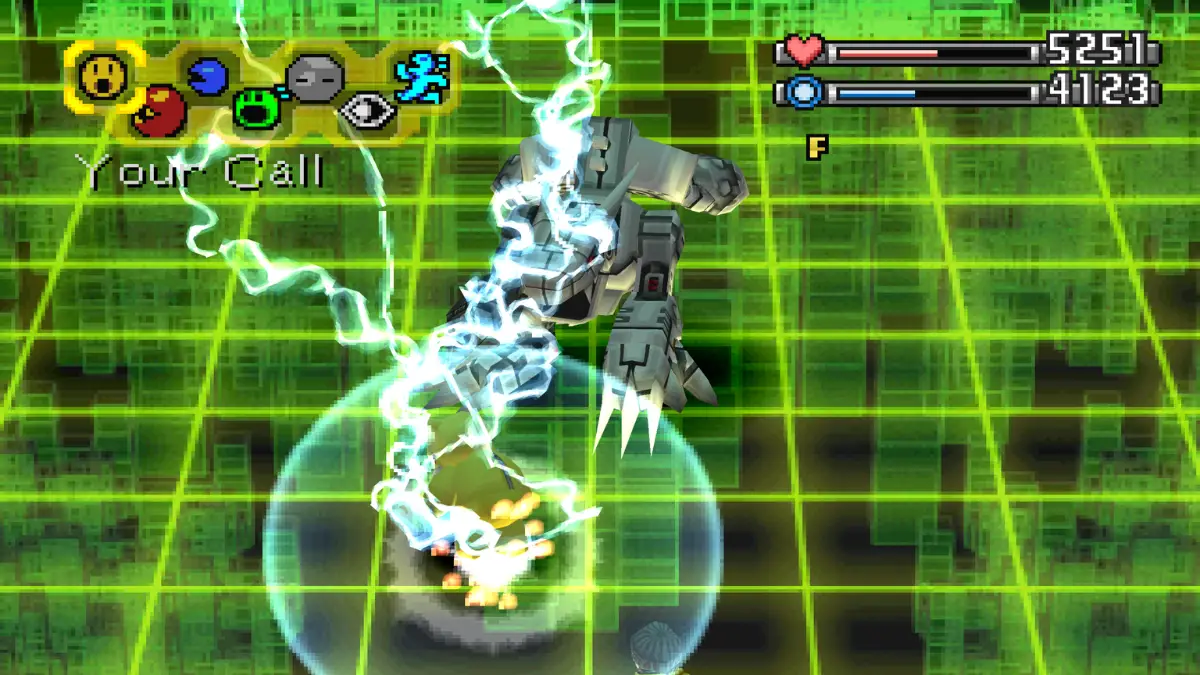
Combat might be my favorite example because childhood me developed an advanced tactical system consisting mostly of pressing the same button repeatedly.
My Digimon would stand there while an enemy attacked, I would tell it to attack, nothing would happen quickly enough, so I would tell it again, and again (I was helping).
Surely the sixth press was the one Agumon had been waiting for.
Back then, it felt like the game was ignoring my inputs. What I didn’t understand was that my Digimon was never supposed to behave like a directly controlled RPG character.
Your partner has its own AI. As its Brains stat rises, you gradually gain more specific battle commands and eventually much more control over the techniques it uses. A smarter Digimon quite literally becomes easier for its trainer to communicate with.
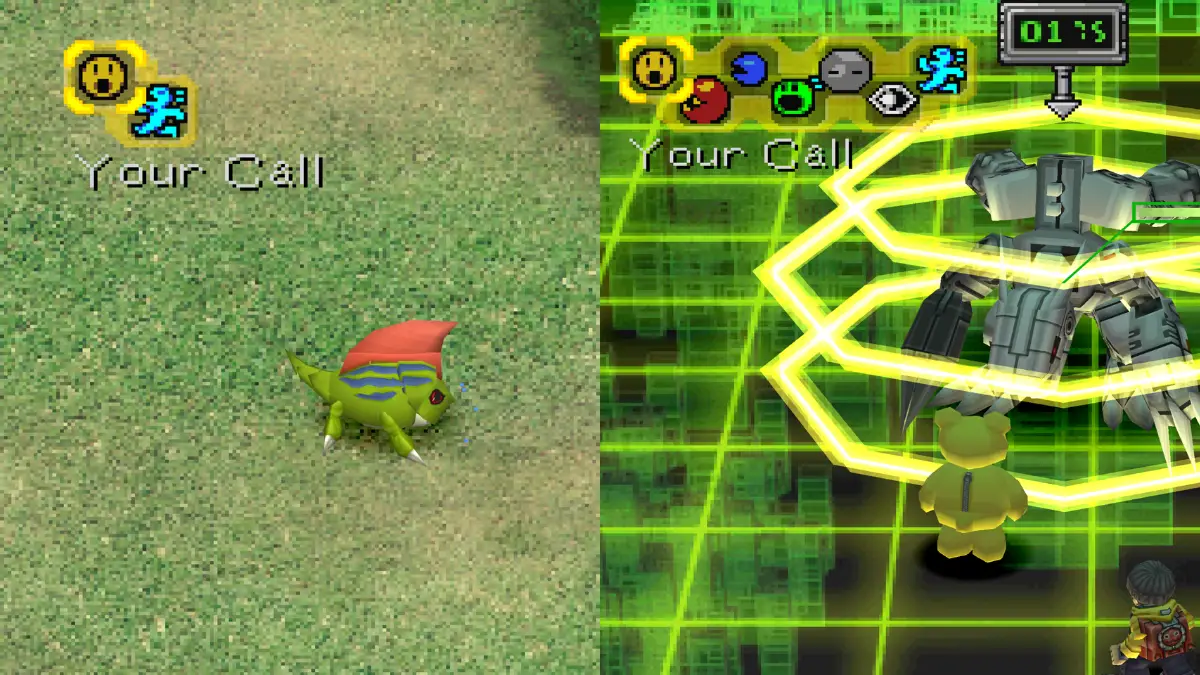
I love that idea now.
The combat system also hides far more underneath it than I realized. There are dozens of techniques with different MP costs, ranges, speeds, animations, and effects. Some can inflict status conditions. Others work better from particular positions or give your partner completely different ways to approach a fight.
There’s even a specialty system affecting damage. It reminds me a little of Pokémon’s type advantages, with certain attack specialties performing better or worse against particular Digimon specialties. The exact interaction is more complicated than a simple one-type weakness chart, and I played the game for years without even realizing the mechanic was there.
The combat problem in one sentence: Digimon World has autonomous AI, a huge technique pool, status effects, attack specialties, positioning, and commands tied to intelligence, yet childhood me came away thinking combat was mostly yelling “ATTACK” at a dinosaur that refused to cooperate.
I also love the moves themselves more now. There’s a surprising range of projectiles, physical attacks, explosions, strange effects, and huge techniques. Learning a technique through enemy battles gives combat a progression hook I barely appreciated when I was younger.
That new understanding changed my opinion of combat, but not enough for me to call it one of the game’s strengths. Battles can still drag. The AI can still annoy me. Feedback is poor, especially early on.
I respect the combat much more than I enjoy it.
I also avoided fights constantly as a kid because they felt like a chore. That created another problem because fighting enemies is one of the ways you learn new techniques. Avoid the system because it’s confusing, and you can accidentally make your future combat options worse.
That sentence might describe half of Digimon World.
Green Gym Is Too Convenient for Its Own Good
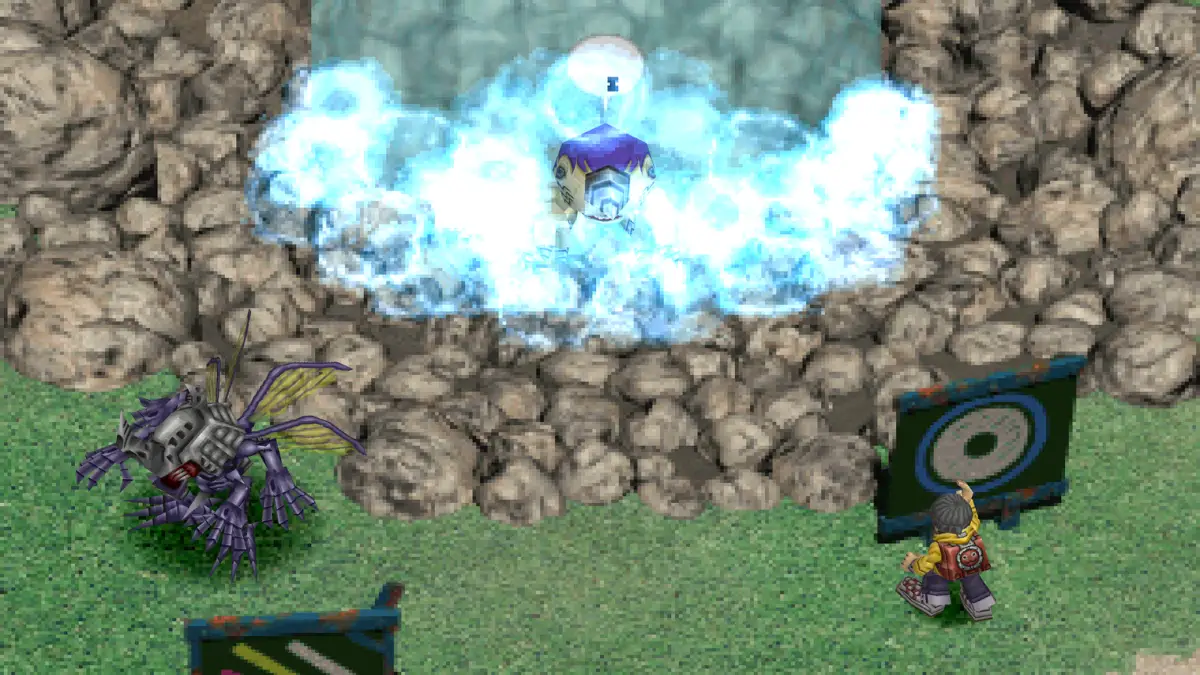
Training is probably the part of Digimon World that has aged the worst for me, I get what the game is doing, but actually sitting there and doing it over and over again is a different story.
Every hour I spend training makes my Digimon stronger, but that hour also comes out of its limited lifespan, and I actually like that tradeoff a lot, what I don’t love is watching the same training animation over and over again every time I raise a new partner.
There are other training spots scattered all around File Island, I know they’re there, I’ve used them, but I still end up right back at Green Gym most of the time (shocking absolutely nobody).
It’s right beside File City, it has training for all of the major stats, the toilet is close, food is close, and the gym itself gets better as you progress. Once everything is running smoothly there, leaving town to train somewhere else starts feeling like I’m making life harder for no real reason.
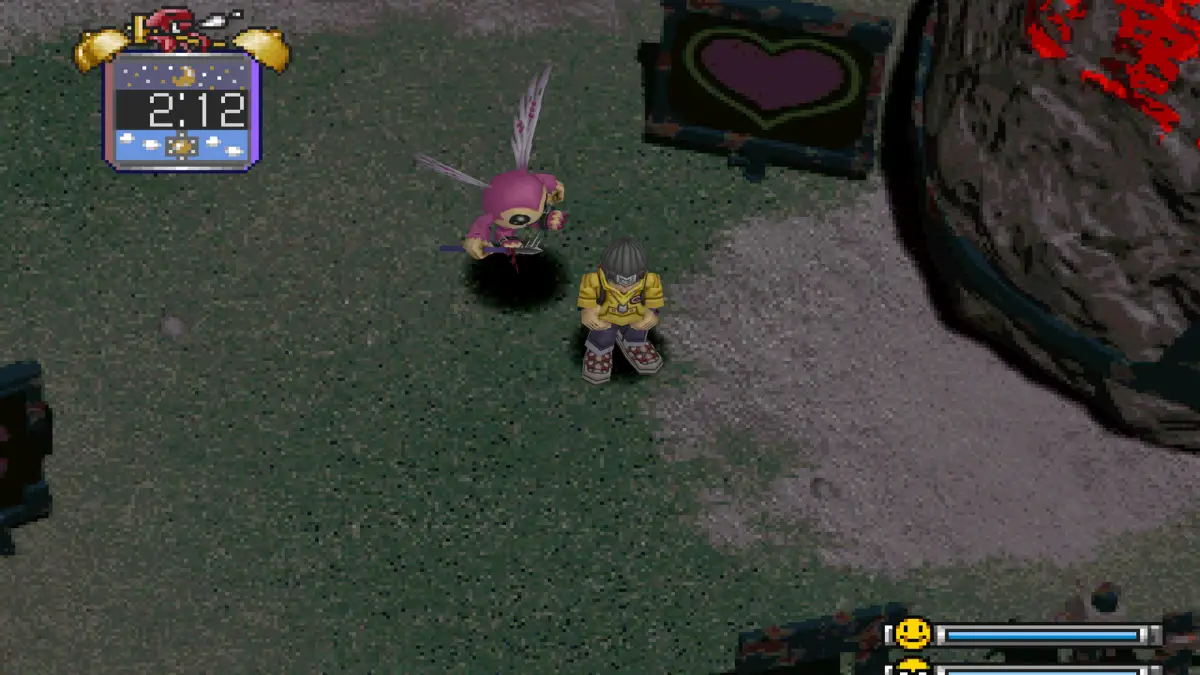
I wish the other training areas gave me a stronger reason to actually use them, File Island is already built around exploring and finding weird little places, so having my training routine change depending on where I’m at in the world would have fit perfectly.
This is also where I stop feeling even slightly guilty about fast-forward, DuckStation’s fast-forward feature doesn’t give my Digimon free stats or extra lifespan, six in-game hours of training still costs six in-game hours.
I just don’t need the game to charge six hours of my own life too.
There Is So Much Game You Might Never See
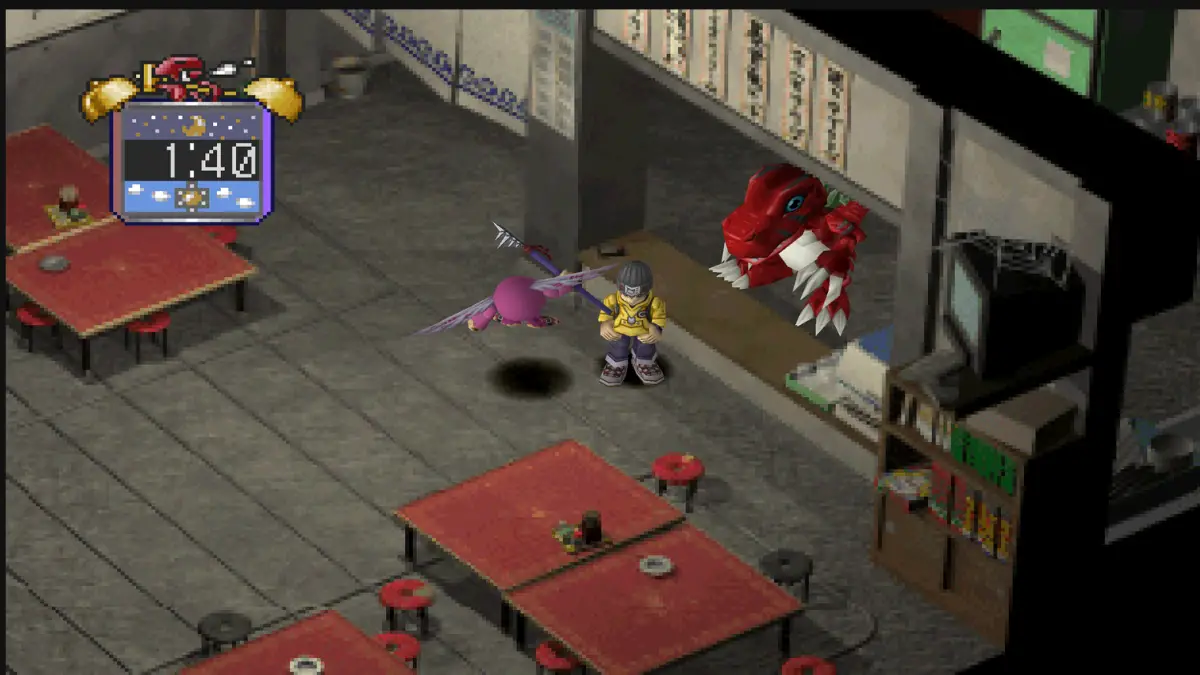
One thing I appreciate way more now is just how much random stuff is packed into this game, there’s always some little system or side activity hiding somewhere that I either forgot about or barely touched as a kid.
You can fish, enter tournaments, collect cards and medals, learn dozens of techniques, unlock transportation, improve the Meat Farm, play little minigames, build a restaurant, and send Digimon out looking for treasure, a lot of this stuff is completely optional (and somehow I still spent years ignoring it), and I barely touched half of it when I was younger.
The restaurant is still one of my favorite examples, you recruit these Digimon from all over File Island and eventually some of them are just… working shifts at a restaurant (normal career path), your partner can sit down and eat there, different chefs serve different meals, and this whole little system exists even though a lot of players can go through the game barely using it.
Treasure Hunt is the same kind of thing, Drimogemon gets recruited, goes back to the city, and now suddenly I can pay him to disappear for days and come back with items, some of those items even connect back into Digivolution, so these weird side systems aren’t always as separate as they first look.
I love that not everything in File City feels like it was placed there because the main story needs it, some things are useful, some are barely useful, and some are just neat to have around, which makes the city feel more like a place and less like a menu with buildings attached to it.
The downside is very Digimon World: the game has all of these cool systems and then barely tells you they exist.
The World Has Aged Better Than I Expected
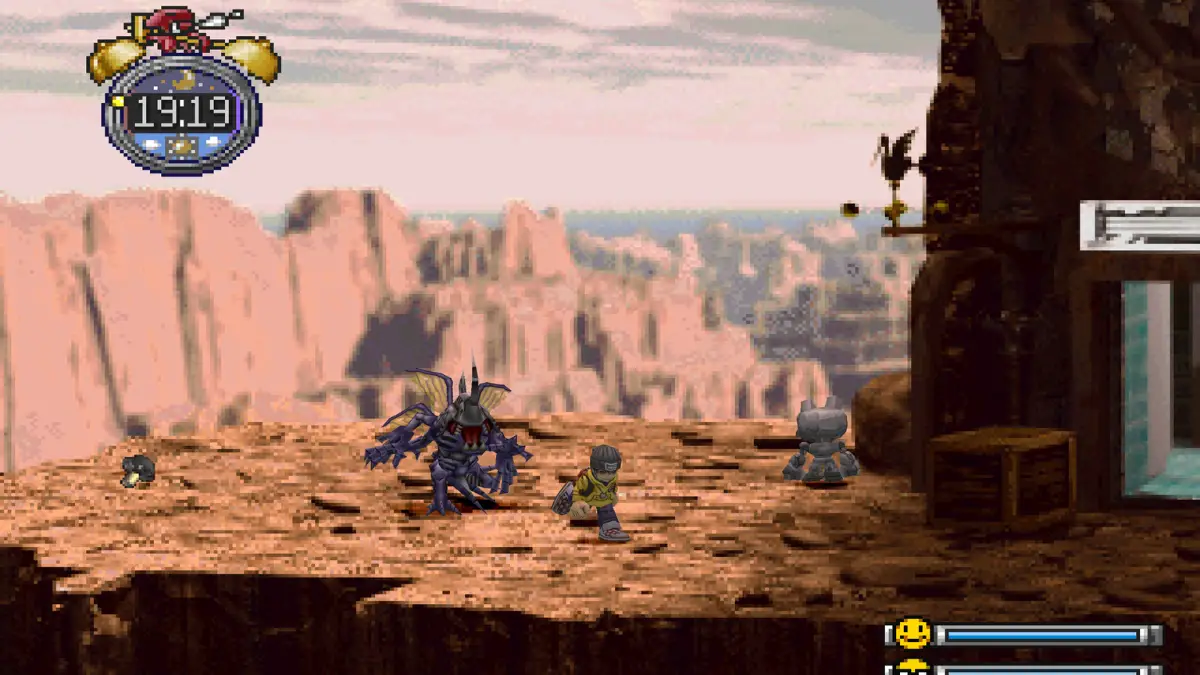
I remembered Digimon World looking incredible, my memory was definitely helping it out a little.
The Digimon are chunky PS1 models, and some of the animations are rough, very rough, but I still love looking at the game because the environments do a ridiculous amount of heavy lifting.
File Island is full of forests, cliffs, pipes, machinery, rusted metal, signs, weird buildings, and technology that looks like somebody dropped it into the wilderness and forgot about it, the game never really looks like normal fantasy, but it doesn’t look like clean sci-fi either, it has its own weird little identity.
The fixed camera helps more than I expected too, each screen gets to be its own little scene, so even though File Island isn’t huge, a lot of individual areas stick in my head.
And then there’s your partner following you everywhere, the models are old, but having this giant creature physically walking behind me still sells the relationship better than a monster sitting inside a menu ever could, it gets hungry, it gets tired, it needs the bathroom at the worst possible time, and it’s always there.
The music is where I know nostalgia is doing some work, I can hear certain tracks and immediately picture the exact area they came from, and that part is impossible for me to separate from growing up with the game.
Still, I don’t think nostalgia invented the atmosphere, File Island is just a strange, memorable place.
How Frustrating Is Digimon World in 2026?
Pretty frustrating, just not always for the reasons I remembered.
If you go in completely blind, you’re going to get lost, miss recruitment conditions, raise Digimon you didn’t want, repeat a lot of training, and probably spend at least a few minutes wondering why your partner is doing something stupid in battle.
Saving is another very 1999 part of the experience, the normal save system is tied into resting instead of giving me a modern save-anywhere option, and I actually like saving being connected to caring for my Digimon, but if I need to stop playing right now I’m using a save state (my real life doesn’t care that Agumon isn’t tired yet), I’ve got things to do.
A new player can easily spend around 30 hours finishing the game, someone who already knows the routes, training tricks, evolution requirements, and recruitment conditions can finish it in way less time, and that gap says a lot about where the difficulty really comes from.
Knowing the game makes the game easier, obviously, but it also makes it move better, I’m not wandering around for three hours because I missed one condition, and I’m not sitting through every single gym animation just because that’s how we had to do it in 2000.
Digimon World still asks for patience in 2026, I just think we are allowed to be a little smarter about where we spend it.
Some of the Difficulty Is Just Bugs
This is the part I’m not giving the game a nostalgia pass on.
The localized versions of Digimon World have real technical problems, there are text issues, battle bugs, evolution problems, crashes, softlocks, and even progression bugs, and some PAL releases are especially infamous for the Ogremon Fortress problem, where the game can basically decide you’re done progressing because a trigger doesn’t work correctly.
If my Digimon dies because I raised it badly, fine, that’s on me.
If I can’t continue because the game broke, that isn’t difficulty, that’s just broken (very immersive).
2026 recommendation: If you’re emulating the North American version, I’d look into the current Digimon World FixPack or whatever its latest successor is when you play. I like this kind of patch because it fixes actual problems without trying to turn Digimon World into a completely different game.
Should You Use a Guide for Digimon World?
Go in blind, mostly.
We know basically everything about Digimon World now, evolution requirements, recruitment conditions, training numbers, technique learning, hidden mechanics, all of it, and you can start the game with fifteen tabs open and know exactly what every Digimon is going to become before you even leave File City.
I think that would ruin a lot of what makes the first playthrough fun.
Let yourself get lost, let Numemon happen, find a Digimon without knowing what it is going to add to the city, push a little too far with an aging partner and regret it later, some of my favorite memories from this game came from having absolutely no idea what I was doing.
But there’s a point where mystery turns into the game wasting your time, and that’s when I’d look something up.
How I would play it: Keep your first generation mostly blind. After that, use an evolution chart or a basic system guide when you need one. You can keep the mystery without pretending the game did a good job explaining itself.
How to Play Digimon World in 2026
Actually getting the original game in 2026 is a little annoying, because there still isn’t a modern digital rerelease.
If you own the original disc and want to figure out your options, my guide to playing PS1 games in 2026 goes through original hardware and emulation without making it more complicated than it needs to be.
On PC, I use DuckStation, it gives me fast-forward, save states, resolution options, and all the little quality-of-life stuff that makes an old game like this much easier to live with. If you haven’t set it up before, my DuckStation setup guide walks through it.
I wouldn’t go crazy with the graphics settings though, Digimon World uses pre-rendered backgrounds, so pushing the 3D models to some ridiculous internal resolution can make them look like they were pasted on top of the scenery, I stick pretty close to the original 4:3 look and only clean things up a little, and my DuckStation settings guide covers the settings worth touching.
My setup: Fast-forward the repetitive training and familiar backtracking, use save states when you need to stop playing, and consider a bug-fix patch. I still let bad evolutions and bad decisions happen. I just don’t think a twenty-five-year-old loading screen deserves the same respect as the lifespan system.
What If This Sounds Too Frustrating?
Then there’s a pretty good chance the original Digimon World isn’t for you, and that’s fine.
If the raising, lifespan, and town-building stuff sounds great but the PS1 friction sounds awful, I’d try Digimon World: Next Order (I won’t judge you), it keeps a lot of the same ideas while making the whole thing much easier to understand and live with.
I still prefer the mood of the original, File Island feels smaller, stranger, and a little lonelier in a way I really like, but I’d rather someone play Next Order and enjoy this style of Digimon game than force themselves through the PS1 game because somebody told them suffering builds character.
Three Things I Wish I Knew Before Playing Digimon World
- Your first partner dying is normal. It feels like you lost everything the first time. You didn’t. The game expects you to go through generations.
- You are supposed to be confused sometimes. Getting lost and figuring things out is part of why File Island works so well.
- You aren’t supposed to be confused forever. If you have been stuck on the same evolution or progression problem for hours, just look it up. There’s no medal for refusing Google.
Who Should Play Digimon World in 2026?
- Play it if: You like monster raising, weird PS1 RPGs, town building, exploration, hidden systems, and games where getting better at the game matters as much as getting better stats.
- Think twice if: Repetitive training annoys you, you hate getting lost, or you know the partner lifespan is going to bother you every single time.
- Probably skip it if: What you really want is a story-heavy RPG, a permanent party of Digimon, turn-based battles, and clear instructions telling you exactly what to do next.
I think the people who get the most out of Digimon World are the ones who enjoy learning the game itself, your fifth generation should feel easier than your first one because your Digimon isn’t the only thing getting better, you are too.
What Aged Well and What Didn’t
| Category | 2026 Verdict |
|---|---|
| Still great | Raising one partner, the lifespan pressure, exploring File Island, rebuilding File City, and the general atmosphere |
| Still rough | Repeated training, early combat control, weak explanations, backtracking, old save limitations, and the bugs |
| Way better in 2026 | Fast-forward, save states, spoiler-light guides, evolution information, bug fixes, and modern emulation |
| My biggest surprise | A lot of the systems I thought were simple as a kid were actually pretty deep. The game was just awful at showing me that. |
Memory vs. Reality
| What I remembered | What I found in 2026 |
|---|---|
| Raising Digimon was incredibly deep | Yep. There was even more going on than I understood. |
| Digivolution felt random | It isn’t random. The game just does a terrible job telling you what you did wrong. |
| My Digimon wouldn’t listen | There’s a reason for that. Brains and battle commands matter way more than I understood. |
| Combat was simple | Not even close. Techniques, status effects, AI behavior, positioning, and specialty matchups are all hiding under there. |
| File Island felt enormous | It’s actually pretty small, but it’s dense enough that I still love exploring it. |
| File City was amazing to rebuild | Still one of the best parts of the game. |
| Training took forever | Correct. Fast-forward is my friend now. |
| The game looked incredible | The models definitely aged. The backgrounds and art direction held up much better. |
| The game was unfair | Sometimes it’s intentionally harsh. Sometimes it just explains itself badly. Sometimes it’s literally broken. |
| There wasn’t anything else quite like it | I think this might be even more true now. |
Frequently Asked Questions
Does Digimon World still hold up in 2026?
I think it does, as long as you know what you are getting into, raising one temporary partner, exploring File Island, and rebuilding File City still feel awesome, while the repetitive training, weak explanations, bugs, and old quality-of-life stuff are where its age really shows.
How long does Digimon World take to beat?
I’d expect around 30 hours for a new player, but if you already know how to train efficiently, what your Digimon needs to evolve, and where all the important recruits are, you can finish it in way less time.
Is Digimon World worth playing for the first time in 2026?
Yes, especially if raising one Digimon and slowly rebuilding a weird little world sounds fun to you, you don’t need nostalgia for this game to work, but you definitely need some patience.
Is Digimon World hard?
Yes, but a lot of the difficulty comes from not knowing things, evolution requirements, recruitment conditions, battle commands, care systems, and technique learning are all poorly explained, and once you understand the rules, the game gets a whole lot easier.
Why does my Digimon not listen in battle?
Your Digimon has some autonomy, especially early on, raising Brains unlocks better commands, and eventually you can directly choose which equipped technique you want it to use, which I somehow spent years not realizing while thinking the game was just ignoring me.
Does Digimon World have type advantages?
Yes, techniques and Digimon have specialties that can increase or reduce damage depending on the matchup, the game barely explains this, which is probably why I never knew it existed when I was younger.
Why do I keep getting Numemon in Digimon World?
Usually because your Rookie reached its evolution point without meeting the requirements for another Champion, the annoying part is that the game gives you almost no useful explanation for which requirement you missed, welcome to the club.
Should I play Digimon World with a guide?
I’d start mostly blind, once the mystery stops being fun and starts wasting your time, look things up (I promise Jijimon will never know), I think that gives you the best version of both experiences.
Final Verdict: Does Digimon World Hold Up in 2026?
WornOutWill verdict: Yes, Digimon World is still worth playing in 2026, nostalgia absolutely helps me put up with some of its nonsense, but nostalgia isn’t the reason the game still works.
Best for: Anyone who likes raising games, exploration, weird hidden mechanics, rebuilding a town, and learning through failure.
Biggest drawback: The game hides way too much important information and makes you repeat a lot of training, some of that friction is part of the experience, some of it is just old.
I obviously have nostalgia for Digimon World, File City music can still drag me straight back to being a kid, and watching Agumon wobble around behind me is probably never going to feel completely objective.
But going back in 2026 also made me realize I misunderstood a lot of this game, probably more than I ever realized as a kid.
Combat had way more going on than I knew, Digivolution wasn’t random, File City was doing more than giving me a prosperity number, and even the parts I still dislike make more sense now that I can actually see what the game was trying to do.
That doesn’t mean I suddenly forgive everything, training still drags, the game hides rules it really should explain, and I’m never going to defend an actual progression bug just because it happened on a PS1.
What still gets me is the partner itself, I raise this one weird little creature, spend hours trying to make it stronger, drag it all over File Island, get annoyed when it refuses to cooperate, finally get attached to whatever it became… and then it dies.
Then I hatch another one, and do it all over again.
As a kid, that cycle felt like the game taking something away from me, now I think it’s the entire reason I remember those partners at all.
Digimon World can still be a pain, it can still waste your time, and I’d never hand it to every person who likes Pokémon and assume they are going to love it.
But if you can get past the rough edges, there’s still something really special here, my partners felt alive, temporary, unpredictable, and mine when I was a kid.
They still do.