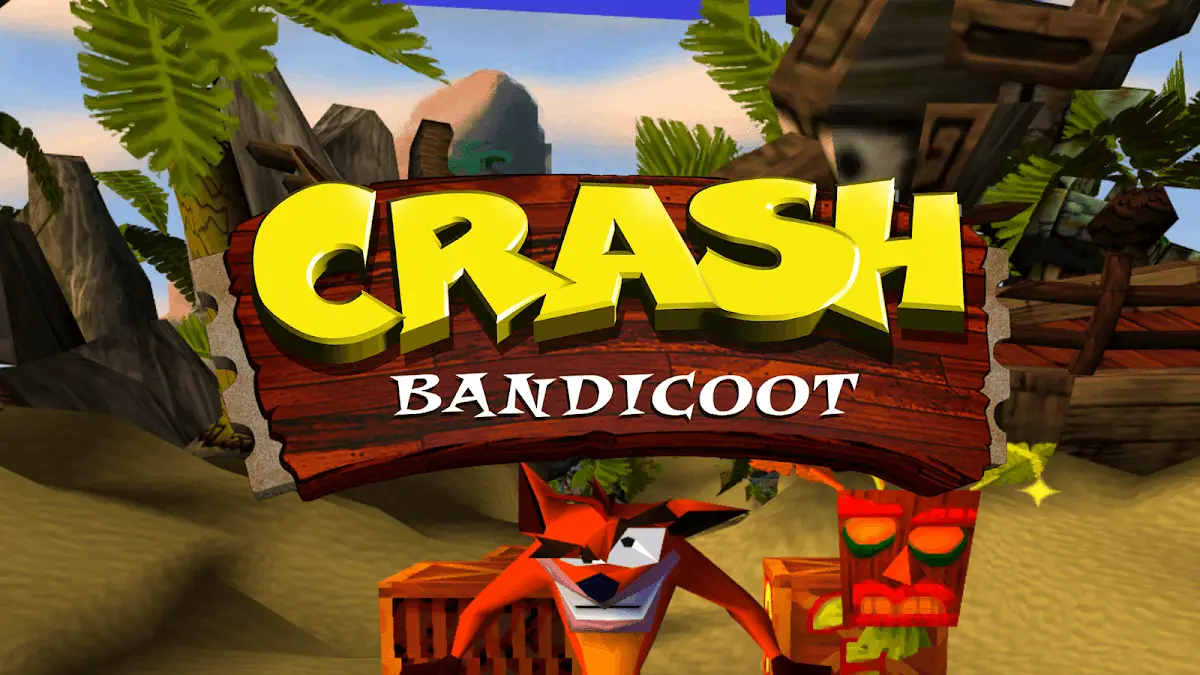
There is a bridge level in Crash Bandicoot, and I need you to remember it correctly. Not the version where you cleared it first try, or even fifth try. I mean the version where you stopped counting how many times you fell and reduced the entire level to tiny instructions: get past the hog, land on the plank, clear the gap, do not look down.
I replayed the original Crash Bandicoot on PS1 expecting nostalgia to do most of the work. Instead, about twenty minutes in, my palms were damp and I was genuinely annoyed at a game I had already beaten before I was ten. I also could not stop playing.
So the question behind this Crash Bandicoot PS1 review is not whether the game still makes me feel something. It obviously does. The question is whether the nostalgia is accurate. After thirty years of better cameras, smoother controls, automatic saves, and platformers with far more mechanical freedom, is the original Crash still actually good?
Short answer: Yes. Crash Bandicoot still holds up in 2026 because its level design, rhythm, visual identity, and deliberately limited move set remain unusually focused. The original save system is bad, depth perception can absolutely betray you, and completion runs are far harsher than the sequels. Those flaws are real. They just do not erase what still works.
Last checked: August 22, 2026. This review is based on the original 1996 PlayStation release and comparisons with the N. Sane Trilogy. I also rechecked the original saving rules, gem requirements, bonus rounds, development history, and the remaster’s documented physics changes.
Crash Bandicoot PS1 Review: The Quick Verdict
| Release | 1996, PlayStation |
|---|---|
| Developer | Naughty Dog |
| Genre | 3D platformer |
| Best at | Tight level design, visual personality, rhythmic platforming, replayability |
| Still frustrating | Saving, depth perception, harsh gem requirements, uneven checkpoints |
| My score | 4/5 |
| Does it hold up? | Yes, with very 1996-shaped rough edges. |
Crash is also one of my picks in 10 PS1 games that shaped modern gaming. This review is the more uncomfortable follow-up: what happens when you stop talking about its historical importance and actually put your hands back on the controller?
How Crash Bandicoot’s Limitations Became Its Design
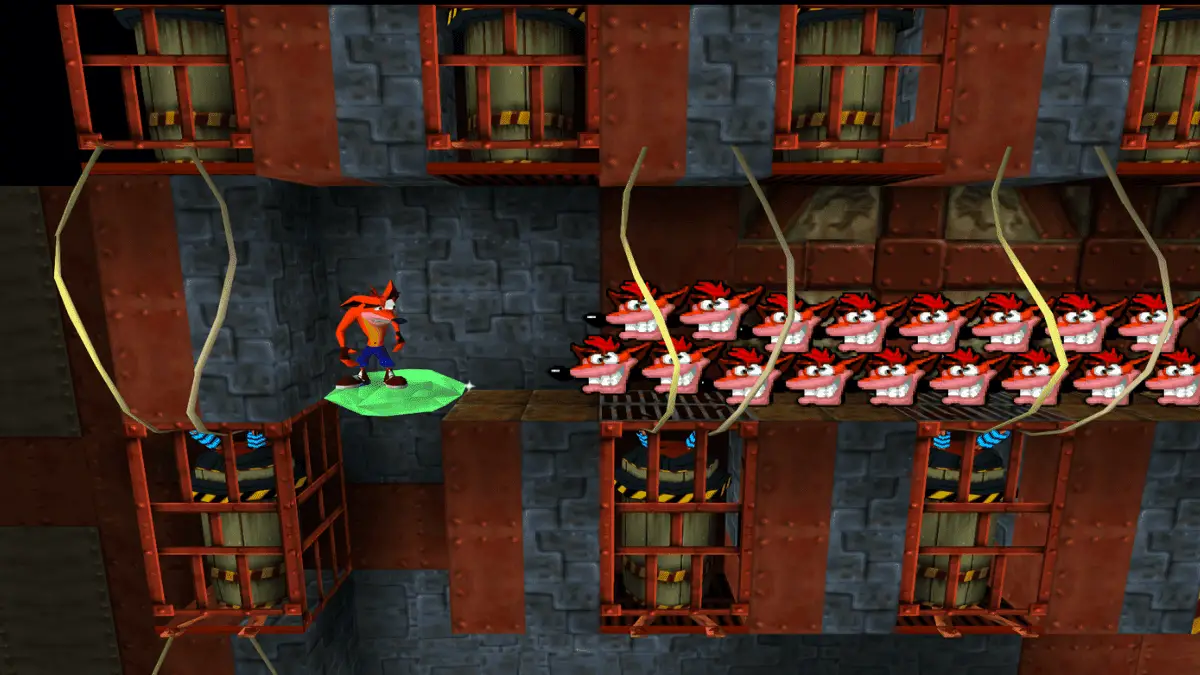
The first thing worth correcting is the clean mascot mythology. PlayStation really did lack a Mario or Sonic-style mascot, and Naughty Dog absolutely saw that opening. Sony later pushed Crash hard once it signed on as publisher. But Crash did not begin because Sony handed Naughty Dog a mascot assignment. Naughty Dog was working with Universal Interactive and deliberately set out to build a 3D character-action game that could fill that role.
Andy Gavin and Jason Rubin jokingly called the concept the “Sonic’s Ass” game: what would a 3D platformer feel like if the camera spent most of its time behind the character? Gavin’s own development retrospective says they were already worried about camera control, dizziness, and judging depth before production had really begun.
That helps explain why Crash feels so unlike the open 3D platformers that followed. Naughty Dog locked the viewpoint down so it could control what the player saw, concentrate graphical detail where it mattered, and build something closer to a 2D platformer’s precision inside a 3D world. Naughty Dog later described that fixed path as part of what let the engine stream only the level data needed for the current view.
The technology underneath it was equally strange. Gavin created GOOL, or Game Oriented Object LISP, specifically for controlling game objects and behaviors. The team also built custom tools, compression systems, and real-time CD streaming because finished levels could be far larger than the PlayStation’s 2MB of main RAM. Naughty Dog preserved the full making-of series, and it remains one of my favorite windows into how aggressively developers had to negotiate with PS1 hardware.
That technical history does not excuse every limitation. It does explain why the game feels so concentrated. Crash is not giving you a huge move set and an open playground. It gives you movement, jumping, spinning, and tightly framed problems designed around exactly those tools.
Why Crash Bandicoot’s Gameplay Still Works
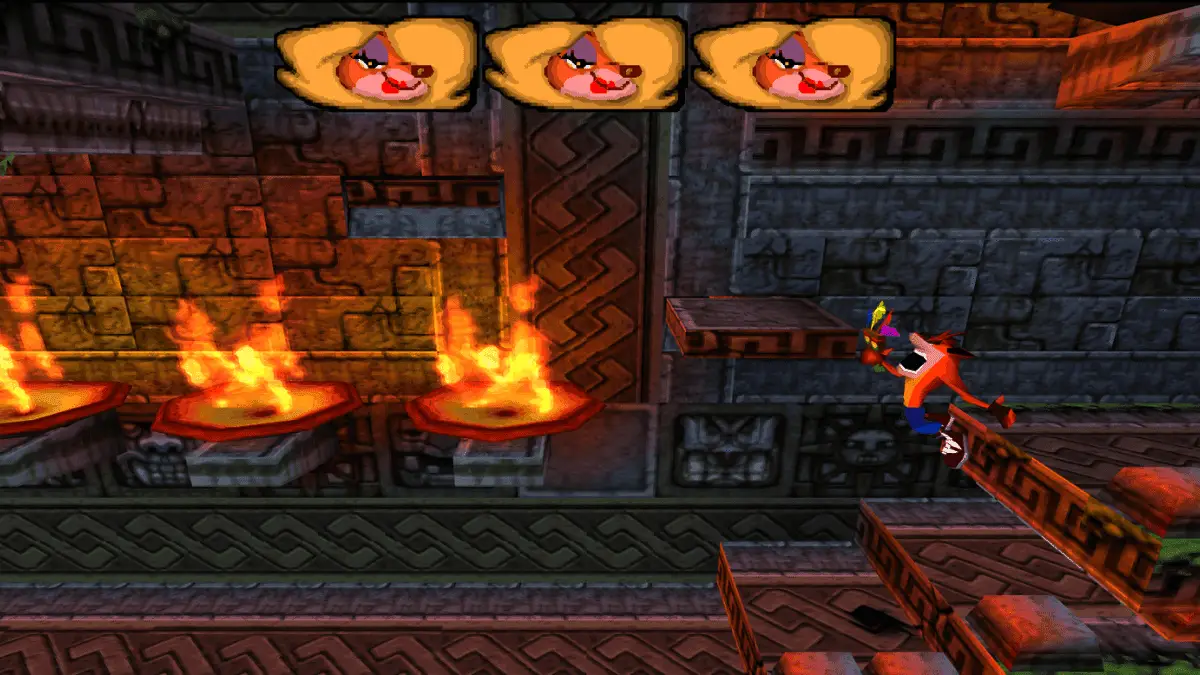
The plot barely needs the space it occupies. Cortex mutates animals into an army, Crash escapes, and Tawna is left behind. Your job is to cross three islands, survive Cortex’s experiments, and eventually go back for her.
What matters is what happens between those story beats. Levels rotate between running into the screen, running toward the camera, side-scrolling sections, vertical climbs, ruins, rivers, machinery, dark corridors, and those bridge levels that seem personally offended by the shape of Crash’s feet.
The limited camera makes you learn levels physically. You stop thinking “there is a turtle after this crate” and start moving before you consciously finish the thought. After enough failures, the map is no longer information on the screen. It is timing stored in your hands.
That is also why the difficulty often feels productive. Good Crash deaths teach you something tiny. Jump later. Do not spin there. Use the enemy as a bounce. Let the platform finish moving. The game keeps converting failure into mechanical information until your run suddenly looks calm.
Boulder Dash: Difficulty Through Rhythm
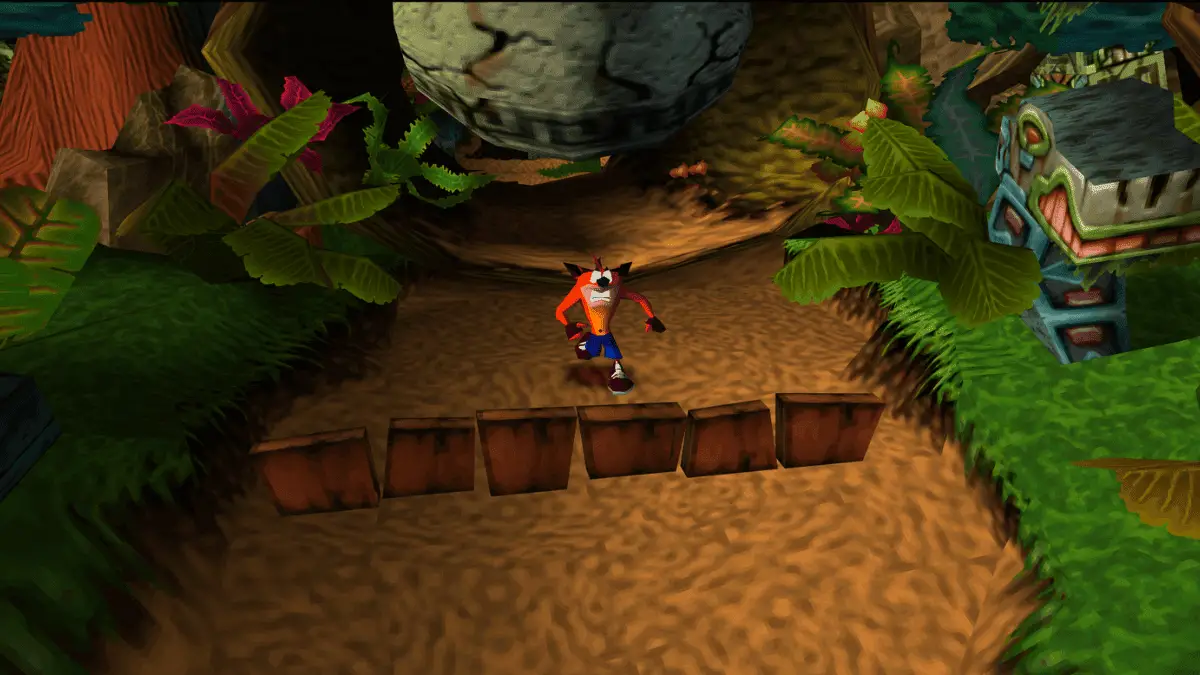
Boulder Dash flips the normal viewpoint and has Crash run toward the camera while a giant boulder chases him. You cannot comfortably inspect the level ahead because Crash’s body and the camera are moving toward information that arrives late.
So you calibrate to rhythm instead. Hazards stop being surprises and start becoming beats. Eventually you are responding to what you know is coming rather than what you can clearly see. Clearing it feels less like solving a puzzle and more like your hands finally agreeing with the game.
The High Road: When the Camera Fights Back
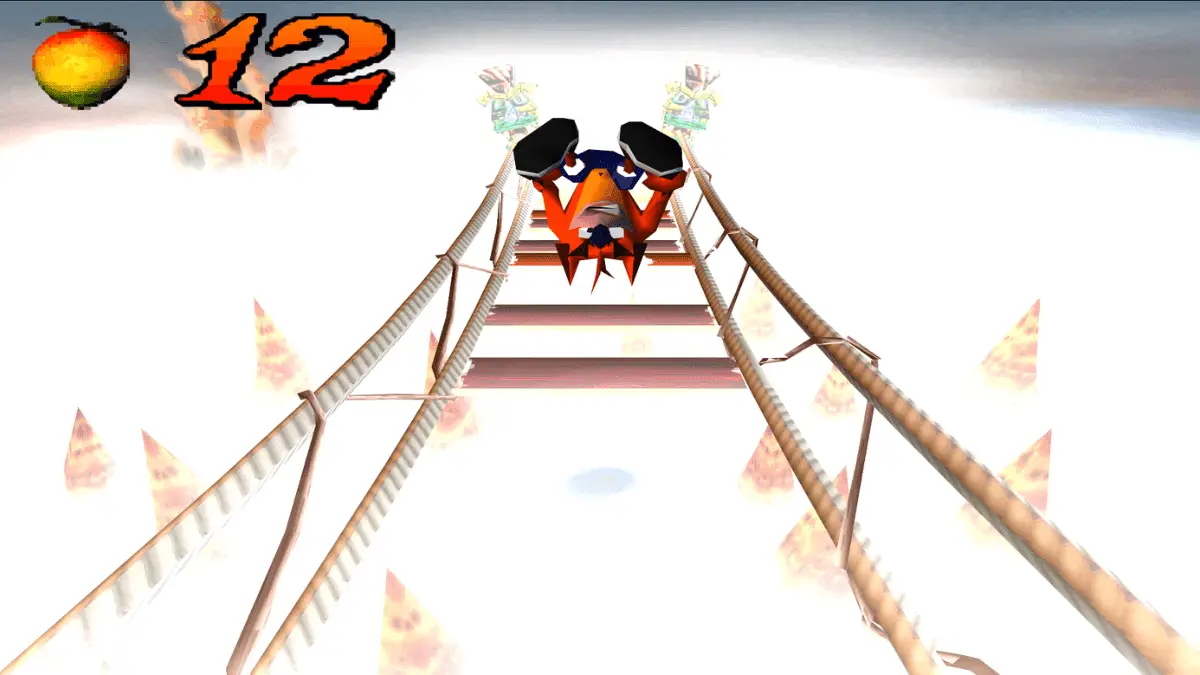
The High Road is the counterargument.
The rope bridge is narrow, depth is difficult to read from the fixed angle, and a small error sends you into open sky. Some of its difficulty is coherent and learnable. Some of it comes from having to estimate where Crash exists in three-dimensional space from a camera that is not always giving you enough information.
I still think most deaths tell you what went wrong. I also think anybody claiming the depth perception is flawless has been staring into the PS1 fog for too long. Both can be true.
That tension is part of why my older article about getting stuck on PS1 games keeps coming back to games like Crash. Sometimes persistence was the mechanic hiding behind the mechanic.
The Original Gem System Is Meaner Than I Remembered
The crates are where casual play starts mutating into obsession.
In the original 1996 game, earning a clear or colored gem generally means breaking every crate in the level without respawning from a checkpoint. In practical terms, that means completing the crate run on one life once you have activated a checkpoint. Dying before using a checkpoint does not necessarily ruin the run because you restart from the beginning, but once you respawn at a checkpoint, the gem attempt is dead.
One correction to my old version of this review: crates inside Tawna, N. Brio, and Cortex bonus rounds do not count toward the level’s crate total in the original PS1 game. The N. Sane Trilogy changed how bonus-round crates work, which makes it very easy to blend the two systems together in memory.
The original does not even give you a running crate counter. You reach the end and discover whether you were perfect or whether Crash is about to stand under a pile of missed boxes while the game judges your life choices.
Tawna, N. Brio, and Cortex Bonus Rounds Explained
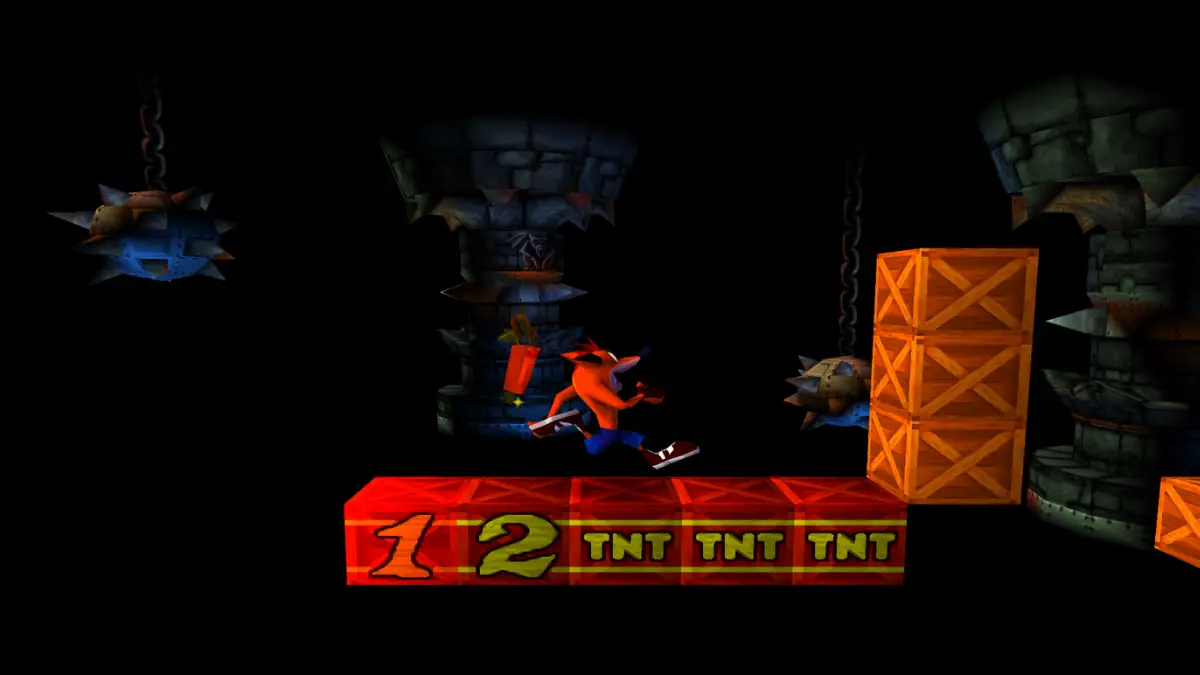
The three token types are one of Crash 1’s strangest systems. Collect three matching character tokens in a level and Crash is transported to that character’s bonus area.
| Token | What the Bonus Does | Original PS1 Rules |
|---|---|---|
| Tawna | Fruit, lives, and the main progress save | Successfully finishing it records level-unlock progress. Once completed, that Tawna round disappears permanently. |
| N. Brio | Harder bonus rooms with extra lives | No main progress save. These are replayable by re-entering the level. |
| Cortex | Earns one of two keys for secret levels | Fail and you can retry after re-entering the level. Once the key is earned, that bonus is finished permanently. |
The fact that the game ties ordinary level progression saving to successful Tawna bonus rounds is still astonishing. It is not merely old-fashioned. It creates situations where you can clear later levels, save a gem or key separately, shut the game off, and then reload from an earlier point on the island map because your last true progress save came from Tawna.
That distinction matters. A Gem Save records the gem. A Key Save records the key. They do not necessarily move your saved level-unlock position forward. Tawna’s Save Point is what records that adventure progress.
The N. Sane Trilogy Really Does Feel Different
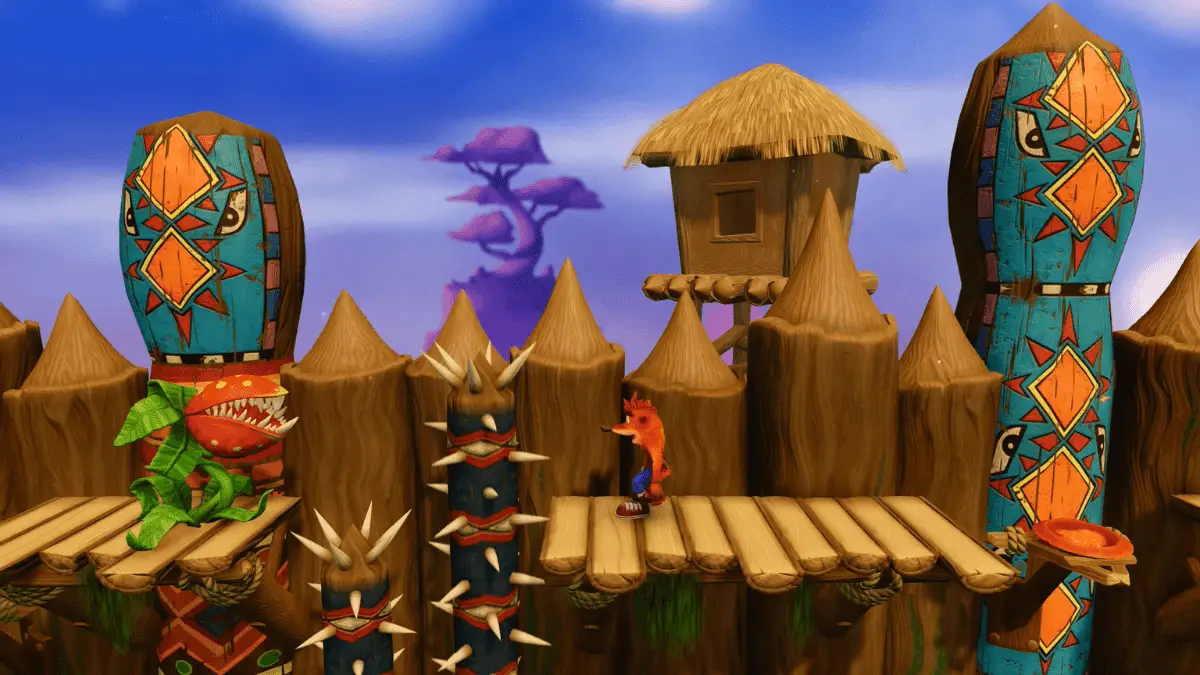
When the N. Sane Trilogy arrived in 2017, people immediately argued that the first game felt harder. That was not purely collective nostalgia malfunctioning.
Vicarious Visions later explained that the trilogy used Crash Bandicoot 3: Warped as the starting point for handling, then tuned jumping separately for each game. The studio specifically acknowledged that Crash falls more quickly when the jump button is released than he did in the original Crash 1, and that the new collision and physics system can make certain jumps require more precision.
That is a more interesting result than “the remaster proved everybody’s muscle memory was frame-perfect.” Players were detecting real changes, but the remake was not a laboratory experiment demonstrating the mathematical perfection of the old game. It was a new engine reproducing old level layouts with deliberately similar, not identical, handling.
I still prefer the feeling of the original for Crash 1. But the N. Sane version fixes something far more important for most people: it modernizes the save and checkpoint systems and removes a lot of the punishment that had nothing to do with actually landing jumps.
Where Crash Bandicoot Has Aged Badly
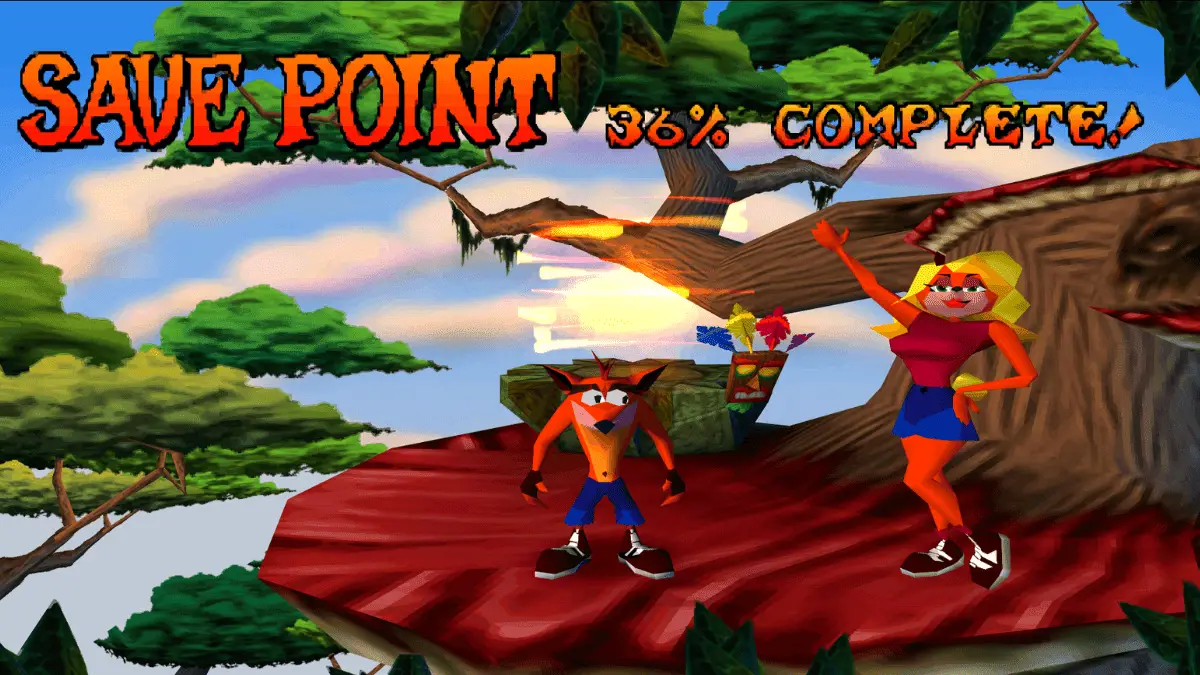
The original save system is bad.
Not “old games were harder” bad. Not “modern players need more patience” bad. It is unnecessarily confusing and can make completed levels disappear from your loaded progression because gems, keys, and Tawna progress saves record different things.
Checkpoint placement is uneven too. The High Road and a few other late stages combine long stretches with depth-perception problems, which can turn repetition from useful practice into plain irritation.
The move set is intentionally tiny. Crash runs, jumps, and spins, with context-specific riding and chase mechanics doing most of the variety work. I like that focus, but going backward from Crash 2 or Warped makes the first game feel noticeably stiffer and less expressive.
| What Still Works | What Has Aged |
|---|---|
| Tight, deliberate level layouts | Tawna-based progress saving |
| Strong visual personality | Depth perception on narrow 3D jumps |
| Simple controls with high skill ceiling | Uneven checkpoint spacing |
| Crates and gems make replaying meaningful | Brutal original gem requirements |
| Excellent rhythm and level variety | Limited movement compared with the sequels |
What’s the Best Way to Play Crash Bandicoot in 2026?
If you want the original physics, original saving, original visuals, and every piece of 1996 weirdness intact, play the PS1 version on original hardware or from your own legally dumped disc through an emulator such as DuckStation. My guide to playing PS1 games in 2026 covers those options, and my DuckStation setup guide walks through the emulator.
If you mainly want to play the levels without fighting the old save system, the Crash Bandicoot N. Sane Trilogy is the easiest modern route. Activision currently lists it for PS4, Xbox One, Nintendo Switch, and PC, and the Switch version is also supported on Switch 2 through backward compatibility.
Crash Bandicoot PS1 FAQ
Does the original Crash Bandicoot still hold up?
Yes. Its strongest qualities are still the same ones it had in 1996: focused level design, readable enemy patterns, memorable art direction, and platforming built around rhythm and repetition. Saving and some depth-perception issues have aged much worse than the actual level design.
Why is Crash Bandicoot 1 so hard?
Crash 1 combines precise jumps with a fixed camera, sparse checkpoints in some levels, and harsh completion rules. In the original PS1 release, getting gems generally requires breaking every crate without respawning from a checkpoint, while saving normal level-unlock progress is tied to successful Tawna bonus rounds.
How do you save in the original Crash Bandicoot?
Completing a Tawna bonus round lets you save normal level-unlock progress. The game also offers Gem Saves and Key Saves when those collectibles are earned, but those primarily record the collectible and do not behave like a modern automatic level-completion save.
Do bonus-round crates count toward gems in Crash Bandicoot 1?
Not in the original 1996 PlayStation game. Crates inside Tawna, N. Brio, and Cortex bonus rounds do not count toward the main level’s crate total. The N. Sane Trilogy changed the bonus-round rules.
Is the N. Sane Trilogy harder than the original Crash 1?
It is different. Vicarious Visions confirmed changes to falling behavior, collision, and physics that can make some individual jumps demand more precision. At the same time, the remaster’s modern save, checkpoint, and dynamic difficulty systems make the overall game much more forgiving than the original PS1 release.
Final Verdict: 4/5
Crash Bandicoot is still genuinely good.
The level variety is strong enough that the three islands feel like a journey rather than a texture swap. The visual identity is loud and expressive. The bosses are simple timing puzzles with enough personality to stick around in memory. Crates still awaken something deeply unhealthy in anyone who thought they were done caring about collectibles.
The save system earns every complaint it gets. Depth perception occasionally creates deaths that do not feel connected to skill. Completion runs can be cruel in ways the sequels wisely abandoned.
But the thing I was worried nostalgia had invented is still there. That moment when frustration burns away and the level becomes timing, when your hands stop asking what comes next because they already know.
Most things I loved as a kid feel smaller when I revisit them. The love was real, but sometimes what I was actually protecting was the version of myself who first experienced them. Crash 1 did not fully behave that way. The game was still underneath the memory, being difficult and weird and annoyingly good.
Score: 4/5. Play it if you want to understand why Crash worked. Play the N. Sane Trilogy if you would prefer that saving your progress not become a side quest.