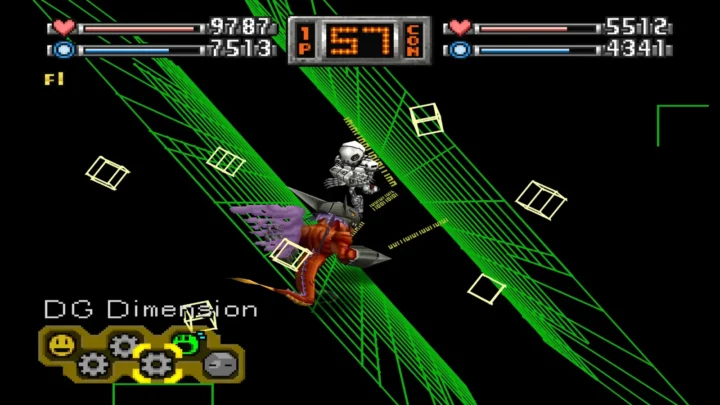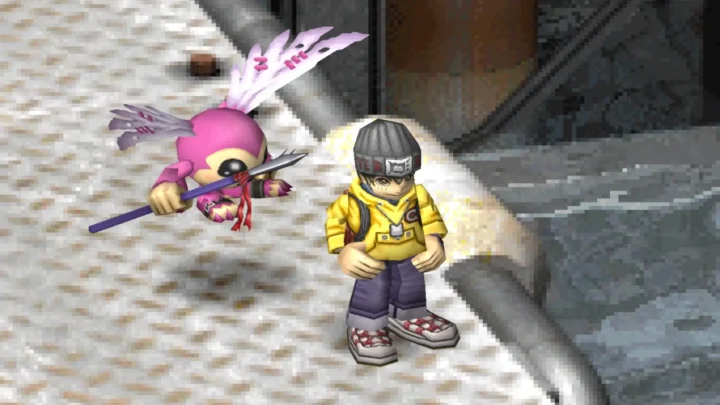
I have been playing Mega Man Legends for over 23 years, which means I am probably the worst person to ask if the controls feel normal. I know Kattelox Island, I know which holes in the walls are worth checking, I know which random junk I want to drag back to Roll, and I know where the story is going. So for this Mega Man Legends review in 2026, I tried to look past all of that and answer the question that actually matters: would I recommend this PS1 game to somebody playing it for the first time now?
Yeah, I would, but I would warn them first. The controls are rough, normal combat leans way too hard on circle strafing, the Reaverbot variety is small, and there are moments where the game expects me to remember one conversation instead of just telling me where to go (thankfully Data gives me reminders). None of that has stopped me from loving it. The digging is fun, the weapon building gives every trip underground a purpose, Kattelox actually feels like a place, and the ruins still have this strange ancient feeling that makes me want to see what is one room farther in.
For me, Mega Man Legends is still one of the best PS1 hidden gems, and after all this time, it is still my favorite Mega Man game.
How I reviewed it: I replayed the original PlayStation version in 2026 and focused on what actually affects a first playthrough now, controls, combat, digging, weapon upgrades, Kattelox, the ruins, side activities, story, saving, and the places where old PS1 design can slow you down.
Last checked: September 2, 2026. There still isn’t a proper modern remaster or current-console collection release of the original Mega Man Legends, so original PlayStation hardware and PS1 emulation remain the most practical ways to play it today.
Mega Man Legends Review at a Glance
| Mega Man Legends | Quick Details |
|---|---|
| Developer / Publisher | Capcom |
| Original release | 1997 in Japan; 1998 in North America and Europe |
| Platform reviewed | PlayStation |
| Genre | 3D action-adventure / light action RPG |
| Main structure | Explore Kattelox, dig through ruins, collect parts and refractors, return to town, upgrade, then head back out |
| Combat style | Lock-on shooting, strafing, jumping, dodging, Buster customization, and special weapons |
| Save system | Manual saving through Data |
| Typical playtime | Roughly 12–15 hours to finish; longer if you chase upgrades, side content, and collecting |
Should You Play Mega Man Legends in 2026?
Short answer: Yes, if exploring old ruins, finding parts, building weapons, and slowly learning one small island sounds fun.
Think twice if: Early 3D controls are a deal breaker, or you want a long, difficult action game.
If you are already digging through old PlayStation games looking for something a little stranger, I would put it right beside the games in my PS1 hidden gems worth playing in 2026. It has old-game friction all over it, but there isn’t much else on the console that feels exactly like this.
What Is Mega Man Legends Actually Like?
If you only know Mega Man from the Classic or X games, Legends is a huge change.
Don’t go in expecting stage select screens or the usual loop of beating a boss and taking its weapon. This is much closer to a 3D action-adventure with light RPG systems, Mega Man just happens to be standing in the middle of it.
You play as Mega Man Volnutt, a Digger who explores ancient ruins looking for refractors and lost technology. He travels with Roll, Barrel, and Data aboard the Flutter, they crash on Kattelox Island, the ship needs repairs, the island is full of ruins, and a family of air pirates is also tearing the place apart looking for the legendary Mother Lode.
Most of the game has me bouncing between those two problems. I go underground, fight Reaverbots, poke around for treasure, come back with parts and money, then head into town and deal with whatever the Bonne family has broken while I was gone.
The loop is basically dig, find, build, upgrade, go back out. Roll can turn certain items into special weapons, Buster Parts change how Mega Man’s normal gun behaves, and movement upgrades eventually let you reach places you couldn’t get to earlier. There are shops, side quests, minigames, a museum, town events, and enough little distractions that Kattelox never feels like it only exists to point me toward the next dungeon.
That was a big shift for Mega Man at the time. GameSpot’s original PlayStation review described Legends as more of an action RPG built around exploration and storytelling than a simple attempt to move the old side-scrolling formula into 3D, and that is pretty much why I think the game survived.
The Controls Are the First Big Hurdle
Mega Man feels old when you first start moving him around.
Legends came from that awkward period where 3D games were all inventing their own answer to the camera, there is no normal free right-stick control here, turning and strafing take some adjustment, and I can absolutely imagine somebody playing for twenty minutes and wondering why I told them this was good.
I adjust quickly because I have been doing this for over two decades, which is not exactly a fair test (twenty-three years of accidental training).
Once the controls click, combat is easy to understand. Lock on, circle strafe, jump or dodge the attack, keep firing. Bosses have patterns to learn and some fights care more about range or timing, but normal enemies rarely force me to change much.
That is probably my biggest gameplay complaint in 2026: Circle strafing works too well. The combat feels good enough that I enjoy doing it, but simple enough that I notice how often I am doing the same thing.
The Reaverbots themselves fit the ruins perfectly, some of them can give me a good scare when I turn a corner and realize something has been sitting there waiting for me, I just wish there were more types. You spend a lot of time underground, the enemy roster starts repeating before the ruins stop being interesting. Thankfully Mega Man Legends 2 steps it’s game up with more Reaverbot types, but I wish they were here as well.
The Fun Part Is What Happens Around the Shooting
The Buster customization is where the combat starts feeling more like mine.
Buster Parts change attack, energy, range, and rapid fire, and I can mix them depending on how I want Mega Man to fight. If I want to stay back and hit enemies from a safer distance, I can build for range, if I want to get closer and dump fast high-damage shots into something, I can do that instead.
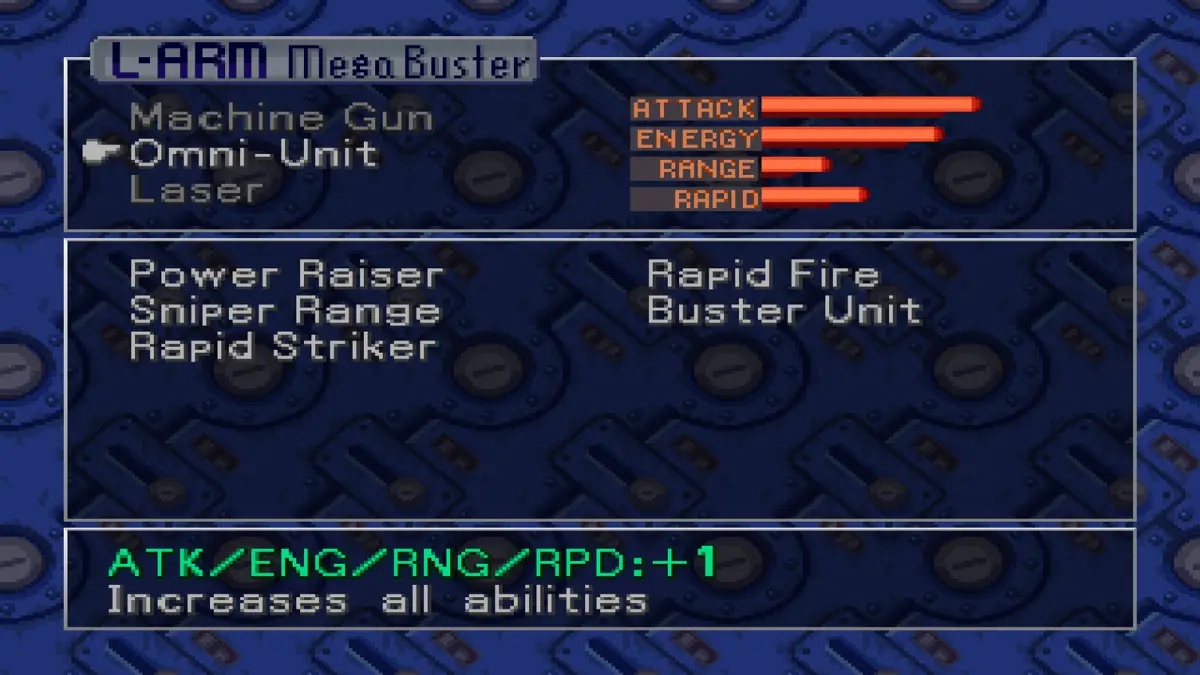
I usually find one setup I like and then barely touch it for half the game (excellent use of all these options), but the freedom is there, and it matters more than a normal string of damage upgrades would.
Special weapons are even better for this. I can find some weird piece of machinery in a ruin, bring it back to Roll, and somehow she turns it into a weapon. Then I dump Zenny into upgrading it because apparently repairing the Flutter can wait.
There is a pretty good spread too, you can end up playing with things like the Grenade Arm, Drill Arm, Active Buster, and eventually the ridiculous Shining Laser. They don’t all fill the same role, and part of the fun is finding out which ones are actually worth pouring my Zenny into.
Some of those weapons are much more useful than others. A few feel too expensive for what they actually give me, and there are weapons I build, fire a couple of times, and forget exist. I don’t really mind, finding them is part of the fun, but once you make the majority of them, exploration of the island is pretty much over and there is nothing to use them on.
That is what makes the progression work, treasure isn’t just a number going up. Something I find underground might become a new weapon, improve one I already have, open an old path, or end up in the museum. Going digging gives me a reason to come back stronger, and getting stronger gives me a reason to go digging again.
Kattelox Is Small, the World Underneath It Doesn’t Feel That Way
This is the part of Mega Man Legends I was most worried nostalgia had inflated.
It hadn’t. (yay)
The ruins are quiet, worn down, and strangely empty, I always get this feeling that Mega Man is digging through something that should have stayed buried. The game doesn’t stop and tell me every hallway is ancient, it lets the silence, the old machines, and the fact that nobody really seems to understand what is down there do the work.
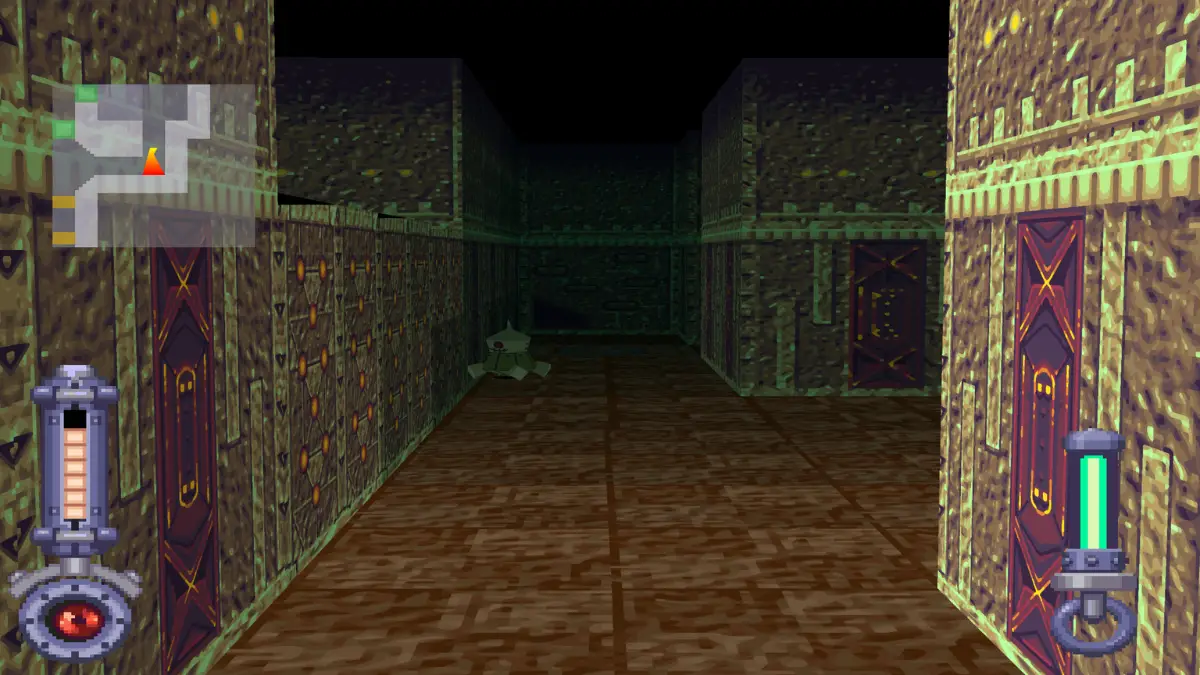
Then I see a hole in the wall and immediately stick my arm in it because I apparently learned nothing.
Those holes can hide Zenny, equipment, weapon pieces, and artifacts, treasure chests are scattered around too, and museum items give the obsessive part of my brain another reason to search everything. Some of that collecting eventually connects to parts for the Shining Laser, one of the strongest weapons in the game, so yes, rifling through ancient ruins does eventually pay off in lasers.
The underground also starts making more sense the longer I explore it. Entrances from different parts of Kattelox connect into a larger buried network, paths open from the other side, and upgrades let me return to places I couldn’t reach earlier. I love going underground in one part of the island and eventually realizing I have come out somewhere completely different.
The Jump Springs open higher ledges, then the Jet Skates completely change how moving around the surface feels. Before that I am jogging through familiar areas, afterward I am blasting through Kattelox on roller blades built into Mega Man’s feet because Roll apparently looked at walking and decided we had suffered enough.
The dungeons could use more visual variety. There are water areas, ice remnants, and some layout changes, but a lot of the same walls and rooms come back. It should bother me more than it does. I think the mystery carries them, I keep wanting to know how far the buried network goes and what else is hiding inside it, and boy do I wish it was even larger than what it already is.
Kattelox Feels More Alive Because It Isn’t Huge
Kattelox is tiny beside a modern open world, I think that is one of its best qualities.
I keep coming back to Apple Market, Downtown, Uptown, City Hall, the hospital, the museum, shops, and houses, so eventually I stop thinking about them as areas on a map and start remembering where things actually are. I recognize people, I notice when dialogue changes, and when the Bonnes damage part of the city, the damage means more because I have already spent time there.
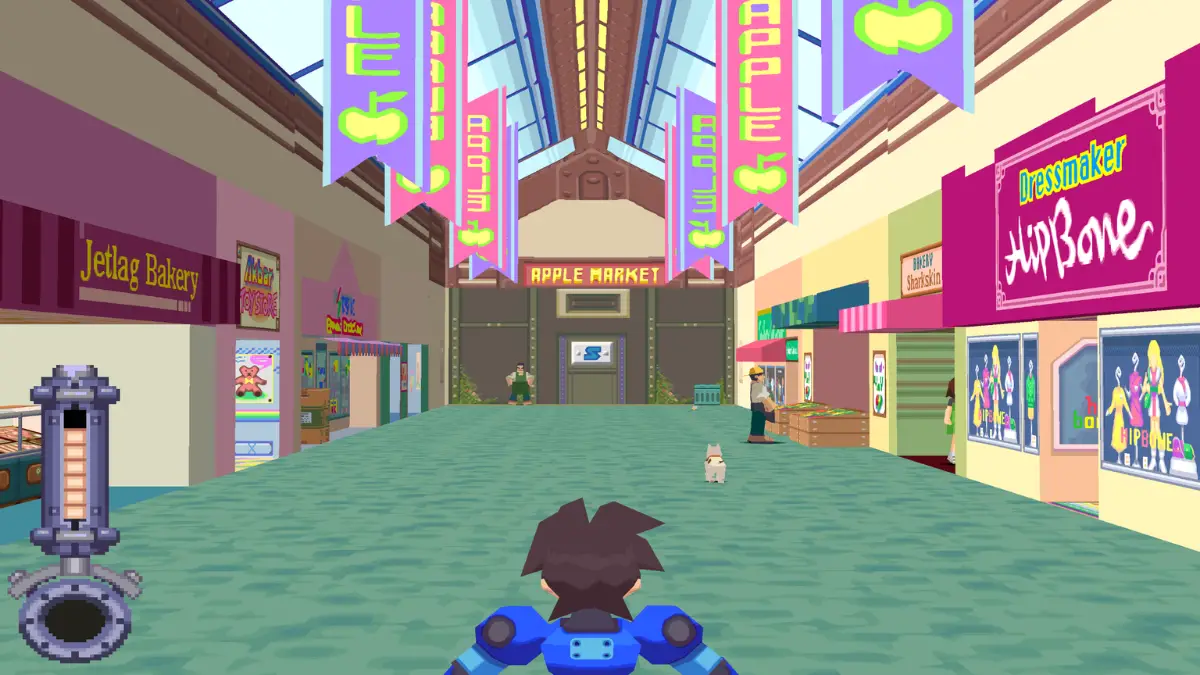
You can even help rebuild parts of Kattelox afterward, which is one of those little side systems I appreciate more now. The same goes for game shows, minigames, museum collecting, and smaller NPC stories, none of it is enormous, it just gives me something to do in the town besides sprint toward the next objective.
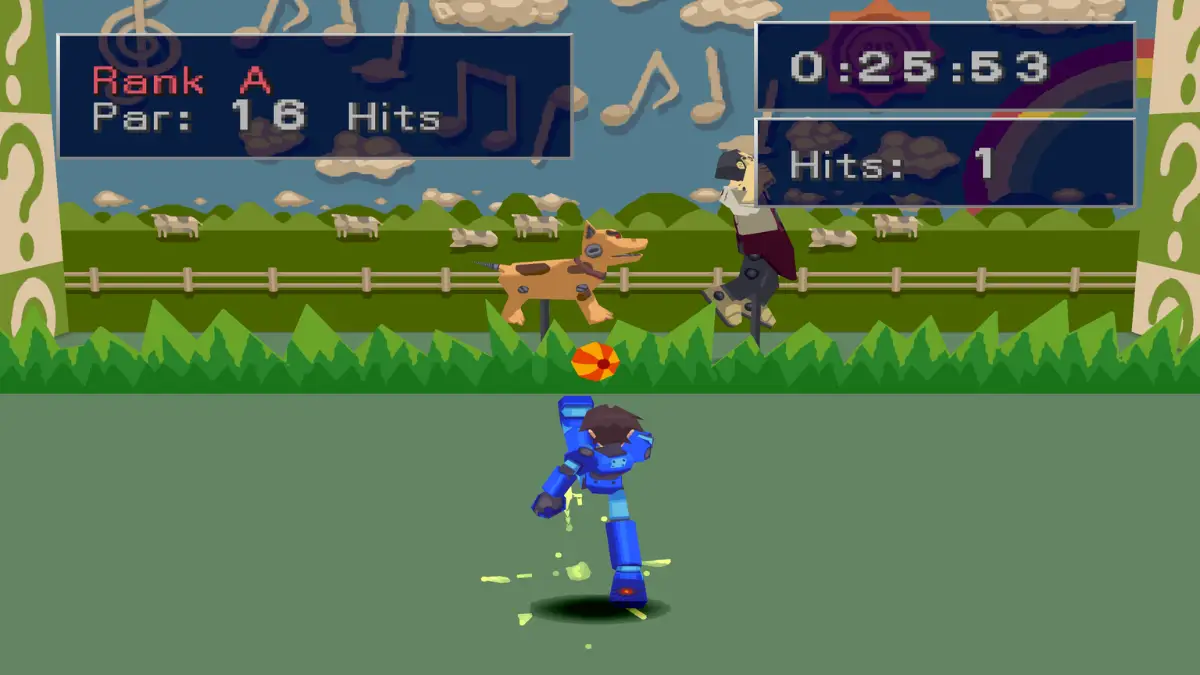
One of my favorite pointless details is checking front doors and hearing what the people inside think about Mega Man at that point in the story. It barely affects anything, nobody needed to put that in there, I check anyway.
There is even a morality system quietly running underneath some of this. Good and bad actions can change the color of Mega Man’s armor, and doing dumb little things like kicking the can around Apple Market can push him toward the darker side.
Kattelox isn’t going to crown Evil Mega Man king because I abused enough public trash, but I like that the game notices.
The Bonnes Keep a Short Story From Feeling Small
The Bonne family is where Legends gets a lot of its energy.
I can spend a while creeping through quiet ruins, then suddenly I am back outside defending the city from some giant machine Tron built, fighting an aerial attack, or dealing with another pirate plan that has gotten completely out of hand.
The bosses are pretty straightforward, but they have their own attacks and patterns, and the fights feel different enough from normal Reaverbot battles that they break up the game well. Tron getting ejected from one of her machines after losing is still funny to me, the Bonnes are dangerous enough to create stakes, but they are such disasters that I never really want them gone.
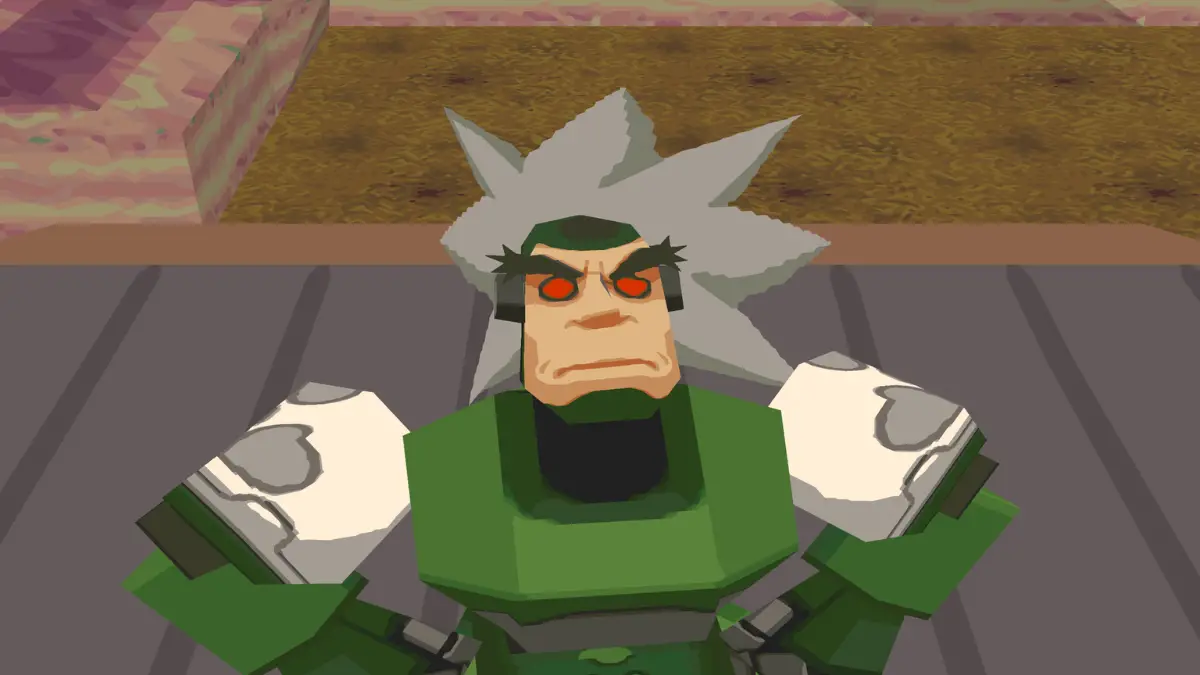
The rest of the cast is simple too. Roll is your mechanic and Spotter, Barrel is the grandfatherly adventurer, Teisel is loud, Bon is Bon, Data dances around like nothing happening here is remotely concerning.
What keeps the story interesting is the mystery behind all of them, especially Mega Man and Data. The game starts with a pretty light problem, repair the Flutter, stop some pirates, find treasure. The deeper Mega Man goes into Kattelox, the more obvious it becomes that the ruins are part of something much bigger.
I don’t want to spoil where that goes. The late-game shift is short, but it changes how I look at everything underneath the island, and I think a first-time player should get to have that moment without me explaining it to death.
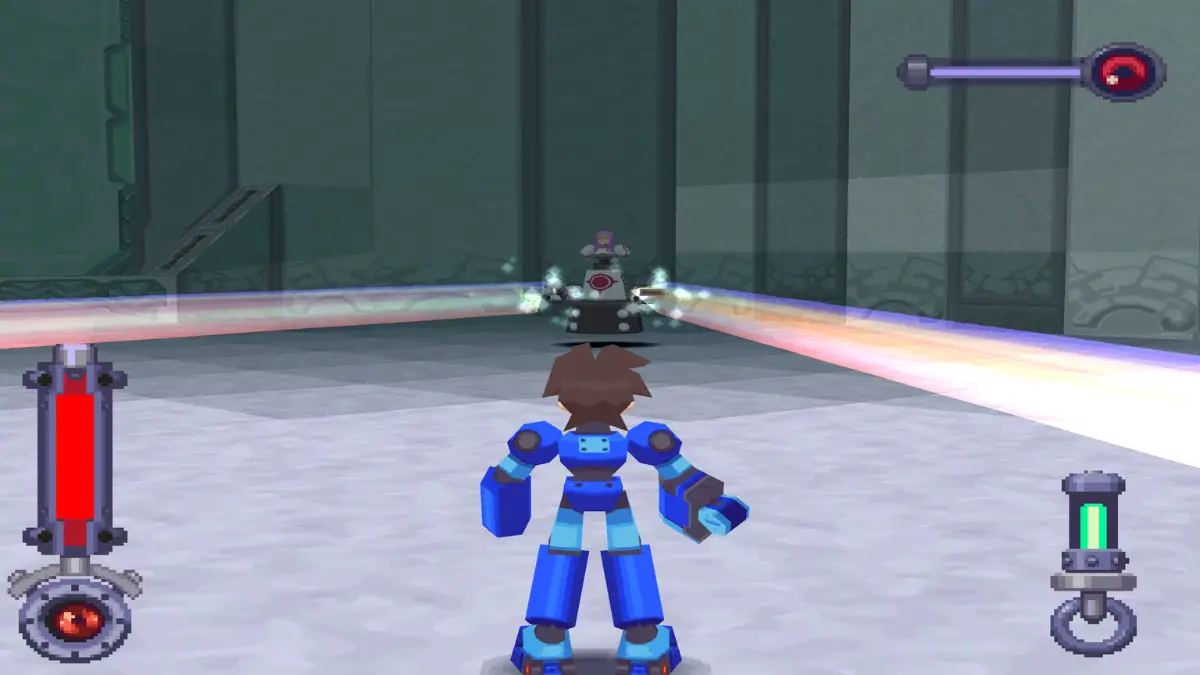
The wider setting is in the extremely distant future of the Mega Man universe, but I wouldn’t play the first game trying to pin an exact number of years after Mega Man X onto it. Legends works better when the past feels impossibly far away.
The PS1 Graphics Are Rough, I Wouldn’t Change the Look
Mega Man Legends looks old. The textures are low resolution, the geometry is chunky, and the original PlayStation image has all the wobbling and rough edges you would expect from an early 3D game.
I like looking at it anyway.
The characters have huge expressions, simple readable designs, changing faces, exaggerated body language, and an anime look that fits the hardware way better than chasing realism would have. Tron can look furious, Roll can look worried, Teisel can be extremely Teisel, and the Servbots somehow manage to look alive with almost nothing to work with.
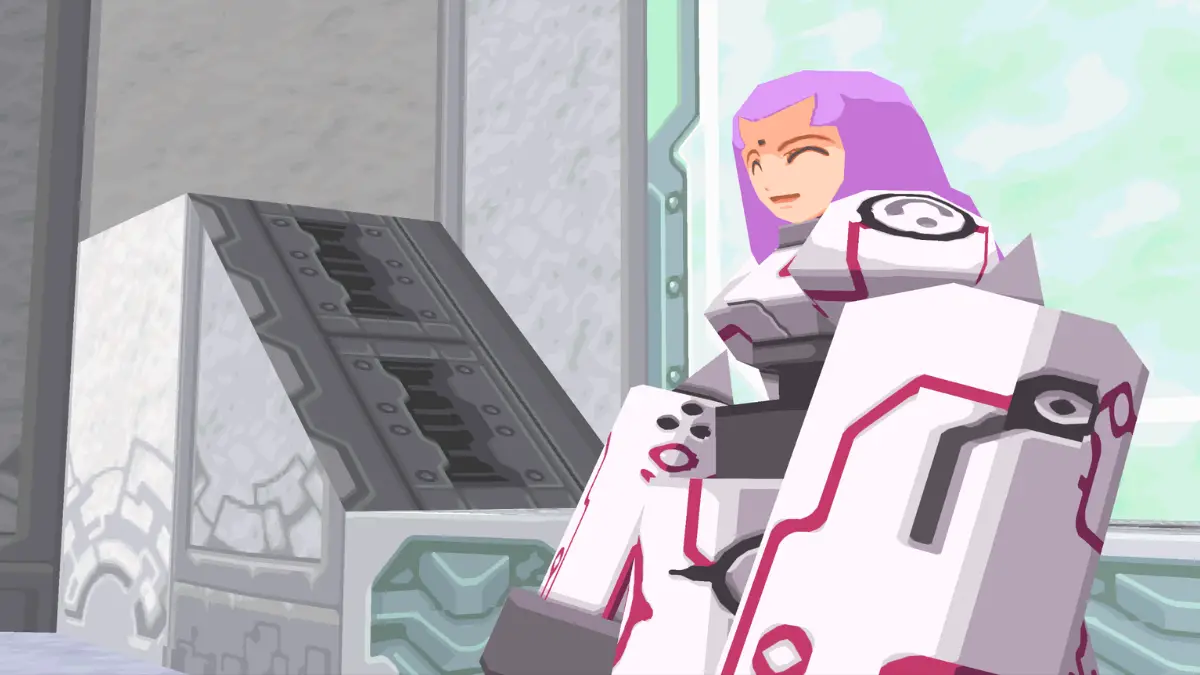
That is why I wouldn’t try to turn Legends into a completely different-looking game in 2026. Cleaning up the image is one thing, sanding off all the PS1 weirdness would take some of the personality with it.
What Has Actually Aged Poorly?
The controls are number one, easily.
After that, I would put repetitive normal combat, low enemy variety, and the occasional vague progression step. Legends expects me to talk to people, remember clues, and figure out where a new item is supposed to take me, sometimes that makes Kattelox feel like a place I need to pay attention to, other times I missed one conversation and now I am walking around like the island owes me an apology.
One later stretch has you trying to track down the Yellow Refractor you need to keep progressing, and the game can leave you wandering around Kattelox simply because you missed the person who points you toward the next step. That is the kind of moment where I would not blame anybody for looking something up.
Saving is old-school too. Data is your save and heal point, there is no autosave quietly rescuing me every few minutes, and forgetting to save can cost real progress.
The game is also short by modern action-RPG standards. There is optional treasure, weapon building, museum stuff, minigames, side quests, and plenty to poke at, but the main story moves quickly.
I used to count that against it more. Now I kind of like that Legends ends while I want more, it never asks me to clear eighteen identical pirate camps because somebody was worried the map looked empty.
How I Would Play Mega Man Legends in 2026
Actually getting into Mega Man Legends today is more annoying than it should be, because Capcom still hasn’t put the original game into a proper modern collection.
Original copies aren’t especially cheap anymore either. As of September 2026, PriceCharting has the North American PS1 release around $53 loose and $93 complete, and recent completed sales can swing above or below that. I wouldn’t tell somebody to spend collector money just to find out whether the controls drive them insane.
If you own the original disc and are trying to figure out your options, my guide to playing PS1 games in 2026 goes through original hardware and emulation without turning the whole thing into a weekend project.
On PC, I use DuckStation with my own legally dumped games and BIOS. It gives you modern controller mapping, higher internal resolution, PGXP, save states, rewind, and other quality-of-life options, and the official DuckStation project documents the emulator and its current features.
If you need help setting it up, my DuckStation setup guide covers the basics, and my best DuckStation settings for PS1 goes through the graphics options worth touching.
For a first playthrough, I would keep the original 4:3 presentation, raise the internal resolution if you want a cleaner image, and use PGXP if the polygon wobble bothers you. I wouldn’t immediately pile on texture replacements, forced widescreen, and camera hacks, at that point I am not really finding out if Mega Man Legends holds up anymore, I am testing my own weird restoration project.
If you want the original hardware look instead, my CRT vs modern TV PS1 guide covers the tradeoffs between real PlayStation hardware, modern displays, and emulation.
If you get stuck: Try to figure things out first, but once the mystery turns into walking around for an hour because you missed one person, I would just look it up. Mega Man Legends Station has maps, guides, boss information, and other resources for the first game. Data is not going to know you used a guide.
Who Should Play Mega Man Legends in 2026?
- Play it if: You like PS1 hidden gems, retro gaming, exploration, action RPGs, weapon customization, small worlds you can actually learn, and games that reward checking every weird corner.
- Think twice if: Old camera controls annoy you, repetitive combat gets old quickly, or you need a lot of enemy variety and difficulty from your action games.
- Probably skip it if: You cannot tolerate early 3D controls at all and need modern aiming, constant autosaves, quest markers, and a much longer story.
Frequently Asked Questions
Does Mega Man Legends still hold up in 2026?
Yes, especially as an adventure game. The controls and normal combat feel dated, but exploring Kattelox, digging for treasure, building weapons with Roll, customizing the Buster, and uncovering what is underneath the island are all reasons I would play it now.
Is Mega Man Legends worth playing for the first time in 2026?
I think so, just give the controls some time. A new player is going to notice the camera and old movement way more than I do, once that starts feeling normal, the exploration and upgrade loop are much easier to enjoy.
Is Mega Man Legends a PS1 hidden gem?
I would call it one. Retro gaming fans know it, Mega Man fans definitely know it, but it never became one of those massive PlayStation games everybody owned, and its mix of digging, action RPG systems, anime characters, weapon building, and connected ruins feels pretty unusual.
What is the best way to play Mega Man Legends in 2026?
For most PC players, I would use the original PS1 version through DuckStation with your own legally dumped game and BIOS, keep the original 4:3 presentation, and optionally use higher internal resolution and PGXP. Original PlayStation hardware is the better choice if authenticity matters more than convenience.
Is Mega Man Legends hard?
Not really. The controls can make the beginning feel harder than it is, but once you understand lock-on, circle strafing, boss patterns, and Buster upgrades, most of the game is pretty manageable.
How long does Mega Man Legends take to beat?
I would expect roughly 12–15 hours for a normal first playthrough, then longer if you start chasing weapons, museum items, upgrades, and side activities. RetroAchievements’ current playtime data puts the median time to beat the PlayStation game at just under 13 hours, while mastering everything tracked there lands closer to 24. That makes Legends a pretty easy PS1 game to fit into a weekend without feeling like you barely started it.
Final Verdict: Does Mega Man Legends Hold Up in 2026?
WornOutWill verdict: Yes, Mega Man Legends is worth playing in 2026. You have to adjust to the way it controls, but Kattelox gives you plenty of reasons to stick around once you do.
Best for: Retro gaming fans who like PS1 hidden gems, exploration, action RPGs, weapon customization, strange little worlds, and games that reward poking around.
Biggest drawback: The camera and normal combat aged a lot more than the adventure built around them.
After more than 23 years, I already know what is under Kattelox, and digging through the same ruins should probably be boring by now.
It isn’t.
I check the holes in the walls, I bring random junk back to Roll to build weapons I probably won’t use, I skate across town because walking is for people without Jet Skates, and I get that same weird feeling underground that Mega Man is poking around inside something nobody on the surface really understands.
The controls feel old, the combat is simple, there should have been more Reaverbots, and the whole adventure is a little short. I don’t need to pretend any of that disappeared just because I grew up with the game.
I keep going back because I like being a Digger, I like learning Kattelox, I like finding some useless-looking part and wondering what Roll can do with it, and I like that this tiny PS1 game makes its buried world feel much older and bigger than what I can actually see.
For me, Mega Man Legends is one of the best PS1 hidden gems, absolutely worth playing in 2026, and still the best Mega Man game.